Chaos in Orlando: Perry Falls at Duel Arena 1
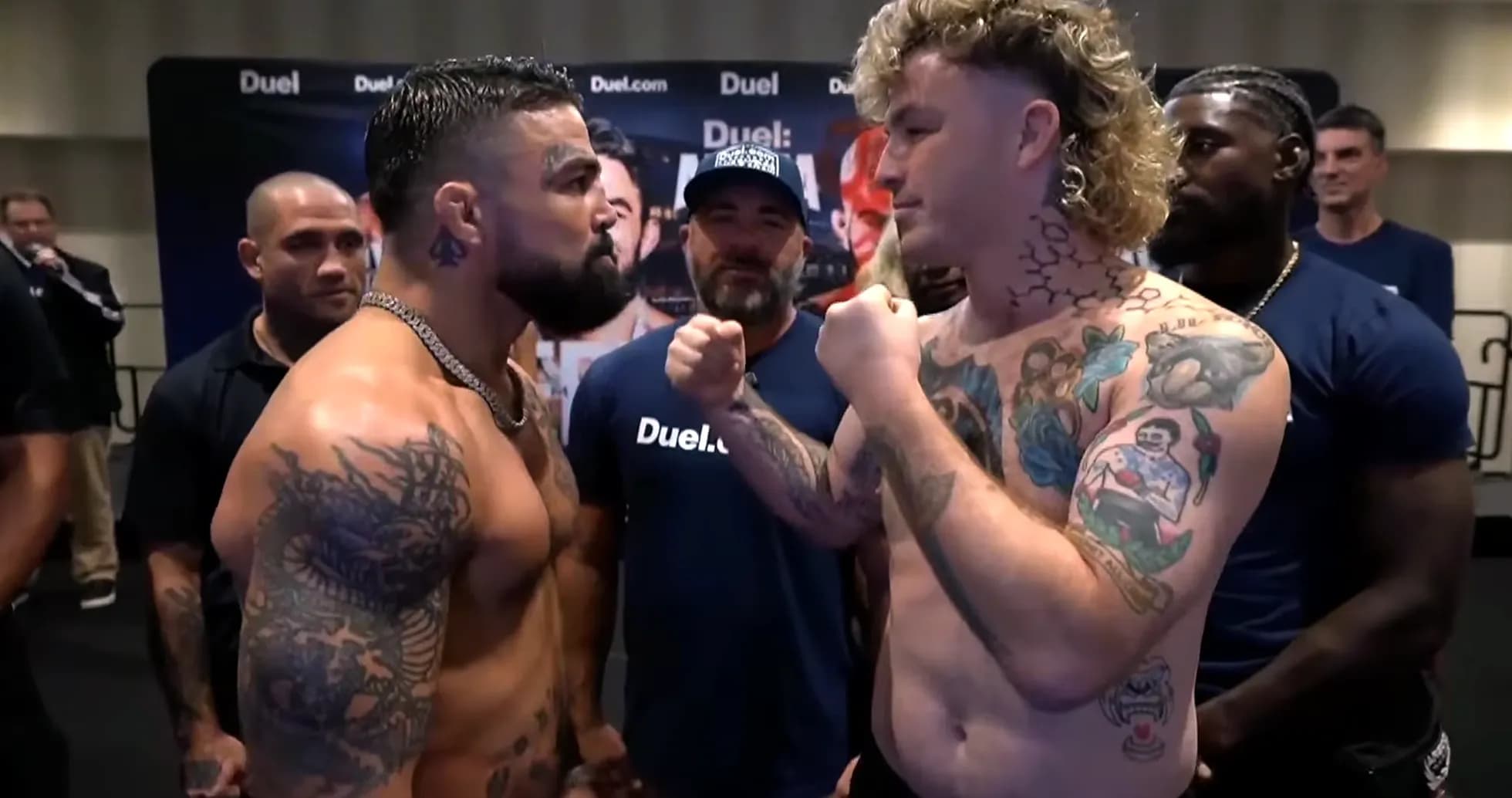
Duel Arena 1 arrived in Orlando promising a new combat sports playground. It delivered something far messier: a night where spectacle kept tripping over itself, an injured hometown star was brutally finished, and controversy felt less like a byproduct and more like the business plan.
Backed by an online sportsbook and staged at the Kia Center, the debut card tried to revive the anything-goes energy of the BodogFight era. MMA, boxing and kickboxing all shared the same ring. The show was initially pitched as pay-per-view. It wound up streaming for free on YouTube.
The fights, though, still had teeth.
Perry’s Nightmare: Injury, Pressure, and a Brutal Finish
Mike Perry walked in as the face of the promotion, the self-styled BKFC “King of Violence” fighting at home and vowing to punish late replacement Brandon Jenkins after Dillon Danis pulled out a day before the event.
He left hurt, beaten and helped from the ring.
Jenkins, stepping in on a day’s notice, refused to play the role of sacrificial opponent. He went at Perry from the opening bell, disrupting the local favorite’s rhythm and forcing him into uncomfortable exchanges. The crowd came to see a mauling. They got one—but not from the man they expected.
At a key moment, Perry appeared to dislocate his left shoulder. The injury changed everything. Jenkins saw it, sensed it, and never let him off the hook. He poured on pressure, targeted a compromised opponent and ultimately wrecked Perry in front of his own fans.
On the broadcast, the commentary leaned heavily into Perry’s misfortune, framing the outcome around the injury and praising him for taking the fight. What it largely missed was the other half of the story: Jenkins had come in cold, on a single day’s notice, and still took the fight to a seasoned, high-profile brawler before and after the shoulder gave way.
Perry talked about Jenkins signing his own death certificate. Instead, the late replacement left with the biggest win of the night, and Perry’s homecoming turned into a harsh reminder of how unforgiving this sport can be.
Manuwa Turns Back the Clock
Earlier on the main card, Jimi Manuwa returned from a seven-year layoff and found his power had not gone anywhere.
Matched in a heavyweight boxing bout with former UFC heavyweight Chase Sherman, the 46-year-old Brit had to survive early danger. Sherman dropped him in the opening round, a reminder of the size and age gap between them.
The second round flipped the script. Manuwa adjusted, started landing clean, and suddenly Sherman was the one under siege. The former light heavyweight let his hands go, hurt Sherman and forced a second-round stoppage in his first combat sports outing in nearly a decade. A comeback, on paper, looked risky. In the ring, Manuwa made it look like a calculated gamble that paid off.
Rowe Boxes to a Win, Hints at a UFC Return
Phil Rowe’s night was less dramatic, but no less important for his own ambitions.
The former UFC welterweight outworked Javanis Ross over four rounds in a super welterweight boxing match, sweeping one judge’s scorecard and winning two rounds on each of the other two. It was methodical, controlled work rather than a highlight-reel finish.
Afterward, Rowe turned his attention back to MMA, making it clear he wants the UFC to remember his name. His run there was complicated: a three-fight winning streak undermined by two weight misses, followed by four losses in five that ended his tenure. Since then, he has rebuilt in small steps—one MMA win and now this boxing victory.
It is a thin résumé for a recall. But this sport has seen thinner.
A Disqualification and a Public Reckoning
One of the night’s most charged storylines surrounded Patrick Clark Jr., the former WWE performer once known as Velveteen Dream, whose career imploded under allegations of sending lewd images to minors and grooming behavior toward another wrestler while he was a minor.
Clark has denied the allegations in the past, then later apologized for people he said he’d hurt through his behavior. The cloud has never lifted.
His opponent in Orlando, Ryan Pownall, made that history the centerpiece of fight week. At Thursday’s press conference, Pownall repeatedly labeled Clark a “pedophile,” triggering a visible meltdown from Clark and a heated confrontation that spilled beyond the stage as Clark left the arena.
The bad blood carried into fight night. Clark’s performance unraveled, and he was ultimately disqualified after making a mockery of himself with repeated antics that overshadowed the actual boxing. Whatever redemption arc he might have hoped to begin here never even got started.
Pownall, better known for his podcast than his pugilism, left with the win and the moral high ground he’d loudly claimed all week.
Cunningham’s KO and the Shadows Around It
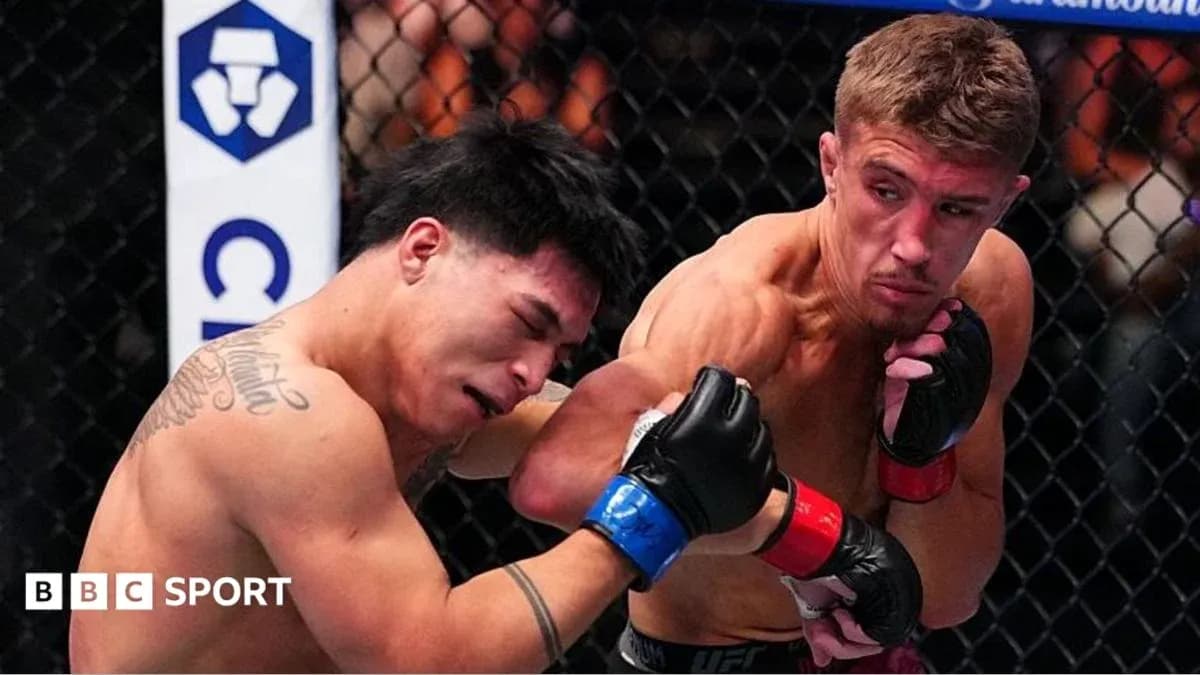
On the prelims, AJ Cunningham delivered one of the cleanest finishes of the event: a spinning back elbow knockout of Joe Penafiel.
Technically, it was outstanding. Perfect timing. Perfect placement.
But Cunningham brings heavy baggage. He has been widely criticized as a nazi sympathizer and branded one of the sport’s most notorious problem figures, with Jake Shields in his corner adding another layer of notoriety. His career had stalled badly—no wins in nearly three years, a failed audition on Dana White’s Contender Series, then an 0-2 run in the UFC before his release.
Here, he finally produced a highlight. Yet the moment landed in a bizarre slot on the card: Cunningham’s violent, clinical finish came just before a magician versus a juggler novelty bout, an arrangement that said as much about the event’s priorities as it did about his future prospects.
What that knockout does for him in the long term is anyone’s guess.
A Circus Around the Fights
The combat was only half the story. Duel Arena 1 wrapped itself in a deliberate, confrontational aesthetic.
The promotion’s official social media accounts leaned into trolling and slurs, taking aim at Dillon Danis even after he withdrew. They labeled him a “Junkie fgt” and then doubled down by hiring his mother, Nikki Carpiniello, as a special ring card girl, posting a suggestive image to bait him from afar.
The broadcast itself veered between dead air and sideshow. Early on, viewers watched extended stretches of nothing after a promo for an opener between a 4-foot-6 influencer and the 5-foot-6 owner of Duel.com—who then lost a decision in a fight that barely registered. Time was burned on laughing about conspiracy theories and debating where Bryce Mitchell fits into that world, before a backstage host walked fans through the basic layout of a boxing ring, as if the audience had never seen one.
At one point, the production spotlighted “the King of Ass Magic” in a novelty bout against a juggler, a clash that seemed plucked from late-night cable parody rather than a professional combat sports card. Even his name appeared wrong on the broadcast graphics, an almost fitting detail in a segment that left the commentary team openly exasperated.
The promotion also teased a “special guest,” a figure described as an openly racist provocateur whose presence seemed designed to underline an anti-woke, shock-value marketing strategy. The message from the event’s architects was clear: outrage is a feature, not a bug.
Amid that chaos, one thing did stand out in a positive light—the production team’s technical execution early on drew rare praise, a reminder that beneath the carnival, there is an operation capable of looking sharp when it chooses to.
Where Does Duel Arena Go From Here?
On paper, Duel Arena 1 will be remembered for Brandon Jenkins seizing his moment, Jimi Manuwa’s late-career knockout, and Phil Rowe’s quiet push for a second chance. In reality, it may be defined just as much by the noise around it: the trolling, the slurs, the sideshow acts and the deliberate courting of controversy.
The promotion wanted to “dip its toes” into the combat sports waters. Instead, it cannonballed into the deep end with a mix of real fights and manufactured chaos.
The fighters gave the night its legitimacy. The rest of the show asked a different question: in a crowded combat sports landscape, is this brand of outrage-driven theater a launchpad—or a fast track to oblivion?