Carlos Alcaraz Returns to US Open with Convincing Win
Carlos Alcaraz walked back into Arthur Ashe Stadium on Monday night like someone reclaiming a stage, not just a title defence.
After 139 days out with a wrist injury, the seven-time major winner returned to singles action at the US Open and needed just three controlled, compelling sets to remind New York what it had been missing, beating Russia’s Roman Safiullin 6-4 6-4 6-4.
The showman returns
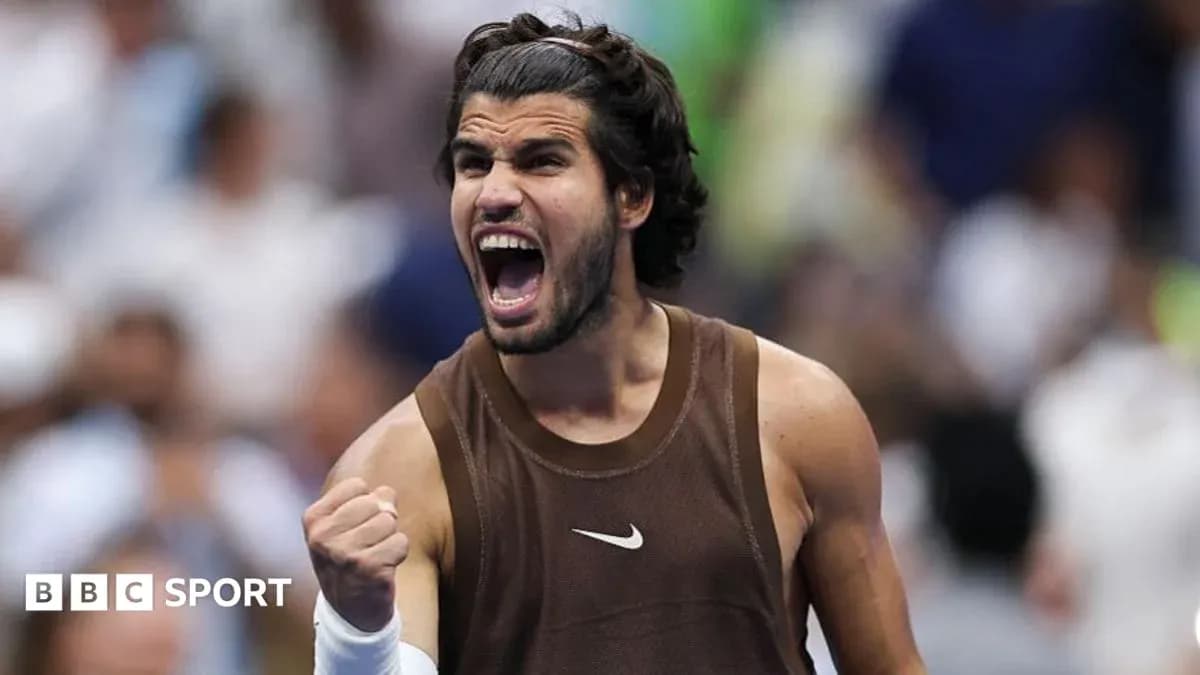
Compression sleeve on his right arm, familiar swagger in his step, Alcaraz wasted no time slipping back into character. Every forehand crack, every whipped winner, came with the same clenched fist and booming “vamos” towards his box. The theatre was back.
“I missed the crowd, the energy, the competition – I missed everything,” he said on court, smiling as if he’d just been let back into his favourite playground. “I’m just really, really happy that I was able to compete again.”
For four months, he had watched from home as Alexander Zverev lifted the French Open and Jannik Sinner took Wimbledon. On Monday, the balance felt a little more familiar: Alcaraz on Ashe, under the lights, dictating the tempo of the night.
He played like a man intent on enjoying every second. He grinned after points, chatted with his team, and at one changeover casually sang along to Michael Jackson over the stadium speakers. When he finished a lung-busting rally in his final service game with a feathered drop shot, he threw his fist to the sky, cupped his ear and waved his arms, demanding more noise from a crowd only too happy to oblige.
Former Wimbledon champion Pat Cash, watching on BBC Radio 5 Sports Extra, noted it looked as though “every little win” was being savoured. That was no accident.
“What I really want to do is enjoy every time that I’m going to walk into the court, feeling the energy from the people,” Alcaraz said. “That’s what I’m going do this tournament. The results, it’s going to come after all. That’s why I enjoyed so much today, and it wasn’t a surprise for me, because I came here to enjoy.”
Power back, serve still searching
If there were any doubts about the wrist, his forehand answered them. The trademark, whippy stroke – the shot that underpins his entire attacking identity – did the bulk of the damage, accounting for most of his 28 winners against the world number 99.
“I felt great,” he said. “I don’t know how it looked from outside, but from inside, my feeling was that I was hitting normal. I was playing pretty normal, playing my style, and everything felt great.”
Not everything was perfect. The serve, by his own admission, lagged behind the rest of his game. He hit just two aces and coughed up five double faults. The numbers behind the first delivery – 68% of first serves in, 66% of those points won – were solid, but the usual free points and intimidation weren’t quite there.
“The serve is the shot I was struggling [with] the most,” he explained. Some of that, he said, was by design, a conscious decision to take pace off and disrupt Safiullin’s rhythm. “I’m going try to serve better. The point is going to try to serve normal, but it’s a shot that I just always struggle [with]. But it will be back, for sure.”
The rest of his arsenal looked sharp. The forehand ripped through the court. The backhand held steady. The drop shot – that mischievous little dagger he loves to pull out in big moments – landed with exquisite touch, especially late in the third set when Safiullin tried to mount a final push.
Testing the body, testing the belief
What you couldn’t see from the stands were the questions in his head. Alcaraz did not look short of fitness, striding through rallies and sets without obvious discomfort, but he admitted the unknown of a best-of-five match after such a long lay-off weighed on him.
“There were some doubts in the match, I’m not going to lie,” he said. “I’ve been thinking about ‘am I going to last the best of five, am I going to last playing four sets, five sets?’”
Those doubts never surfaced in the scoreline. He held his nerve on the big points, controlled the scoreboard, and managed the night with the assurance of a champion easing his way into a long tournament.
“I need more matches under the belt to get again into the rhythm of the tournament,” he added. “I’m pretty sure I’m going to get better and better every day.”
That’s the ominous part for the rest of the field. This was not peak Alcaraz. This was version 1.0 of the comeback, already good enough for a straight-sets win, with room to grow.
A draw that suddenly opens
The context around him has shifted, too. The US Open he walked into on Monday looks very different to the one many expected a week ago.
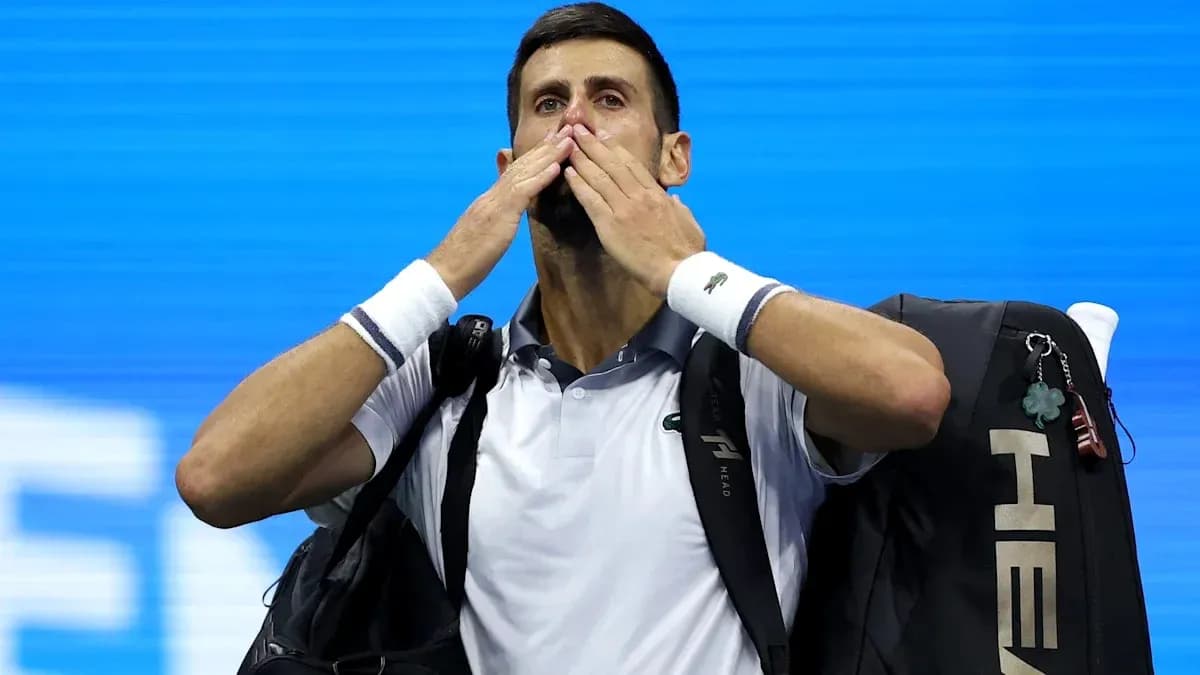
World number one Jannik Sinner is missing with a knee problem. Novak Djokovic, the 24-time Grand Slam champion and eternal measuring stick, crashed out in a stunning first-round defeat to Argentina’s Mariano Navone on Sunday. French 10th seed Arthur Fils, fresh from his Cincinnati Masters triumph and widely tipped as a serious contender, also fell on Monday, beaten by Stefanos Tsitsipas.
The pressure finally told on the draw itself. It cracked open.
As second seed, Alcaraz sits on the opposite side to French Open champion and top seed Alexander Zverev; they cannot meet before the final. Between now and the semi-finals, the only top-10 opponent he can face is American Ben Shelton, potentially in the quarter-finals.
Next up is Portugal’s Jaime Faria, ranked 72 in the world. On paper, tougher tests lie further down the road than Safiullin and Faria. On this evidence, that might be exactly what Alcaraz needs: matches, minutes, and the chance to build momentum in a half of the draw suddenly stripped of two of the sport’s biggest names.
For now, though, the defending champion has what he craved most: a healthy wrist, a winning start, and a New York crowd ready to roar every “vamos” deep into the night. The question is no longer whether his body will hold up.
It’s how far this version of Alcaraz can run with a tournament that seems to be clearing a path right in front of him.