Ben Shelton's Comeback Victory at the U.S. Open
Under the lights of Arthur Ashe Stadium, Ben Shelton looked nothing like a contender. For half an hour, he looked lost.
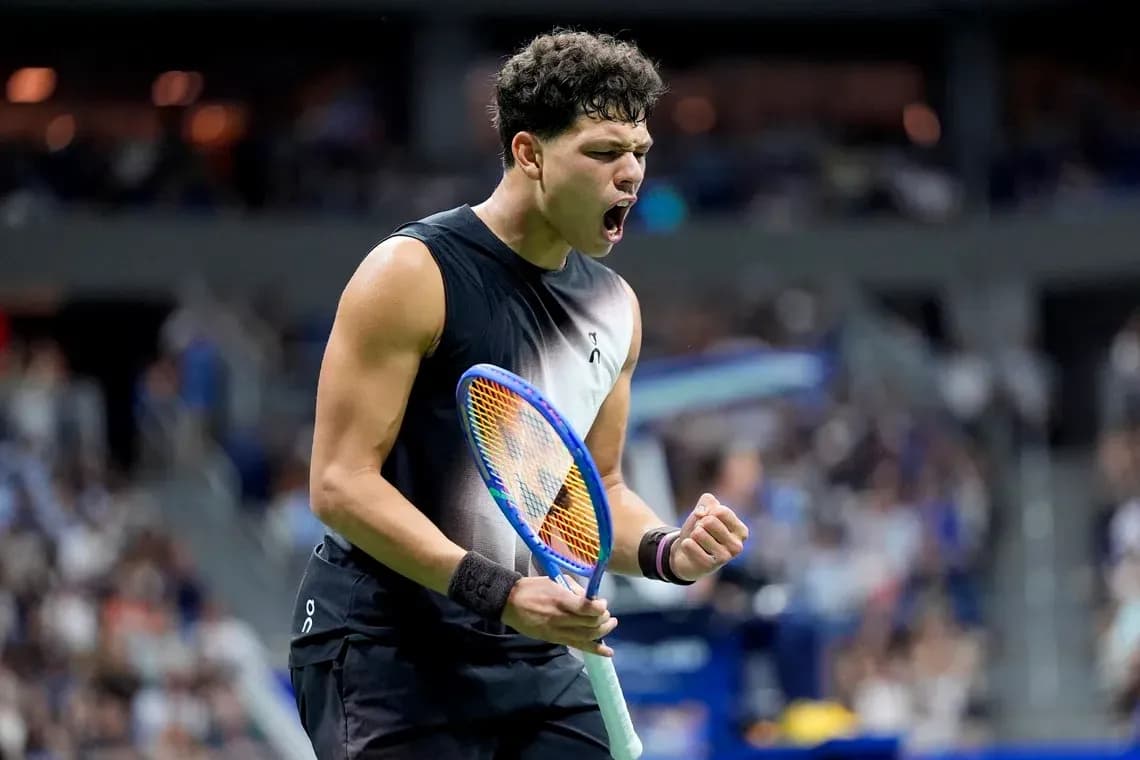
Then he flipped the switch.
The eighth seed survived a ragged opening and surged back to beat Tallon Griekspoor 1-6 6-1 7-6(3) 6-2 on Monday night, turning a nervy first-round scrap into the kind of statement win a home hope needs at the U.S. Open.
Shelton, 23, is carrying a heavy banner in New York: the top American man in the draw, chasing a title no U.S. player has claimed since 2003. His Grand Slam season to this point has sagged under that weight, but he arrived with fresh confidence after defending his Canadian Open crown earlier in the month. That swagger, though, was nowhere to be seen at the start.
Griekspoor came out swinging as if still riding the high from his upset of top seed Alexander Zverev in Montreal. He bullied the baseline, stepped inside the court, and gave Shelton nothing to work with. The American sprayed 14 unforced errors in the opener, including two double faults, and managed to hold serve just once. In less than 30 minutes, the Dutchman had the set in his pocket and the stadium murmuring.
Shelton later admitted he started “a little bit nervous,” and it showed. His feet were heavy, his forehand rushed, his serve unreliable. Griekspoor’s aggressive patterns and refusal to offer any rhythm only deepened the early discomfort.
Then the match turned.
Shelton steadied in the second set, shortened his swings, and began to land his first serve with purpose. The errors dried up, the body language changed. He started stepping into returns, reading Griekspoor’s patterns, and suddenly it was the Dutchman scrambling. Shelton broke three times in the set, ripping through it 6-1 to erase the early damage and jolt the crowd to life.
What had been a one-way traffic jam became a street fight.
The third set tightened into the kind of tension Ashe specializes in. Both men held firm on serve, trading heavy blows from the back of the court. Shelton tried to press with his forehand and quick-strike patterns; Griekspoor countered with flat, penetrating groundstrokes and bold forays forward. Neither blinked until the tiebreak.
There, the pressure finally told on Griekspoor. The errors that had been lurking in the background spilled out at the worst possible time. Shelton played the breaker with clarity and conviction, keeping his margins safe and his serve secure. On the Dutchman’s sixth double fault of the night, the set was gone and so, effectively, was the upset bid.
Shelton could smell it.
With a two-sets-to-one lead, he surged out for the fourth like a man in a hurry. The serve grew heavier, the forehand more vicious, the court positioning more aggressive. He stormed to a 4-0 lead, breaking Griekspoor’s resistance along with his serve, and never looked back. What began as a wobble ended as a strut, the American closing out the match with authority to seal his place in the second round.
“Once I found my rhythm through the second set, things started to click,” Shelton said, quick to nod to his opponent’s awkward, attacking style and the difficulty of finding a groove against him.
He will need that rhythm again in a hurry. Next up is Poland’s Hubert Hurkacz, a seasoned campaigner with a serve that can silence any crowd. For Shelton, chasing history on home soil, this was a shaky but vital first step.
The question now is simple: was this just an escape, or the spark of a serious title run?