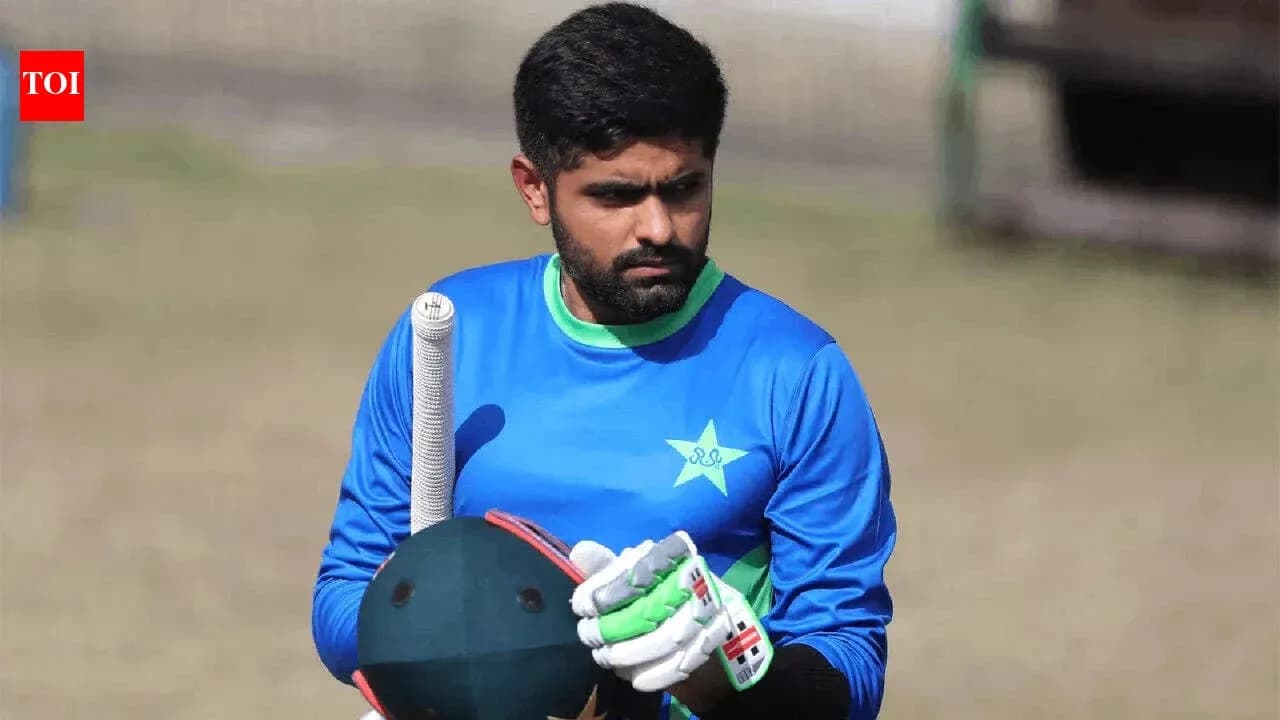
Babar Azam's Century Drought: A Struggle for Form
For years, Babar Azam walked to the crease in Test cricket with an air of inevitability. If he settled, he scored big. If he scored big, he usually went all the way. Hundreds felt less like milestones and more like checkpoints on a long, elegant journey.
That journey has stalled.
His last Test century came on December 26, 2022, in Karachi: a commanding 161 against New Zealand. It was his ninth Test hundred, the crowning stroke on a year in which he piled up 1,184 Test runs and four centuries. At that point, the conversation around Babar was about records, rankings, and where he might eventually sit among the greats.
Since that day, the questions have changed.
From 161 to a long, cold wait
The drought began almost immediately. In the very next innings after that 161, Babar fell for 14. Two more modest scores followed in the second Test against New Zealand in Karachi — 24 and 27 — the kind of numbers that hint at form but don’t shape a match.
Then came 2023. In Sri Lanka, he managed 13, 24 and 39. In Australia, where great batters carve their names into folklore, his series produced 21, 14, 1, 41, 26 and 23 across three Tests. The 41 in Melbourne briefly looked like a turning point, his highest Test score of that period, but again the innings ended before it could become something defining.
The pattern was set: starts, glimpses, and then the familiar walk back.
2024: From lean spell to full-blown crisis
By 2024, the numbers stopped being a quirk and started to look like a problem.
Against Bangladesh, Babar’s returns were 0, 22, 31 and 11 across two Tests. For a player of his class, those scores were not just underwhelming, they were jarring. The fluency at the crease remained in patches, but the end product kept falling short.
Then came England at home. On a Multan pitch where Shan Masood and Abdullah Shafique both went on to score hundreds, Babar managed only 30. Chris Woakes trapped him lbw, and that dismissal stretched his run of innings without even a fifty. The man who once made centuries look routine could no longer get to 50.
The pressure grew heavier. The scrutiny more intense.
South Africa finally brought a flicker of light. At Centurion, Babar made 50 — his first Test fifty since that 161 against New Zealand. It was a small number with a big meaning: evidence that the old rhythm might be returning. At Cape Town, he went further, scoring 58 in the first innings and 81 in the second. That 81 felt close. Close enough for Pakistan to believe again, close enough for him to sense a 10th Test hundred just out of reach.
He fell 19 short. The drought lived on.
2025: Better numbers, same story
Babar started 2025 with that 81 against South Africa as one of the standout efforts of his year. Across the two-Test series, he compiled 193 runs, with three fifties and a best of 81. On paper, it was a solid return. In context, it was something else: more evidence that he could get in, dominate phases, but still not cross the line that had once felt so familiar.
His overall Test numbers for the calendar year improved compared to 2023 and 2024. The graph ticked upwards. Yet one column remained stubbornly blank. No century. The 81 stayed his highest score of the year, a ceiling he kept hitting but could not break.
2026: Run out on 88 – the one that should have been
If one innings captures the frustration of this phase, it is Port of Spain.
In the second Test against West Indies, Babar played with the control and authority that used to be his trademark. He moved to 88, just 12 runs away from finally ending a wait that had stretched to almost four years. The stage was set: a good pitch, a platform built, a captain in command.
Then came the mix-up.
A run-out, finished by Brandon King, cut him down on 88. No great technical flaw, no unplayable delivery, just a moment of confusion that ended another march towards three figures. It was the kind of dismissal that lingers long after the scorecard is filed away.
Earlier in the series, he had made an unbeaten 58 in a fourth-innings chase, but Pakistan still lost by 90 runs. Across the two Tests, he scored 193 runs, including that 88 and an unbeaten 24, enough to briefly haul him back into the ICC Test top 10.
The ranking climbed. The century column did not.
Bangladesh: Another opening, another miss
Before the England tour, Bangladesh offered him another chance to reset the narrative.
He responded with 68 and 47 in the two-Test series. Both were useful innings, both showed control and application, and both again stopped short of the landmark that has started to feel like a psychological barrier as much as a statistical one.
For nearly four years, the story has been the same: Babar gets in, Babar looks set, Babar falls short.
England: Injury, return, and two more low scores
The latest chapter has played out in England, where Pakistan’s captain arrived with a finger injury and a mountain of expectation.
He missed the first Test at Headingley after that injury, watching from the sidelines as Pakistan were crushed by an innings and 103 runs. For a side that has often leaned on his runs to steady them, his absence felt glaring.
At Lord’s, he declared himself 90 per cent fit and came back into the XI. Pakistan needed their captain to make a statement. Instead, they were bowled out for 110 in the first innings, and Babar’s part in that collapse was painfully brief. Josh Tongue found the edge, Jordan Cox took the catch, and Babar walked off for 8.
The second innings brought a target of 389 and a sliver of hope. If Pakistan were to chase it, their captain would almost certainly have to be at the heart of it. Jofra Archer had other ideas. Pace, bounce, an awkward response, and once again the ball flew to Jordan Cox at third slip. Babar gone for 6.
Two innings. Two low scores. Still no century.
From inevitability to uncertainty
What makes this drought so striking is not just the length — 17 Tests and 36 innings without a hundred — but who it belongs to. This is Babar Azam, the batter who once turned starts into statements, who made 2022 look like the launchpad to an all-time great Test career.
Instead, he finds himself trapped in a strange in-between space. He is scoring enough to hint at form, enough to remain vital, but not enough to silence the questions. Every promising start now carries extra weight. Every dismissal before three figures feels bigger than the number next to his name.
The technique is still there. The class is still visible. The scorecard, though, keeps telling the same story.
At some point, the drought will end. Every great player has a knock that breaks the spell, a day when the ball looks large again and the game feels simple. The question, as Pakistan look ahead to the rest of this England series and beyond, is whether Babar’s release will come in time to shape their future — or whether this barren stretch will come to define a phase of his career that once promised so much more.