Alex Eala Shines at US Open: A New Star Emerges
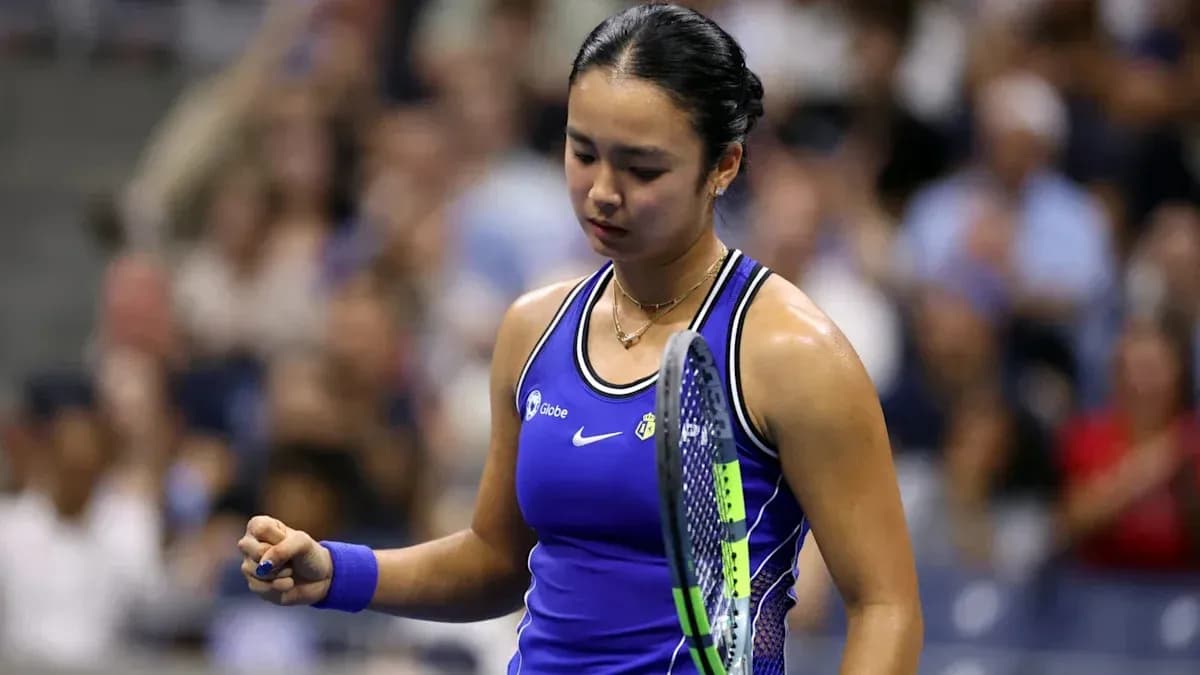
Under the lights of Louis Armstrong Stadium, New York is about to find out just how big the Alex Eala phenomenon really is.
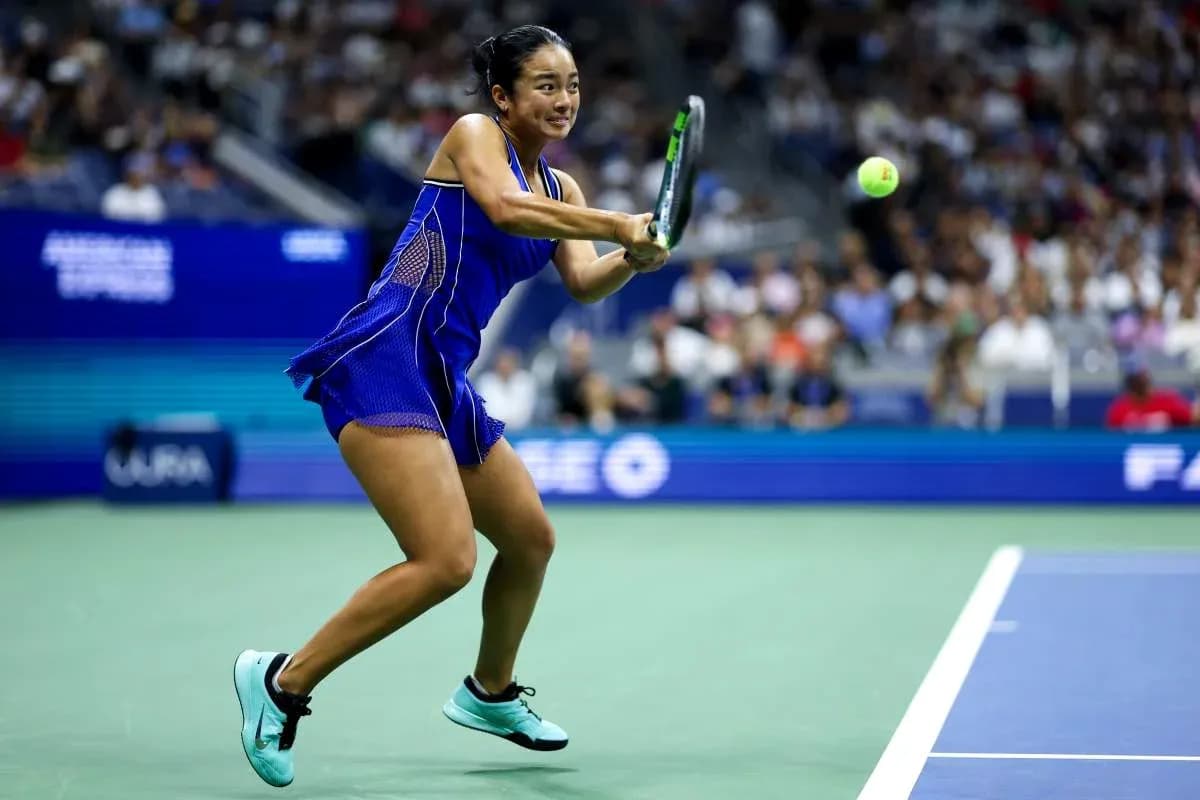
On Tuesday night, the 17th seed from the Philippines walks into her first US Open singles main draw, not tucked away on a side court, not hidden in the shadows of the grounds, but on one of tennis’s grandest stages. She gets the second slot of the night session in the 14,000-seat arena at the USTA Billie Jean King National Tennis Center, following a best-of-five men’s match between Adolfo Daniel Vallejo and Gael Monfils that starts at 7 p.m. ET.
Her opponent: American qualifier Mary Stoiana, ranked No. 122, who has already fought through three tense rounds just to be here.
The schedule gives only a rough promise. If the opening match runs to form, Eala’s walkout lands around 8:40 p.m. ET—8:40 a.m. Wednesday in the Philippines—but New York time bends to five-set marathons and tie-break swings. What is fixed is the placement: second match of the Louis Armstrong night session, under the roof, under the noise.
For Eala, that’s not a courtesy. It’s crowd management.
A Rising Star, Now on Center Stage
Eala arrives in Queens with a new number next to her name and a heavier weight on her shoulders. She is now world No. 18, a career high, and a freshly minted WTA Tour champion after her breakout title run in Washington.
That week in D.C. was not a soft draw. She took down Zheng Qinwen, Leylah Fernandez, Elina Svitolina, Naomi Osaka and Jessica Pegula in a single tournament, a gauntlet that signaled she no longer belongs in the “future star” file. She is already here.
Stoiana has earned her shot the hard way. The former collegiate No. 1 survived the qualifying minefield, clinching her place in the main draw with a gritty 6-3, 4-6, 6-4 win over Yuan Yue. Her ranking may sit outside the top 100, but she arrives match-tough and battle-tested.
The two share history. Eala beat Stoiana 7-5, 6-2 at the 2024 ITF Landisville tournament, a straight-sets win that feels like a snapshot from a different era. Both have climbed since then, both hardened by bigger stages and bigger stakes.
Now they meet again, this time with 14,000 seats and a global audience watching.
The Schedule Says It All
On paper, Tuesday belongs to Coco Gauff and Alexander Zverev on Arthur Ashe Stadium. In reality, Louis Armstrong might host the night’s loudest theater.
Arthur Ashe opens at 11:30 a.m. with Madison Keys against Alina Korneeva, followed by Taylor Fritz against 18-year-old American wild card Darwin Blanch. The evening session in the sport’s biggest arena starts at 7 p.m. with world No. 4 Coco Gauff facing Turkey’s Zeynep Sonmez, then top seed Alexander Zverev taking on Lorenzo Sonego.
Louis Armstrong’s day slate sets the stage for Eala’s night. Fifth seed Flavio Cobolli meets Francisco Comesana at 11 a.m., followed by Mirra Andreeva against Indonesian qualifier Janice Tjen. Vallejo versus Monfils opens the night session at 7 p.m., with Eala–Stoiana to follow.
ESPN’s coverage runs from 11:30 a.m. to 6 p.m., then “US Open Match Point” fills the hour before primetime coverage begins at 7 p.m. on ESPN and ESPN2. Every court streams through the ESPN App for ESPN Unlimited subscribers.
Eala will not step onto Arthur Ashe on Tuesday. Gauff and Zverev own that marquee. Yet the second-biggest stadium, packed with one of the tournament’s most feverish fan bases, may feel like the true epicenter once the flags start waving.
“Put Her on Big Courts”
Her assignment on Louis Armstrong did not happen by accident.
Patrick McEnroe had sounded the alarm before the order of play dropped. Speaking on ESPN’s US Open preview call, he urged the USTA to resist the temptation to bury Eala on an outer court, warning that New York would be “wild for her” and insisting she belonged on the big stages.
He got his wish.
Mary Joe Fernandez, the former world No. 4 and longtime analyst, has already seen the evidence. She described Eala’s following as “off the charts,” pointing out that the crowds now turn up not just for her matches, but for her practices.
Fan Week proved the point. Spectators ringed the practice courts whenever Eala appeared, phones out, flags raised. Her exhibition in Arthur Ashe Stadium—the Stars of the Open showcase—felt less like a warm-up and more like a preview of what might come.
Facing close friend Iva Jovic in a one-set match, Eala lost 6-3. No one seemed to care. The atmosphere crackled, the stands were packed, and Philippine flags dotted the lower and upper bowls. When Eala and Jovic invited their fathers onto the court for a light-hearted doubles segment, the stadium erupted again, this time for a family moment that said as much about her appeal as any cross-court winner.
The bond between Eala and New York had already been sealed last year. More than 8,000 fans flooded Grandstand to watch her claw back from 5-1 down in the third set to beat Clara Tauson, making her the first Filipino in the Open Era to win a Grand Slam singles main-draw match. That comeback felt like a breakthrough. Twelve months later, it looks more like a beginning.
From Prospect to Global Headliner
The media coverage around Eala’s arrival in New York underlines how far, and how fast, her profile has grown.
Forbes put her on its Daily Cover, dissecting her expanding fame and commercial power. Sports Illustrated splashed her across its digital cover with the headline “Pinoy Power,” calling her “tennis’s next great superstar.”
The New Yorker stepped back and took a wider view, exploring how Eala has become a symbol of the Philippines, threading her rise through the country’s cultural values and national pride.
ESPN has gone all-in as well. In a feature titled “Inside the Raucous and Rapid Rise of Alex Eala,” the network detailed the swelling crowds, the surging expectations and the cultural weight pressing in around her, describing her as part Manny Pacquiao, part Maria Sharapova—and a genuine contender to go deep in New York.
This level of attention rarely lands on a player who has yet to reach a Grand Slam quarterfinal. Yet here she is, simultaneously headlined by Forbes, Sports Illustrated, The New Yorker and ESPN, while her practices play out in front of packed fences and her social media numbers climb.
Eala has stepped beyond the category of “promising teenager.” She is one of the sport’s most marketable young stars, and the US Open is leaning into it. She has taken part in Media Day, shot tournament promos, and done the rounds in interviews across the grounds. Her meeting with New York Knicks guard Jordan Clarkson—two Filipino sporting icons sharing a stage—produced another viral moment, another reminder of the reach she carries.
Queens as a Second Home
If you were building a borough in which to launch a Filipino tennis star, you might end up with something very close to Queens.
According to an Asian American Federation demographic study, about 94,000 Filipinos lived in New York City as of 2023. Roughly 49,500 of them called Queens home, more than any other borough.
A few miles west of the National Tennis Center sits Woodside’s Little Manila, a dense stretch of Roosevelt Avenue near 69th and 70th streets lined with Filipino restaurants, bakeries, groceries, remittance centers and small businesses. A New York City neighborhood study estimates Filipinos make up around 16% of Woodside’s population. In 2022, the city formally recognized the area by co-naming the intersection of 70th Street and Roosevelt Avenue “Little Manila Avenue.”
Those numbers don’t count the fans streaming in from New Jersey, Long Island, Connecticut, Pennsylvania or flying across oceans from the Philippines itself. Eala’s following in New York is at once local, regional and global. When she steps onto Louis Armstrong, she will feel it in the flags, in the chants, in the layered accents rolling down from the upper deck.
The Biggest Party in Queens?
On Tuesday night, Coco Gauff and Alexander Zverev will command Arthur Ashe, as expected. They are the established headliners, the names in lights on the sport’s largest permanent stage.
Yet a different kind of electricity is building across the plaza.
Louis Armstrong, with its 14,000 seats and a roof that traps every shout and drumbeat, is primed for something else: a home crowd for a player who is not from New York, not from the United States, but who has somehow turned Queens into an extension of Manila.
Alex Eala will not walk out as a curiosity or a footnote. She comes as a seeded player, a WTA champion, a national symbol and a 19-year-old asked to carry the hopes of a country and the expectations of a sport eager for its next global star.
The lights will be bright. The noise will be relentless. The stage, finally, is big enough.
Now the question is simple: how far can she push this run in the city that already treats her like one of its own?