Alex Eala's Tokyo Journey: Lessons from a Close Defeat
Alex Eala walks away from Tokyo with a loss on her record, but something far more valuable in her pocket.
A reminder that she is not far off the players lifting trophies.
Pushing the champion to the brink
This has already been the season that changed Eala’s career. A maiden WTA title in Washington, a charge to the fourth round at Wimbledon, a first step into the top 20. For a 21-year-old, that’s a leap into the sport’s elite.
Then came the post‑US Open drag.
Since New York, the wins have slowed: three victories in seven WTA matches, momentum stalling just as the season hit its final stretch. And twice in that run, the roadblock has had the same name: Diana Shnaider.
The most recent meeting, in Tokyo, felt different.
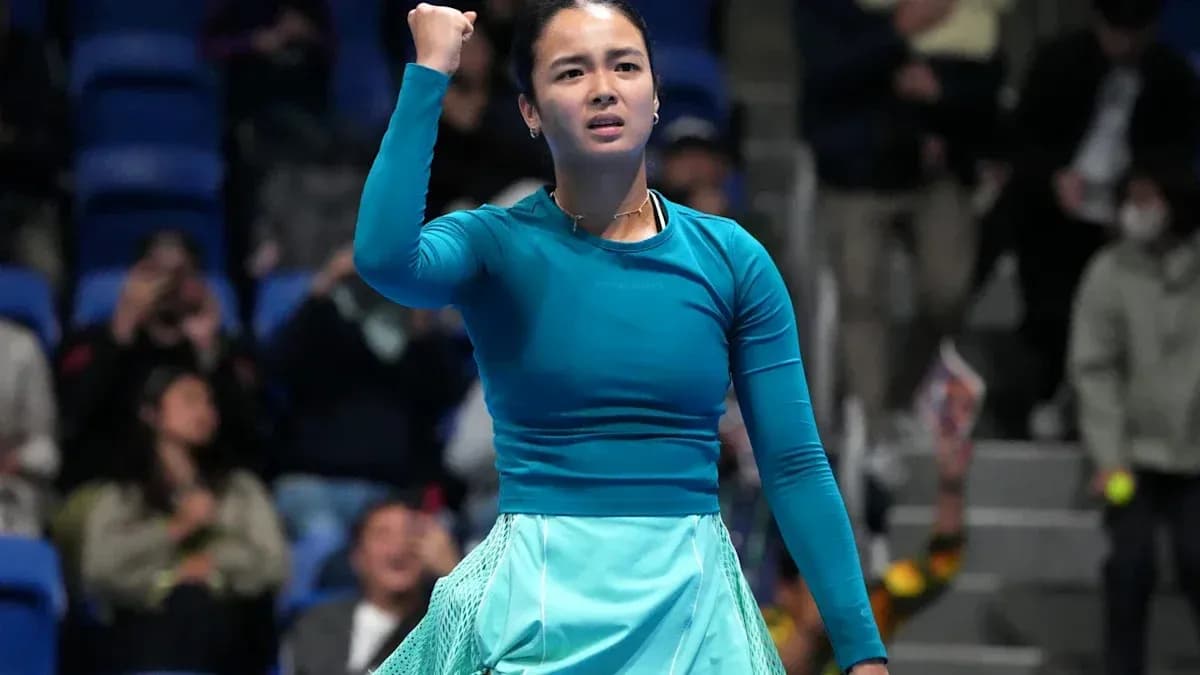
On paper, it goes down as another defeat. Shnaider beat Eala 2-6, 7-6(5), 6-4 in the quarter-finals of the Tokyo Open, coming back from a set down. On court, though, it was the kind of match that can reset a player’s belief.
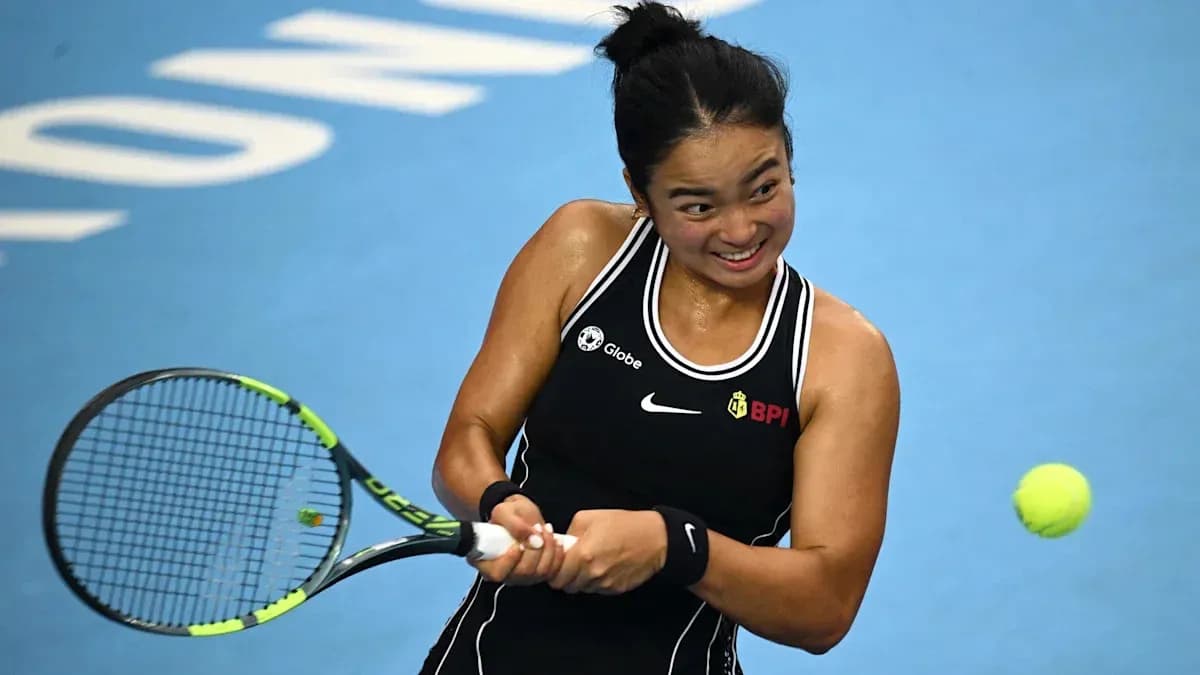
Eala flew through the opening set, 6-2, taking time away from the Russian and dictating with the kind of clean, aggressive baseline game that powered her summer surge. She then stood within touching distance of a straight-sets win, just two points from closing out the second-set tiebreak.
She blinked. Shnaider didn’t.
The Russian edged the breaker 7-5, wrestled back control, and eventually dragged herself over the line in three tight sets. From there, she didn’t look back. Shnaider went on to beat Leylah Fernandez in the final and claim the Tokyo title, her first trophy of the 2026 season.
Several players took Shnaider the distance that week. None came closer to stopping her than Eala.
That’s the fine line at this level: a handful of points between a quarter-final exit and a champion’s run. In Tokyo, Eala stood on the right side of that line for long stretches. She just couldn’t stay there long enough.
A needed boost after a flat spell
For a player searching for rhythm after a patch of disappointing results, this matters.
Eala had already lost to Shnaider earlier in the season at the Ningbo Open. That match never quite caught fire in the same way. In Tokyo, she closed the gap, matched the eventual champion’s intensity, and forced her to find something extra.
The message is clear: her game still stacks up against one of the form players on tour. The rankings say Shnaider is a threat. The scoreboard in Tokyo says Eala is right there with her.
In the context of her post‑US Open wobble, Tokyo stands out as her sharpest week since New York. The level returned, the competitiveness returned, and even in defeat she left with tangible proof that her ceiling hasn’t shifted.
Now she has one last chance this year to turn that performance into something more concrete.
Hong Kong on the horizon
The final stop on Eala’s 2026 calendar is the Hong Kong Open, where the draw offers opportunity and danger in equal measure.
Shnaider is absent, which will not disappoint Eala, but the path to a second WTA title is anything but clear.
Her opening test comes against Alycia Parks, a player whose raw power can blow open any match. Their head-to-head sits at 1-1, but Eala holds the edge from their most recent meeting. That matters. Players remember the last chapter.
If she gets through Parks, the draw suggests likely encounters with Tereza Valentova, Xinyu Wang, Maria Sakkari and Sorana Cirstea.
Against Wang and Cirstea, the numbers tell a similar story: 1-1 in both rivalries, with Eala winning the latest clash each time. She has seen their games, solved them once, been beaten once. There is no mystery there, only execution.
Sakkari is the unknown. They have never faced each other, and the Greek remains one of the most physical and relentless competitors on tour. That would be a different kind of test – one of endurance and nerve as much as ball‑striking.
Then there is Valentova, perhaps the most intriguing obstacle of all.
The Valentova problem
Eala has never beaten Tereza Valentova. Not once.
They have played twice: at the Japan Open in 2025 and the Qatar Open in 2026. Both times, the Czech walked away the winner. For Eala, Valentova represents something more than just another name in the draw. She is a measuring stick from the last two seasons, a reminder of the work still to be done.
Valentova’s own year has been turbulent. Still only 19, she enjoyed a breakout season last year and climbed as high as world No. 42 in May. Then came the drop. A dip in form, injury issues, and with them a slide out of the top 80.
The danger hasn’t gone away, though. Players who have been that high, that young, don’t suddenly forget how to win big matches.
For that rematch to happen in Hong Kong, both players have to do their part. Eala must beat Parks in the first round. Valentova needs to get past Japanese qualifier Himeno Sakatsume in her opener.
Only then will the unresolved storyline between them return to centre stage.
One last statement to make
The main draw in Hong Kong begins on Monday, November 2, with Eala and Valentova scheduled to start their campaigns on Tuesday.
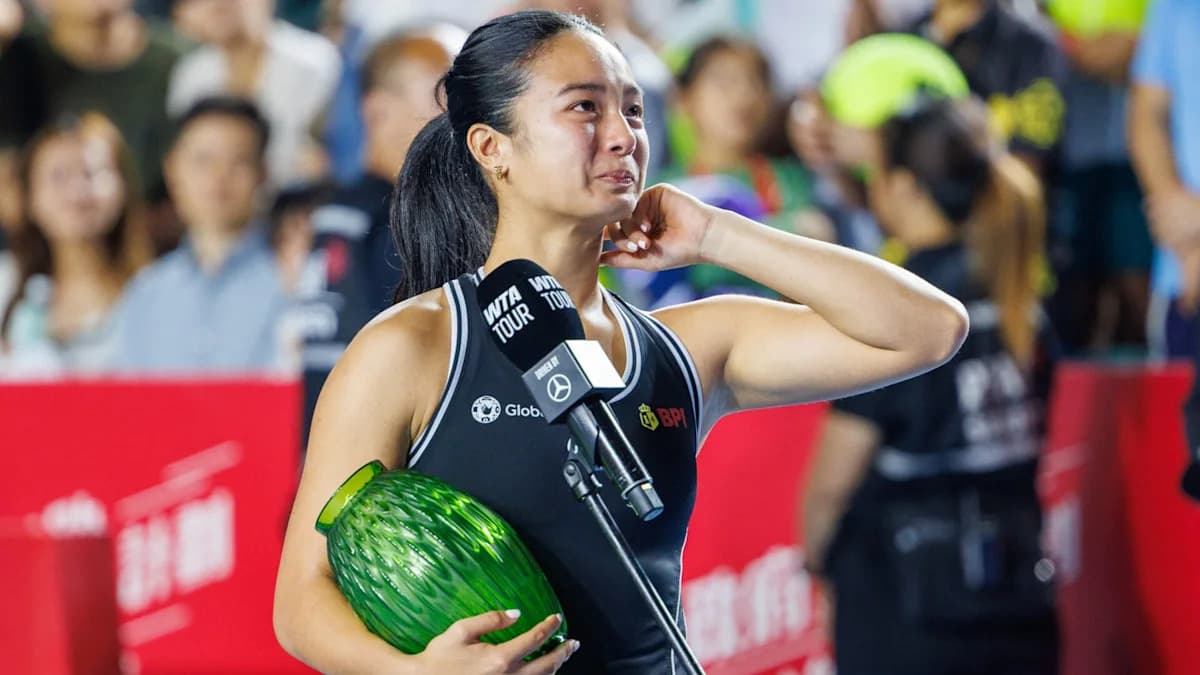
For Eala, this is more than just another tournament. It is the last word of a season that has already delivered a first title, a second-week Slam run, and a place among the world’s top 20. It is also a chance to turn a narrow loss to the Tokyo champion into a springboard rather than a regret.
She has shown she can live with the players lifting trophies.
Now the question is simple: can she finish 2026 by lifting one of her own again?