Alex Eala: A Rising Market in Tennis
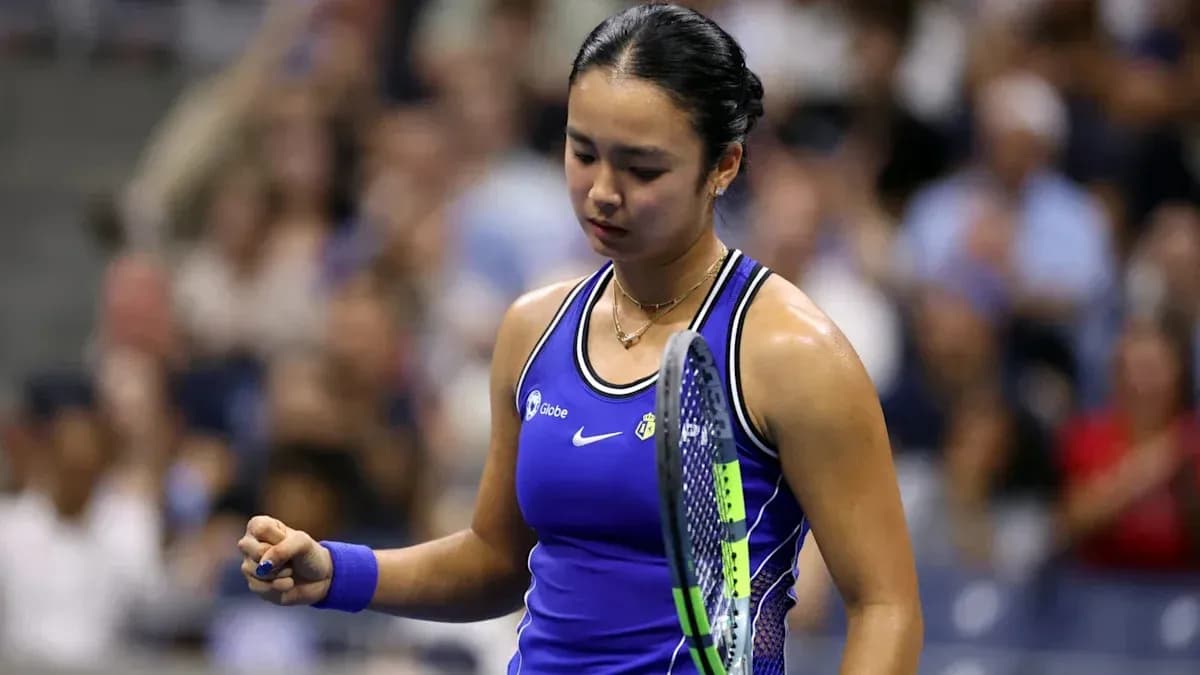
Alex Eala hasn’t hit a ball in the main draw yet, and already the U.S. Open feels a little different.
Her practice courts are full. Not just busy—full. Flags, chants, phones in the air. A 21-year-old from the Philippines turning a weekday hit into must-see theater at Flushing Meadows. Sponsors have noticed. So have tournament directors. And one of the sport’s most powerful dealmakers is now putting a staggering number on where this is all heading.
Max Eisenbud, the man behind the commercial machines of Maria Sharapova, Coco Gauff and Emma Raducanu, believes Eala is on the verge of joining an ultra-elite club.
“I feel very confident that by 2027, she will be the second-highest-paid female athlete in the world, behind Coco [Gauff],” Eisenbud told Forbes.
That is not a prediction thrown around lightly in this business.
A Commercial Rocket Taking Off
Eala’s results are catching up to the noise, but her off-court trajectory is already in a different stratosphere.
Forbes estimates she has banked more than $5 million off the court over the past 12 months, before taxes and management fees, on top of $1.7 million in 2026 prize money. Those are the numbers of a player whose name resonates far beyond a rankings list.
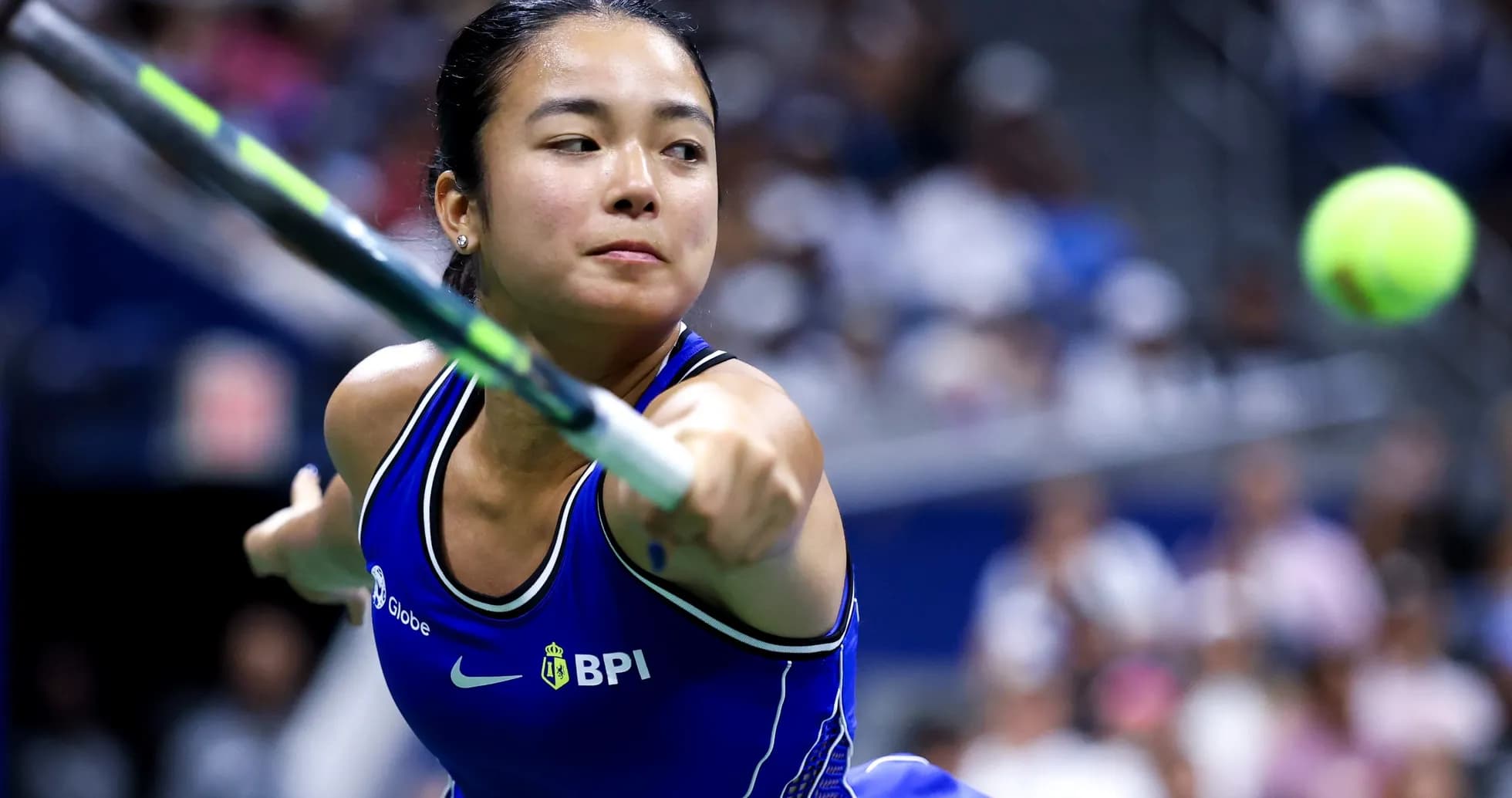
Her endorsement roster reads like a corporate roll call across two continents: Nike, Babolat, Globe Telecom, Bank of the Philippine Islands, Locally and Milo. Several of those relationships were built long before she cracked the top 20.
Globe took a gamble when she was just 8 years old. Babolat came in during her junior days. Nike signed her in 2019, sensing a story building. BPI followed in 2022. Locally joined in 2025, and Milo added her as a brand ambassador in February 2026.
The partnerships have matured with her game. Nike has leaned directly into her identity, weaving Filipino culture into its campaigns, rolling out sampaguita-inspired apparel and merchandise that speaks to a fan base that rarely sees itself reflected on tennis’ biggest stages.
The clearest marker of her rising value, though, sits in a tiny space on her kit.
Forbes reported that Globe and BPI each agreed new four-year deals at the start of 2026 worth more than $1 million annually for logo patches on Eala’s Nike outfit. Eisenbud says seven figures is now the baseline just to get on her uniform.
That kind of escalation doesn’t happen by accident. It happens when demand outruns inventory.
From Practice Courts to Stadium Stages
The numbers on a contract are one thing. The numbers in the stands tell an even louder story.
During U.S. Open Fan Week, Eala’s practice sessions have turned into events. Filipino supporters have flooded the outer courts, transforming routine drills into some of the most heavily watched workouts on site. Players notice when their warm-up hits feel like mini-matches. So do organizers.
The Stars of the Open exhibition at Arthur Ashe Stadium provided another glimpse. Eala stepped onto the sport’s largest arena to face American prospect Iva Jovic and drew an electric crowd, the kind of energy usually reserved for established champions, not first-time title winners.
The U.S. Open reacted quickly.
Her opening-round match on Tuesday night against American qualifier Mary Stoiana has been placed on Louis Armstrong Stadium, the second-biggest stage at the USTA Billie Jean King National Tennis Center. That is a statement. Tournament director Eric Butorac has acknowledged that once organizers saw the scenes around Eala during Fan Week, they understood she had to be on a marquee court.
Ticket prices have responded accordingly.
For a player trying to convert national adoration into global superstardom, this is the sort of platform that can accelerate everything—rankings, revenues, relevance.
Chasing Coco Gauff’s Commercial Summit
The mountain in front of Eala is enormous, and it has a name.
Coco Gauff sits at the top of the women’s sports earnings list. Forbes estimated the American earned $25 million off the court in 2025. Freestyle skier Eileen Gu followed at $23 million, Chinese tennis star Qinwen Zheng at $21 million, with Aryna Sabalenka and Iga Swiatek each at an estimated $15 million.
Eala is nowhere near those figures yet, but the direction of travel is clear. She is already up to No. 18 in the world after a season that delivered her first WTA singles title in Washington, where she became the first Filipino to win a WTA Tour-level singles crown.
That breakthrough ticked a crucial box: proof of concept at the top level.
But the rankings only sketch the outline of her commercial story. The color comes from the people following her.
Filipino fans have turned her schedule into a traveling home tournament, from Washington to New York. They crowd practice courts, fill exhibition stands, and now help drive her U.S. Open debut onto Louis Armstrong. It’s an organic movement, built not in a boardroom but in communities that see themselves in her rise.
Brands spend fortunes trying to manufacture that kind of emotional pull. Eala brings it with her.
A New Audience for Tennis
The sport has taken note. Former world No. 1 Andy Roddick told Forbes that Eala is bringing a massive new audience into tennis, a demographic and geographic wave the game has barely tapped.
Eisenbud has seen this movie before. He watched Sharapova become a global icon, guided Gauff into the front row of women’s sports, and helped Raducanu turn a breakout Slam into a commercial whirlwind. Around Eala, he sees many of the same ingredients coalescing: results trending upward, a distinct identity, and a fan base that refuses to be quiet.
The missing piece is obvious and unforgiving—Grand Slam consistency.
Deep runs in the majors are what turn endorsement potential into long-term dominance. They keep a name on front pages, on prime-time slots, on billboards and social feeds from New York to Manila. They justify the seven-figure patches and open the door to the eight-figure campaigns.
Eala now walks into Louis Armstrong Stadium with all of that swirling around her. A nation watching. An industry recalibrating. An agent convinced she can chase down everyone but Coco Gauff in the earnings race within three years.
If she starts stacking big Slam results on top of this groundswell, those packed courts in New York might be remembered as the moment tennis—and the wider sports business—finally realized what Filipino fans had been shouting for years: Alex Eala isn’t just a rising player.
She’s a rising market.