Alexander Zverev Claims US Open Title, Denies Shelton's Dream
The wait goes on for American men’s tennis. Twenty-three years and counting.
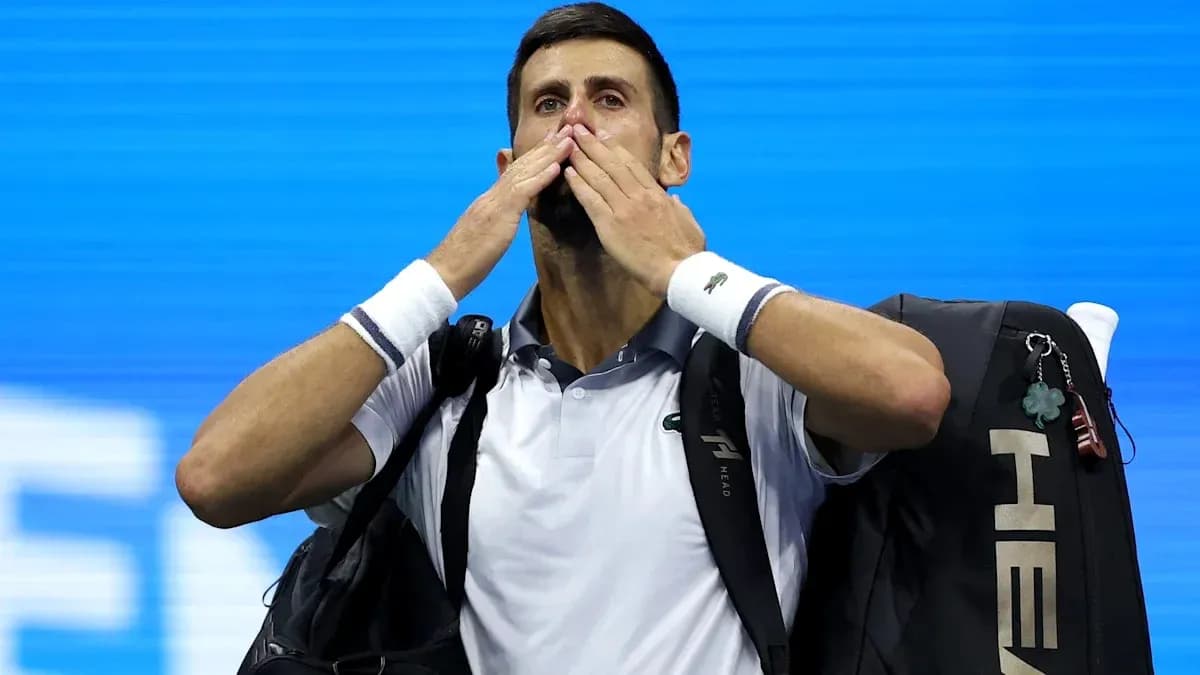
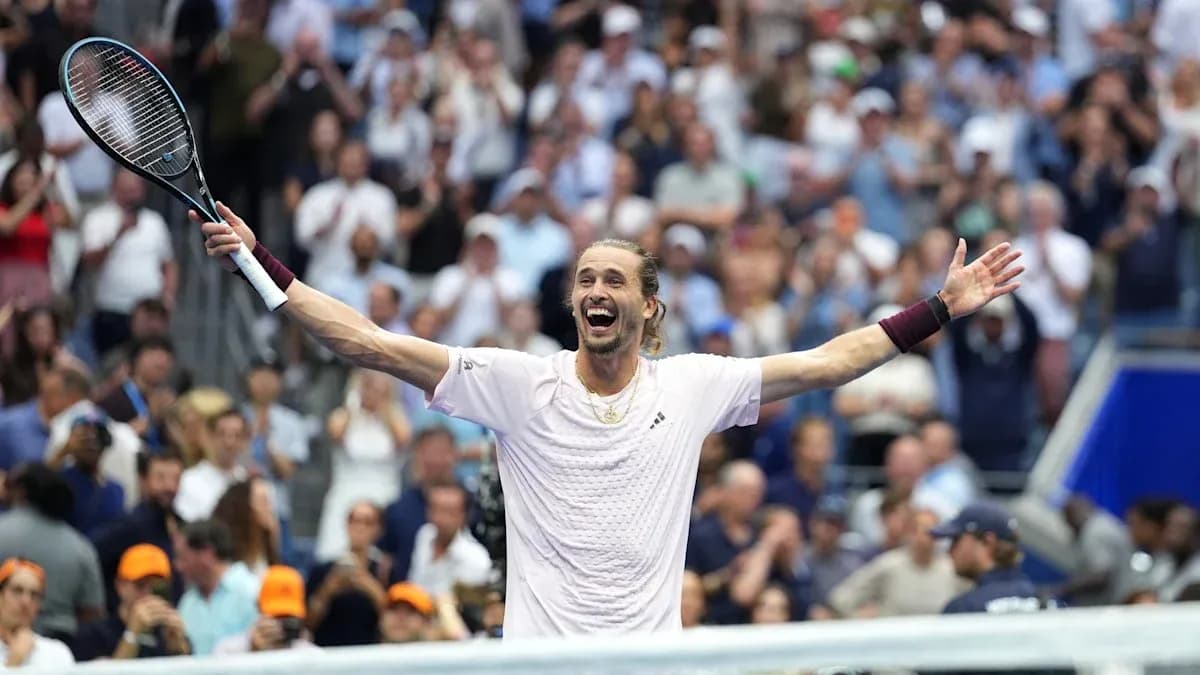
On a hot, restless night in New York, with Arthur Ashe Stadium desperate for a homegrown champion, Alexander Zverev walked into the noise and walked out with his second grand slam title, beating Ben Shelton 6-3, 7-6, 5-7, 6-2 to claim his first US Open crown.
The script had been laid out for Shelton. Big serve, bigger personality, the 23-year-old riding the wave that had already dumped out defending champion Carlos Alcaraz. Andy Roddick, the last American man to win a major back in 2003, watched from the stands as the crowd tried to roar a new name into that company.
Zverev never let them.
The top seed from Germany played like a man who has finally learned how to close the doors on chaos. He muted Shelton’s thunderous serve, absorbed the pace, and dragged the American into rallies he didn’t want. The first set slipped away quickly, 6-3, and with it a little of the home hope’s swagger.
The second set felt like the real test. Shelton’s serve began to bite, the crowd started to lean forward, and the match tightened into a tiebreak. This was the moment New York expected its man to explode. Instead, Zverev locked in. Point by point, he strangled the tension, taking the breaker and a two-set lead that sucked the air out of Ashe.
Shelton refused to fold. He clawed back the third set 7-5, capitalising on a rare wobble from Zverev and finally giving the American fans something to believe in. The stadium erupted. The momentum seemed ready to swing.
Then Shelton opened the fourth set and dropped his serve.
That was the crack Zverev needed. From there, the match turned ruthless. The German tightened every screw, his depth and consistency overwhelming a tiring opponent. The scoreboard raced to 6-2, and with it, the title.
So focused was Zverev that he didn’t immediately realise he’d won. Only when the handshake was done and the noise began to shift did he raise his arms, part triumph, part disbelief. Commentator Todd Woodbridge captured it in real time: the image of a player so deep in the contest he lost track of the finish line.
This was not the smooth path of a dominant champion. Zverev had come within two points of going out in the first round to Lorenzo Sonego. Quentin Halys dragged him into five sets in the second. He looked vulnerable, human, there for the taking. Yet every time the door opened, he slammed it shut.
His season had already changed in Paris. After years of questions about whether he could win the biggest prizes, he finally broke through at Roland-Garros in June. With world No.1 Jannik Sinner out injured in New York and Alcaraz removed from his half by Shelton, Zverev saw another gap and drove straight through it.
Shelton, the No.8 seed, is now 0-6 against Zverev. That statistic hurts, but it also tells its own story: experience still matters at the sharp end of these tournaments. The German lost the 2020 US Open final to Dominic Thiem after leading by two sets; that scar tissue showed up here in a different form, as calm.
“It’s been a loud crowd, but it hasn’t affected him. He’s been locked in, Zverev,” Jelena Dokic said on Nine as the German kept turning back each surge of American support.
Away from the baseline battles, Zverev’s career has carried a heavy backdrop. Domestic abuse allegations from former partners Olya Sharypova and Brenda Patea have followed him for years. A trial in Germany ended in 2024 with a settlement with Patea; the case was dropped without a verdict or admission of guilt. The noise around him has rarely stopped.
“He’s had his battles on and off the court throughout his career and this year is turning into a magic moment for him,” Woodbridge said on Nine, framing the title as part of a turbulent journey rather than a clean rise.
On court, during the trophy presentation, Zverev faced the New York crowd that had spent most of the night urging his opponent on.
“I know today 99.9 per cent of the people wanted Ben to win, so I’m very sorry first of all,” he said, drawing a ripple of laughter. “But second, it was an incredible atmosphere to play in. Even though I know that the crowd was against me, the crowd was always incredibly fair.”
He then turned to his box and spoke about what this run meant to his team and to German tennis.
“We went almost 30 years without winning a grand slam title, and now we’ve won two in a span of three months,” he said. “I think God has seen how hard we worked, how much we suffered, how much pain we went through, and I think 2026 is the outcome of all the years that happened before.”
The night’s most powerful moment came when he thanked his mother Irina, herself a former professional player, and revisited his childhood diagnosis with diabetes.
“When your four-year-old son is diagnosed with diabetes and doctors in the office tell you that life and sports will be very limited for that child, it takes a very strong mother to say ‘my son will be whatever he wants to be’,” Zverev said.
“If he wants to be a tennis player, he’ll be a tennis player. If he wants to do something else, he’ll do something else, but this illness will not define us. I’m happy that we worked through it, and we’re doing things that we’re doing right now. My mother is the most important and strongest person I know because it takes an unbelievably strong woman to do what she did.”
Shelton, beaten but unbowed, offered a clear-eyed assessment in his own speech.
“You’re one of the very best players in the world, maybe the best player in the world this year,” he told Zverev, a line that landed with the weight of the fortnight behind it.
For Shelton, this was a step – a harsh one, but a necessary one – in the education of a future contender. For Zverev, it was confirmation that Roland-Garros was no one-off, that the player who once let a US Open final slip away now knows how to finish the job.
The American drought survives another year. The German who refused to play the supporting role leaves New York with the trophy, the noise, and a season that suddenly looks like the start of something far bigger.