Alexander Zverev Wins US Open Final Against Ben Shelton
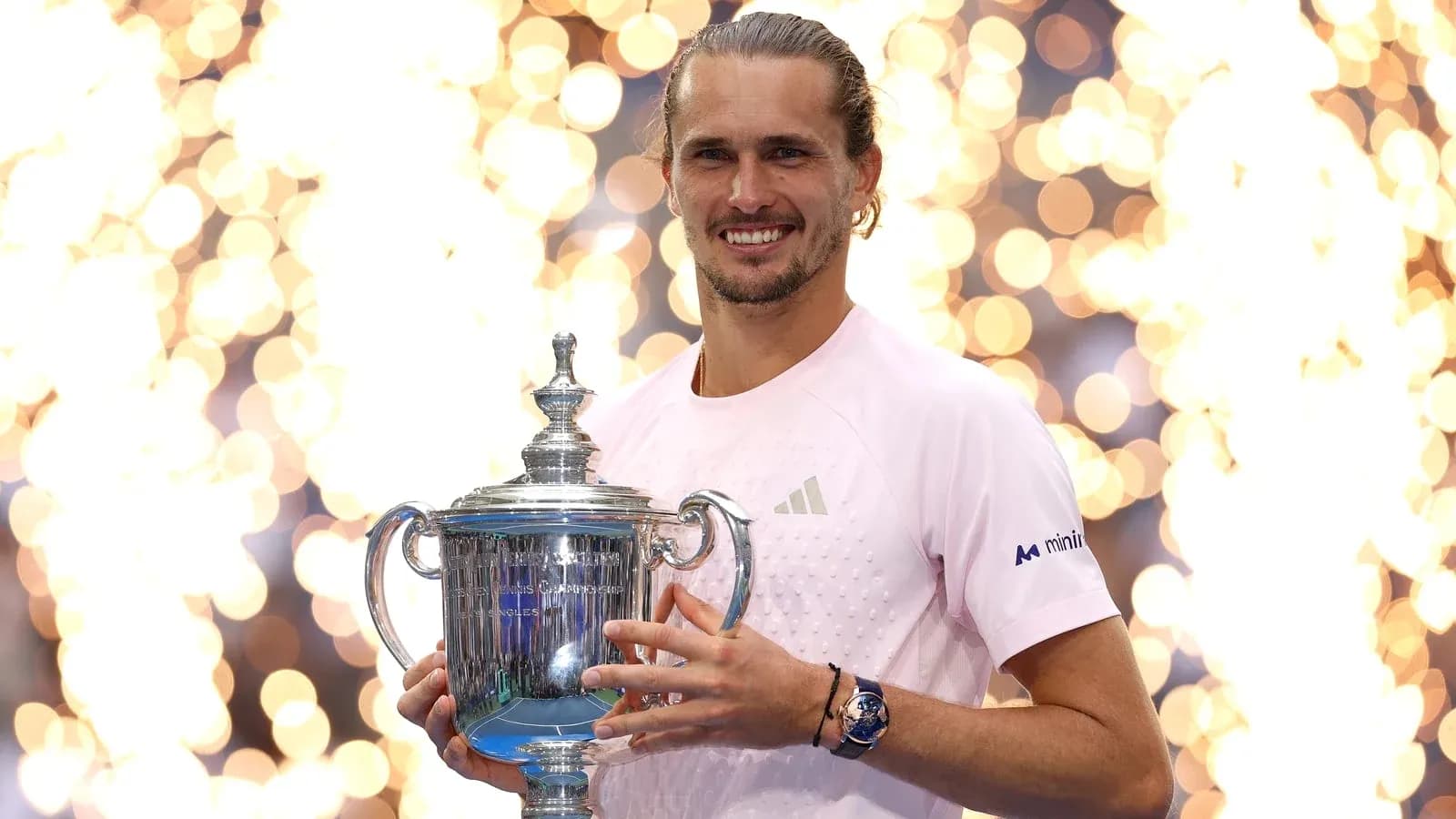
Alexander Zverev walked into Arthur Ashe Stadium as the man with the heavier résumé. He walked out with the trophy, the American dream in pieces, and a second grand slam title in his hands – even if, for a surreal few seconds, he didn’t realise it.
On match point, Ben Shelton’s return sailed long. The stadium gasped. Zverev didn’t. He simply gathered the balls and strolled back to the baseline, ready to serve again, convinced the score was 5-1 rather than 6-1 in the fourth.
Only when he glanced up at the big screen did the truth land. It was over. 6-3 7-6 (2) 5-7 6-2. His first US Open crown, his second major of the year after Roland Garros, and a statement that he now belongs firmly in the sport’s most elite company.
“I thought it was 5-1. I knew I’d broke him twice but I thought he’d only won one,” he said on court, still half-laughing at his own tunnel vision. “Teachers used to tell you to forget about the score, so I did.”
A partisan cauldron and a brutal start
Shelton had walked into a wall of noise. Arthur Ashe, 23,000 strong and loudly one-eyed, roared for the 23-year-old American who has turned this fortnight into a travelling show. This was his first major final, on home soil, in the stadium named for a pioneer. The script felt obvious.
The cameras picked out Pierce Brosnan in the stands, the match clock reading 0:07 as the Irish James Bond actor appeared on screen. A cute cutaway. A knowing joke. New York loves theatre.
But the opening act belonged to Zverev, and it was ruthless.
Shelton double-faulted to hand over a break in the very first game. The crowd groaned. He double-faulted again on set point, gifting Zverev the opener. Shaken and stirred, the American looked tight, his shoulders heavy, his serve unreliable. Zverev, by contrast, hit his spots and hit them hard, “the living daylights” out of his delivery, as the numbers began to tilt his way.
Shelton, the eighth seed, did not see a single break point in the first two sets. Zverev, in his sixth major final and now unburdened by the old label of “best player never to win a major”, played like a man who knew exactly how to navigate this stage.
The second set told the same story. Shelton swung freely in rallies, but every time he sniffed a chance, Zverev’s serve slammed the door. The German marched into the tie-break and took control, dictating from the baseline, leaning on his weight of shot. The breaker was one-way traffic. Two sets to love. A long way back.
Shelton’s fightback and a restless crowd
This crowd, though, does not give up easily. Nor, as it turned out, does Shelton.
He had arrived at Flushing Meadows with a poor record against Zverev: five meetings, five defeats. The same had been true with Stefanos Tsitsipas, and with Carlos Alcaraz, until this tournament. Those barriers fell. Why not this one?
Just as the match seemed to be slipping into a straight-sets procession, Zverev’s serve finally faltered. The American dug in, chased lost causes, and dragged the contest into the trenches. He carved out three break points, and with them three set points, as Ashe erupted back into life.
Zverev saved one. He could not save the second. Shelton converted, the third set in his pocket, the noise inside Ashe suddenly deafening. For the first time all afternoon, the final felt like a genuine fight.
Zverev reset instantly. The wobble passed. The fourth set began with the German stepping forward again, taking the ball early, breaking serve and crushing any notion of a full-blown comeback. The pressure that Shelton had built late in the third evaporated in a few brutal games.
A champion’s body and a champion’s will
Zverev’s path to this title has been shaped by the absences and fitness issues of Carlos Alcaraz and Jannik Sinner at various points this season, but he has capitalised with clinical precision. Across more than 23 hours on court this fortnight, he has ground opponents down with weight of shot and an almost obsessive routine.
One detail captured that perfectly. The statistics showed he spent around three hours of those 23 simply bouncing the ball between serves. It finally earned him a time violation in the final, a minor slap on the wrist for a man lost in his own meticulous rhythm.
There is another routine that defines him, one far more significant. Diagnosed with Type 1 Diabetes as a child, Zverev has lived his entire career managing a condition that demands constant attention. In the fourth set, he reached for an insulin pen and injected his leg on court, then walked back to the baseline and carried on serving for a grand slam title.
Afterwards, he spoke about the roots of that resilience.
“When your four-year-old son gets diagnosed with diabetes and doctors tell you that life and sports will be very limited, it takes a very strong mother to say ‘my son will be whatever he wants to be’,” he said, his voice catching slightly.
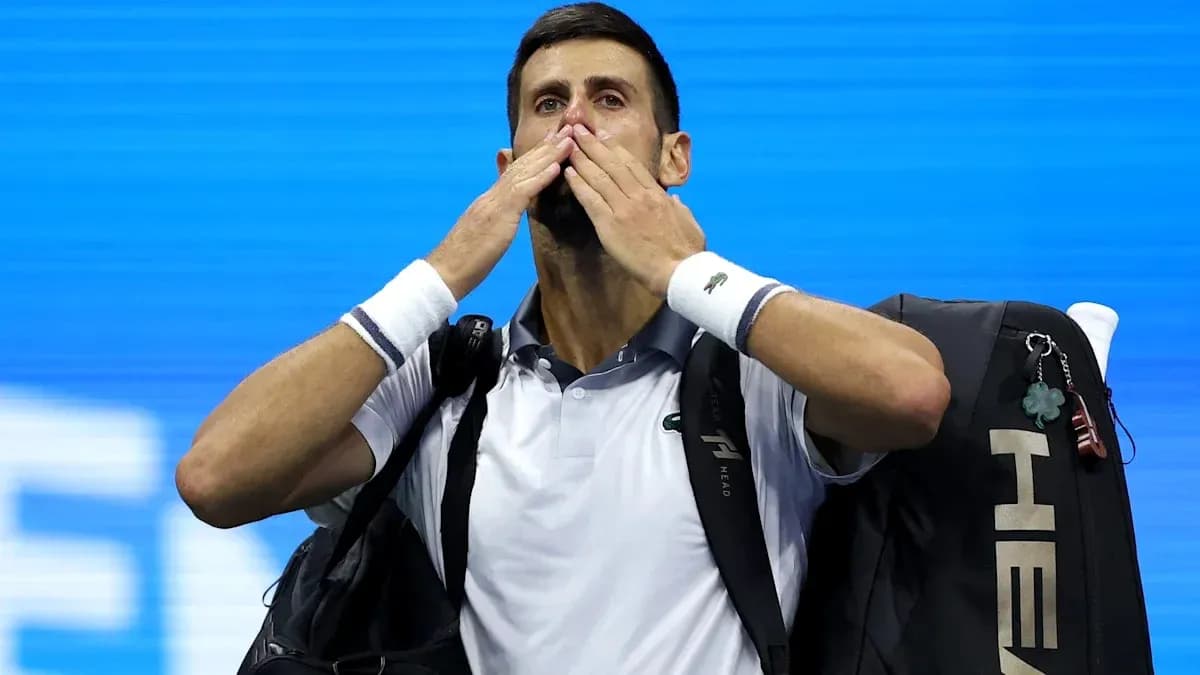
From there, the finish line came quickly. Three hours and 33 minutes after they began, Zverev finally allowed himself to celebrate, the brief confusion over the score giving way to a wide grin and raised arms as the New York crowd, partisan or not, stood to applaud.
Shelton’s promise, New York’s embrace
For Shelton, this was a harsh education delivered under the brightest lights. The double faults, the missed chances, the long stretches without a look at Zverev’s serve – they will sting. But his run has lit up this tournament and reconnected a restless home crowd with the idea of an American man challenging deep into the second week.
“This is my happy place and I wish this tournament never ended,” he told the crowd, still emotional but already looking ahead. “To the city of New York, to the fans who showed up today, to the fans at home, to the people who stayed until 4 in the morning, you guys brought me to the position I’m in. I’m just getting started and I’ll be back again.”
On this night, though, the stage belonged to Zverev: the former nearly man who now has two majors in the same season, a US Open trophy in his hands, and a sport suddenly asking how far – and how fast – he can climb from here.