Alexander Zverev Wins US Open 2026: A Historic Victory
Alexander Zverev stood alone on Arthur Ashe Stadium, staring at the big screen in mild confusion. The ball had sailed long off Ben Shelton’s racquet. The crowd had gasped. The umpire had called game, set, match.
Zverev, somehow, kept hitting balls back as if nothing had happened.
Only when he finally looked up and saw the score did it sink in. He was US Open champion. Again, he bounced the ball. This time, he let the racquet fall.
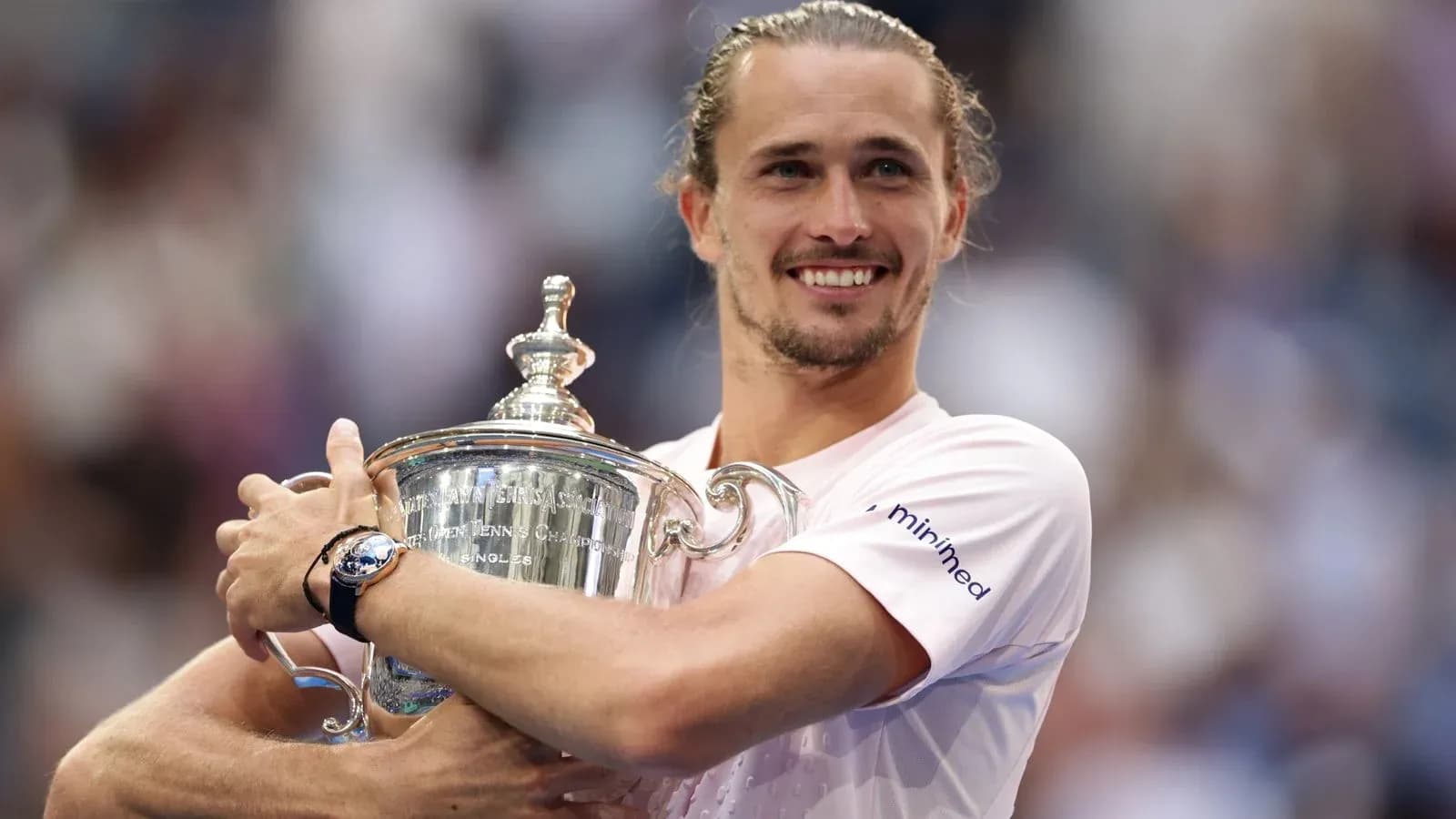
The German, top seed in New York and already the king of Paris this year, completed the most significant season of his career with a four-set victory over Shelton, 6-3 7-6 (7-2) 5-7 6-2, in three hours and 33 minutes at Flushing Meadows. A maiden US Open title. A second Grand Slam of 2026. A career, and a narrative, rewritten.
A family’s suffering, a year of release
“I feel like there was so much suffering for the Zverev family at Grand Slam level, that maybe 2026 is the year we should just enjoy,” he told Sky Sports Tennis, still processing what he had done. “Everything is going perfectly. I am unbelievably happy.”
Three months ago in Paris, Zverev finally stripped away the label that had stalked him for years – the best player never to win a major. He admitted he would have signed for just one Slam and nothing more.
Now he has two in a single season.
“Now standing here with two Grand Slam trophies in the space of the months is incredible,” he said.
His most emotional words, though, were reserved for his mother Irina, the former pro who refused to let a diagnosis of type 1 diabetes define her four-year-old son.
“When your four-year-old son is diagnosed with diabetes and doctors in the office tell you that life and sports will be very limited for that child, it takes a very strong mother to say ‘my son will be whatever he wants to be’,” Zverev said on court.
“If he wants to be a tennis player, he’ll be a tennis player. If he wants to do something else, he’ll do something else but this illness will not define us.
“My mother is the most important and strongest person I know because it takes an unbelievably strong woman to do what she did.”
On Sunday night, the boy those doctors doubted walked away with the biggest hard-court title in the sport.
Shelton’s stage, Zverev’s start
This was supposed to be Ben Shelton’s moment. The 21-year-old American, born months before Andy Roddick lifted the US Open trophy in 2003, walked into Arthur Ashe Stadium as the great home hope, bidding to become the first American man to win a Slam in 21 years and only the second black man to win a major singles title after Arthur Ashe himself in 1975.
He emerged to a wall of noise from 23,000 fans in the stadium that bears Ashe’s name. A star-studded crowd watched on: Brad Pitt, Rami Malek, Pierce Brosnan catching a mischievous camera cut with the match clock at 0:07.
The energy belonged to Shelton. The early control belonged to Zverev.
Shelton won the toss and chose to serve. It looked like a statement. It turned into a warning. From 30-30 in the opening game he missed a routine shot, then double-faulted. Break Zverev. Nerves exposed in an instant.
“The difference in their experience was absolutely massive,” said Marion Bartoli on Sky Sports Tennis. Zverev, she pointed out, made only one unforced error in that first set. Shelton never recovered the early damage and never saw a break point in the opening two sets.
Zverev, the No 1 seed at a Slam for the first time, leaned on his serve like a heavyweight leaning on the ropes. He had already spent 19 hours and 38 minutes on court coming into the final – the fourth-longest run to a major final since 1991 – but he came out like a man with fresh legs and a clear plan.
He broke in the first game of the match and again on set point to take the opener 6-3, silencing a crowd that had arrived ready to roar Shelton into history.
Tie-break authority, a twist in the third
Shelton knew the numbers. He had lost all five previous meetings with Zverev. But he also knew what he had done in New York: first wins over Stefanos Tsitsipas and, more significantly, Carlos Alcaraz. Those results gave him licence to believe.
Zverev, though, played the second set like a man who had no interest in another five-set epic. His serve remained untouchable. Shelton chased, swung freely, and tried to ignite the crowd, but when the tie-break arrived, the German tightened the screw.
He dominated it 7-2, ripping through points with that familiar, heavy rhythm from the baseline. Two sets up, one set from the title, Zverev looked utterly in command.
Shelton refused to fold. The American dug in, waited for his chance, and finally saw cracks in the third. Zverev’s serve, so reliable all night, suddenly wobbled. Shelton brought up three break – and set – points. When he converted the second, Arthur Ashe erupted.
He had a set. He had life. For a moment, he had Zverev on the run.
Tim Henman, watching for Sky Sports Tennis, felt the shift but never sensed panic from the German.
“Shelton did a great job getting that third set, but losing his serve first game of the fourth settled Zverev down and gave him more energy,” Henman said. “He coasted to the line from there.”
Fourth-set clampdown and a strange finish
The pressure from the crowd was deafening at the start of the fourth. Shelton had momentum, had the night session feel in his favour, had the sense that another comeback might just be brewing.
Zverev snuffed that out in minutes.
He broke early in the fourth set, striking cleanly, returning deep, and dragging Shelton into longer rallies that exposed the gap in experience. The American’s shoulders dropped just a fraction. Zverev’s belief swelled.
The German’s notorious ball-bouncing – statistics showed he had spent around three of his 23-plus hours on court this fortnight simply bouncing the ball between serves – finally earned him a time violation. The Ashe crowd enjoyed that. Zverev shrugged it off.
At 5-2, serving for the title, he thought he still had work to do. He believed it was 5-1. He was preparing for a “relaxed service game” and expecting to feel the nerves on the next one.
Instead, Shelton’s return flew long on championship point. Zverev kept hitting, unaware. The crowd reacted. The umpire called it. Only when he looked at the scoreboard did he allow himself to believe.
“It’s actually funny, teachers in tennis say play each point and forget about the score,” Zverev said. “Well I forgot about the score and it helped me!”
After 23-plus hours on court across the fortnight, after years of questions about his mental strength at the majors, after all the physical and emotional baggage, he finally let himself celebrate.
Respect at the net, and a warning from Shelton
Zverev’s first instinct was not to gloat but to acknowledge the man across the net.
“Ben, you’re an incredible player and an incredible person,” he told Shelton. “This was your first Grand Slam final but I already told you you’re going to be back here many more times and if I would have to bet all my money on it, I would bet that you would lift this trophy one day.”
Shelton, who had carried the weight of a nation’s hopes for two weeks, handled defeat with the same boldness he had shown in victory.
“Sascha, congrats on these two weeks, your second Grand Slam title and two in one year,” he said. “What you’re doing is incredible, the way you are serving and moving in play. You work harder than anyone I know, and do more hours on court than anyone else.
“You and your team do things the right way and I’m sincerely happy for you guys to hold this title.
“To New York, you guys drove me here today. I’m just getting started and I’ll be back here again.”
For Zverev, this night underlined a transformation Henman has watched closely.
“I was looking back at his Grand Slam results, and his game was going backwards,” Henman said. “But he has transformed himself to be more aggressive.”
Bartoli saw the same shift, framed through the pressure Shelton felt.
“Look, it’s not easy to come out in front of your home crowd and play your first ever Grand Slam final in those circumstances,” she said. “Zverev made only one unforced error in the first set, and it just made Shelton’s life so difficult. There’s no shame losing to Zverev when Zverev is playing like this.”
Two Slams in one year, a first US Open crown, and the scars of past failures starting to fade. Zverev has his hands on the trophies now.
The question is no longer whether he will win a major. It’s how many this new, hardened version of him can collect before the era closes.