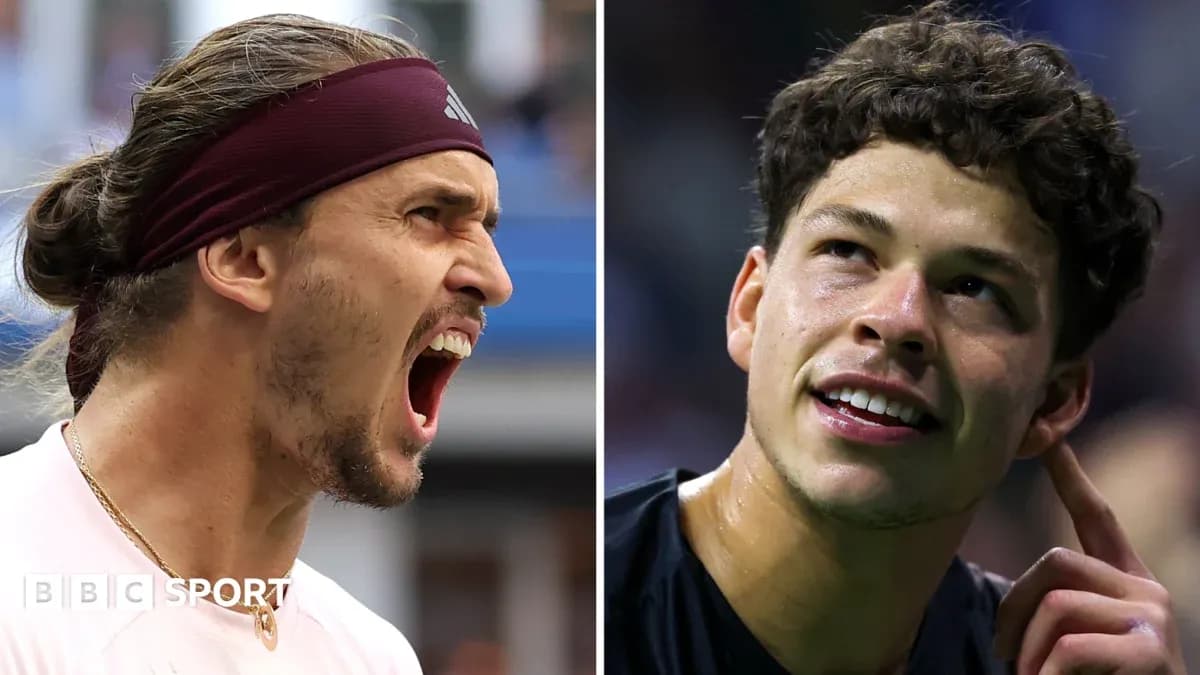
Zverev vs Shelton: A Grand Slam Final with Historic Stakes
Alexander Zverev and Ben Shelton will walk into Arthur Ashe Stadium on Sunday knowing this: whatever happens under the New York lights, 2026 has already changed their careers.
For Zverev, it is the year he finally stepped out from the long, looming shadows of Jannik Sinner and Carlos Alcaraz. For Shelton, it is the year he proved the raw electricity of his game can carry him all the way to a Grand Slam final – and through the sport’s biggest names to get there.
Zverev’s long road to belonging
For a long time, the story around Alexander Zverev was simple and brutal: talented, yes. A champion at the very top level? Maybe not.
Three major finals had come and gone. The most painful of them all at this very tournament in 2020, when he led Dominic Thiem by two sets and still watched the US Open title slip away. The scar from that night has followed him around these courts ever since.
The past two seasons only deepened the doubt. While Zverev toiled, Sinner and Alcaraz carved up the sport, sweeping all four Grand Slams between them in 2024 and 2025 and earning the joint nickname “Sincaraz”. The question around every major became almost rhetorical: which one of them would win this time?
Then 2026 broke open.
Injuries to both men cracked the door. Alcaraz missed Roland Garros and Wimbledon. Sinner was forced out of the US Open. Zverev didn’t just step through that gap; he stormed through it. He beat Flavio Cobolli in the French Open final to claim the first major many suspected would never come. He then reached the Wimbledon final, losing to Sinner but proving he belonged at that level.
Now he stands in a third straight Grand Slam final, chasing not just a second major of the year, but of his entire career.
Asked if he believed he could finish 2026 with more majors than Sinner and Alcaraz, Zverev didn’t hesitate. “I believed in it. I believed that it's possible. I think not many of you guys did,” he said. The narrative for two years had been whether Carlos and Jannik would simply share all four Slam finals between them again. Zverev has ripped that script apart.
This fortnight in New York hasn’t always been pretty. He ground through the early rounds, often deep into the small hours, looking more weary than inspired. Crucially, though, he has not yet faced a top-20 opponent. He has done enough, tightened his game when required, and slowly sharpened across the two weeks.
Shelton, at last, is the serious test.
Shelton’s surge and the weight of history
For Ben Shelton, everything about this run has felt new. New territory, new expectations, new pressure.
“For me, this whole tournament has been uncharted territory,” he admitted. “I'm in positions I've never been in before. I've beaten guys I've never beaten before.”
He has also beaten doubts. Doubts about his ability to handle five-set warfare. Doubts about whether his explosive, attacking style could be refined enough to last seven matches at a Slam. Doubts about whether his backhand and defence could stand up to the best in the world.
They look outdated now.
Shelton has pieced together a season that screams progression: four titles on four different surfaces – Dallas on indoor hard, Munich on clay, Stuttgart on grass, and the Canadian Open on outdoor hard. Each win added another layer to his game, another answer to the question of whether he could adapt, adjust, and evolve.
The defining result came in New York. Until this tournament, he had never beaten a top-three opponent. Then he took out seven-time major champion Alcaraz in a wild, late-night quarter-final that finished at 3:34am, the kind of match that shifts how a player is viewed in locker rooms and living rooms alike. Alcaraz was playing his first event in almost five months, but the moment still mattered. Shelton stayed with him, traded blows, and didn’t blink.
“Ben has been trending in the right direction throughout this year. I think four titles on different surfaces is evidence of it,” said his father and coach, Bryan Shelton. “He's willing to suffer a little bit in the rallies, go deeper and really use his athleticism.”
That willingness to suffer has turned a highlight-reel server into a far more complete threat. The serve still booms – regularly over 140mph during this fortnight – but now it’s backed by improved defensive instincts and a backhand that no longer looks like an obvious target.
On Sunday, he will be backed by a 24,000-strong crowd desperate to see an American man win his home Slam again. The wait has stretched to 23 years since Andy Roddick lifted the trophy in 2003. Shelton, at 23, has a chance to end that drought and to carve out something even bigger.
If he beats Zverev, he would become the first black American man to win a Grand Slam singles title since Arthur Ashe in 1975. When a reporter pointed out the scale of the history on the line after his semi-final victory over Frances Tiafoe, Shelton responded with a grin and a simple, “Is there?” The smile didn’t hide the significance.
Former world number four James Blake captured what a Shelton triumph would mean. “Having another black American in the final leaves you wondering how many kids and adults are watching that maybe wouldn't have been otherwise,” he told BBC Sport. “They are going to be inspired to hear Ben's story and see someone that looks like them out there playing and competing in a sport that has historically been dominated by the sense of a country club white sport.”
The symbolism is heavy. So is the task.
Shelton has never beaten Zverev. Not once in five attempts. To lift the trophy, he has to solve a puzzle that has stumped him every time so far, against a man who finally looks at home on the biggest stages.
A final loaded with meaning
Zverev enters as a slight favourite, the French Open champion chasing a second major of the season and the chance to close the gap on the absent “Sincaraz” duo. He knows this window may not stay open for long once Sinner and Alcaraz return fully fit.
Shelton steps into his first Grand Slam final with the roar of Arthur Ashe behind him and the possibility of reshaping American tennis history in front of him.
One man fights to confirm his place among the sport’s elite after years of doubt. The other swings for a breakthrough that could echo far beyond a single night in New York.
Only one of them will leave with the trophy. But both know this season has already changed what they are – and what they might become.