Alexander Zverev Claims Second Grand Slam Title at US Open
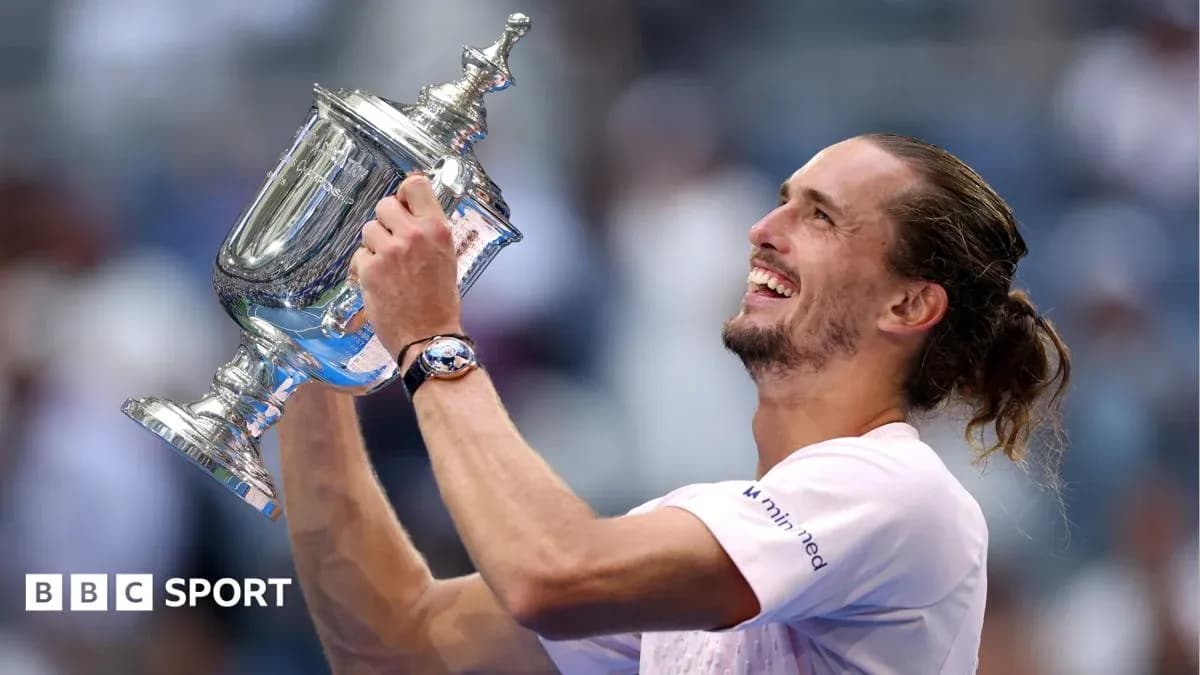
Alexander Zverev walked into Arthur Ashe Stadium carrying the weight of expectation and a wall of noise. He walked out with his second Grand Slam title – and 24,000 American fans silenced by a German who has finally learned how to close the biggest stages.
The top seed, already a first-time major champion after his breakthrough at Roland Garros, added the US Open to his collection with a 6-3 7-6 (7-2) 5-7 6-2 win over Ben Shelton, the homegrown hope who had been tipped to drag American men’s tennis out of its long drought.
Shelton, 21 and fearless all fortnight, was chasing history. No American man has lifted a Grand Slam singles trophy since Andy Roddick in 2003. The crowd came ready to celebrate the end of that 23-year wait. Zverev never let them.
Experience over electricity
The match opened with a jolt, and not the one the home fans wanted. Shelton, visibly tight, double-faulted on break point in the very first game. Against Zverev, that kind of gift is usually fatal. It was again.
The German immediately settled behind his serve, imposing the rhythm he wanted. He hammered down first serves, dragged Shelton into backhand exchanges, and went to work on the weaker wing. The American’s forehand fireworks never really arrived in the opening set; his backhand was picked apart. Another double fault from Shelton on set point sealed it, and the early roar on Ashe dropped to a nervous murmur.
Zverev’s record against Shelton told its own story. Five meetings, five straight-set wins before Sunday. The matchup suits him, and he played like a man who knew it.
The second set followed a similar pattern, only tighter. Shelton began to land more first serves, to swing a little freer, to flash the power that had carried him to a first major final. But when Zverev finally saw a break chance in the fourth game, Shelton slammed the door and clung on.
That only shifted the pressure to the tie-break. It was there that Zverev’s scars from the past – not least the 2020 US Open final he lost from two sets up – might have crept in. They didn’t. His serve held firm, his forehand stayed heavy, his decision-making stayed clean. He raced through the breaker 7-2, looking every inch a man who now trusts himself on these stages rather than fears them.
Two sets up again in New York, this time he did not blink.
Shelton’s surge, Zverev’s answer
The match finally caught fire in the third. Shelton, with little left to lose and the crowd roaring him on, began to swing with the abandon that has made him one of the most dangerous young players on tour.
He started to read Zverev’s serve, stepped in on second serves, and at last applied real pressure. Break points came. The noise rose. On his third opportunity, Shelton broke through, and Arthur Ashe erupted. For the first time all afternoon, Zverev looked slightly rattled.
Shelton rode that wave. He held his nerve through a tense closing stretch of the set, kept attacking, and forced Zverev into the kind of defensive patterns that had been so rare earlier. The American snatched the third set and, suddenly, the match felt alive again. The script – a veteran top seed strolling to victory over a first-time finalist – had been ripped up.
But only briefly.
Zverev reset with the cold clarity of a man who has waited too long for this kind of dominance to slip away easily. He broke early in the fourth, reasserting control just as the American surge threatened to become something more serious. The crowd tried to lift Shelton again; Zverev shut them out with first serves that thudded into the corners and with rallies that relentlessly probed that backhand.
Once he had the lead, he did not loosen his grip. The German accelerated towards the finish, while Shelton’s level dipped under the strain of chasing from behind for most of the afternoon.
A strange ending, a clear message
Even the final act carried a hint of the surreal. On championship point, Shelton’s return flew long. Zverev, locked so deeply into the battle, didn’t immediately realise what he’d done. Only when his team leapt up and pointed to the scoreboard did the smile break across his face – broad, disbelieving, and tinged with relief.
At the start of the season, Zverev’s story was very different. Three major finals lost. A career that had promised everything but looked in danger of falling short of the sport’s biggest prizes. The questions were loud and fair: would he ever win one, let alone two?
The door opened in 2026, and he barged through it. Carlos Alcaraz missed Roland Garros and Wimbledon. Jannik Sinner was forced out of the US Open. Between them, those two had monopolised the majors in 2024 and 2025. With both sidelined, the landscape shifted. Zverev, fitter and mentally sharper than in years past, seized the gap.
It wasn’t smooth from the start in New York. He staggered through the early rounds in late-night epics, far from his best, dragging himself into the second week rather than striding. He didn’t face a top-20 opponent until Shelton in the final. But as the fortnight wore on, his game hardened. The serve tightened. The forehand bit. The doubts, for once, did not swarm at the first sign of trouble.
Against Shelton, all of that work – and all of those old wounds – fed into a performance that was more ruthless than spectacular, more clinical than chaotic. Exactly what his career had been missing.
Afterward, addressing the tight family unit that has followed him through every high and low – led by his father Alexander Sr and brother Mischa – Zverev framed this season as the payoff for three decades of toil.
“We went 30 years without winning a Grand Slam title and now won two in the span of three months,” he said on court. “I think God has seen how hard we have work, how hard we have suffered and how much pain we went through. I think 2026 is the outcome of all the years that happened before.”
For Shelton, this was a harsh education in how thin the margins are at the very top. For Zverev, it was confirmation. He is no longer the nearly man of men’s tennis. He is a multiple Grand Slam champion – and when Alcaraz and Sinner return to full fitness, the fight for the sport’s future will look very different with this version of Alexander Zverev in the middle of it.