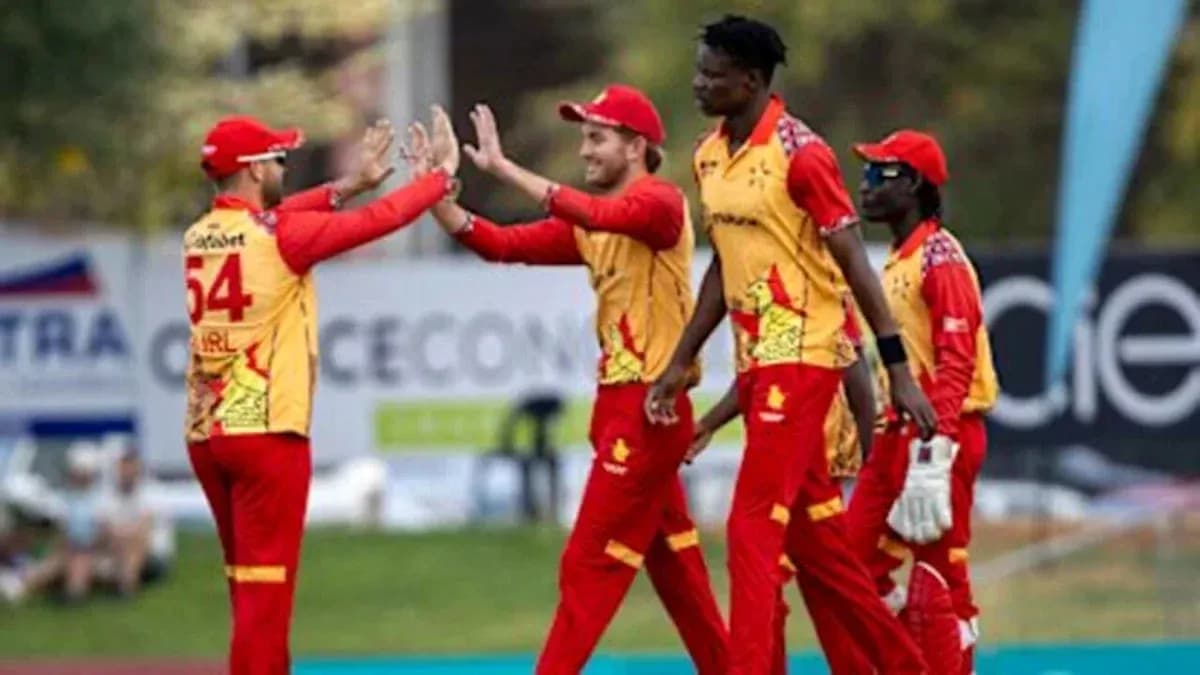
Zimbabwe Edge Namibia by Five Runs in Thrilling Windhoek Match
Zimbabwe walked a tightrope in Windhoek and somehow made it across, edging Namibia by five runs in a match that swung so violently it almost defied belief.
From 101 for 6 to 195 for 6. From Namibia marooned at 76 for 6 to within a hit of victory. It was chaotic, breathless, and utterly gripping.
Burl and Evans flip the script
Put in to bat, Zimbabwe came out with intent. Ben Curran and Brian Bennett were busy and bold, threading gaps and punishing anything loose as they raced to 64 for 0.
Then, just as Zimbabwe looked settled, the slide began.
Bennett, on 32 from 21, miscued a pull off JJ Smit and picked out deep midwicket with the final ball of the Powerplay. In the next over, Dion Myers fell to Bernard Scholtz. The tempo stalled, the innings tightened.
Gerhard Erasmus then tore into the heart of Zimbabwe’s plans. He removed Sikandar Raza first ball for a golden duck, a huge moment that silenced the visitors’ dressing room and lit up the Namibian fielders. Curran, who had anchored the start, departed in the ninth over, and Erasmus struck again soon after to send back Wesley Madhevere.
From 64 without loss to 79 for 5 in the 10th over. Zimbabwe were not just wobbling; they were staring at a sub-par total and a wasted platform.
Ryan Burl and Brad Evans refused to accept that script.
They rebuilt, then exploded. Their 94-run stand came off just 48 balls, a partnership that dragged Zimbabwe from trouble into a position of strength. Burl targeted the gaps and then the stands, while Evans backed him with clean, fearless hitting.
The real damage came at the death. Namibia turned back to spin for the final over, handing the ball to Erasmus. It proved a costly gamble. Burl tore into him, launching a six and then three fours in succession. Twenty runs flew off the over, and with it, the tone of the match changed.
Zimbabwe, once in danger of folding cheaply, suddenly strode off with 195 for 6 – a total that looked imposing on a surface where stroke-making had not always looked simple.
Green and Volschenk light up the chase
Namibia’s reply never found early rhythm. Wickets fell, momentum stalled, and the chase seemed to be slipping away almost before it had begun.
At 76 for 6, with the top and middle order dismantled, the contest looked all but done. Zimbabwe were cruising, their bowlers dictating, their fielders chirping. Namibia, who had opened the tri-series by toppling South Africa, appeared miles away from a repeat statement.
Then came the surge.
Zane Green and Alexander Volschenk refused to let the game die. They counterattacked, not with reckless slogging but with calculated aggression, picking their bowlers and their moments. Singles turned into twos, mishits into boundaries, pressure into opportunity.
The partnership ballooned at a staggering rate: 109 runs for the seventh wicket, off just 49 balls. The crowd came alive, Zimbabwe’s certainty evaporated, and suddenly every misfield, every half-chance, felt heavy.
Zimbabwe, once in command, were now scrambling for control.
Evans holds his nerve
As the chase hurtled towards its climax, every delivery carried weight. Namibia had dragged themselves from nowhere to the brink of a heist that would have rivalled their win over South Africa.
Zimbabwe needed someone to shut the door. Brad Evans stepped up.
Handed the final over with the match hanging in the balance, Evans kept his composure where so many had lost theirs. He hit his lengths, denied the big shots, and forced Namibia into risk without reward.
The late charge that had electrified Windhoek finally met resistance. The equation narrowed, the tension spiked, but Evans did not blink.
Namibia’s dream comeback fell just five runs short. Zimbabwe, who had been staring at collapse at 79 for 5 and then watching a near-miracle unfold at 76 for 6 in the chase, walked away with a win that felt equal parts relief and statement.
On another day, Green and Volschenk would have finished the job and owned the night. This time, it belonged to Burl’s brutality, Evans’ calm, and a Zimbabwe side that refused to crack when the game went wild.