Zheng Qinwen Stuns Iga Swiatek in US Open Comeback
Zheng Qinwen is starting to make 5-0 deficits look like a warm-up drill.
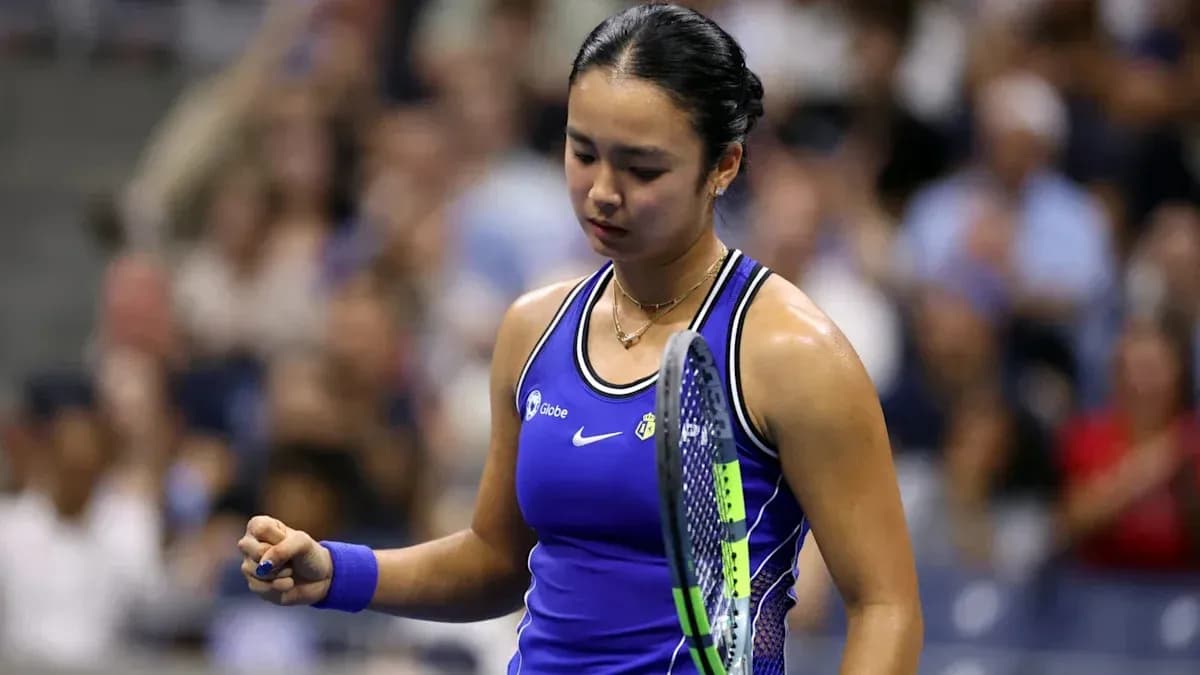
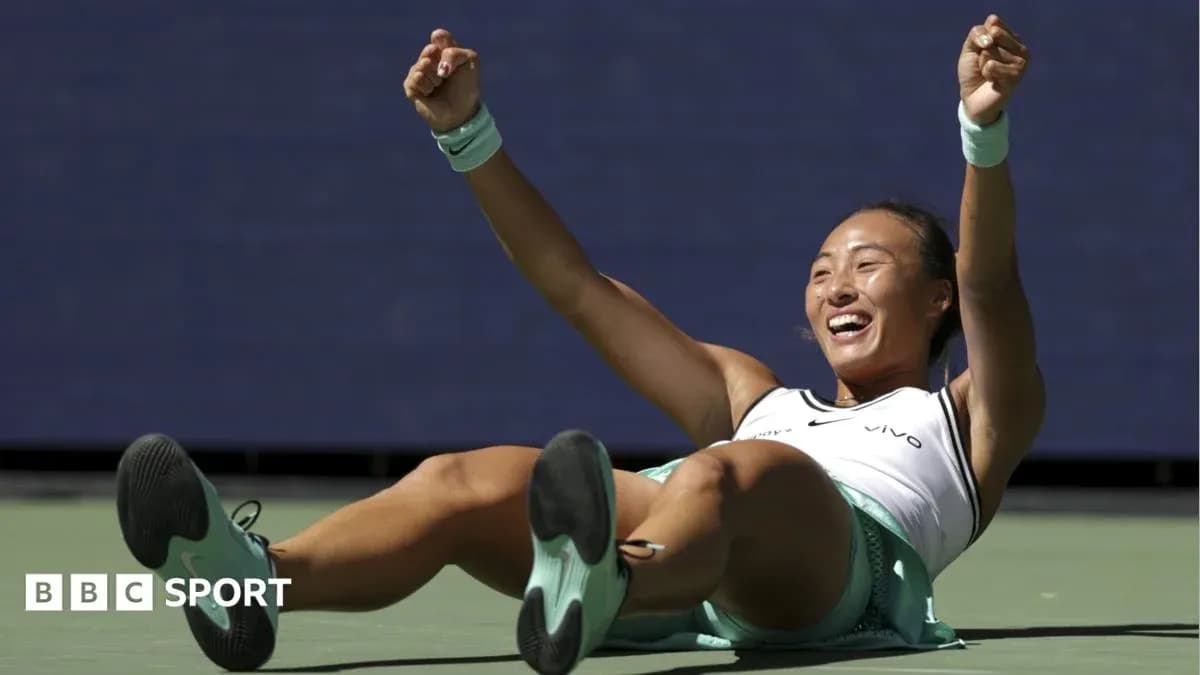
For the second match in a row at this US Open, the Chinese star climbed out of a hole that should have buried her, this time against a former champion and one of the game’s great frontrunners. Down 5-0 to Iga Swiatek in the opening set on Arthur Ashe Stadium, the qualifier and reigning Olympic champion ripped through 13 of the next 16 games to win 7-5 6-3 and march into the quarter-finals.
A week ago she was outside the world’s top 100, still feeling her way back from elbow surgery in July 2025. On Monday night in New York, she looked like a force returning to its natural place.
From surgery table to Arthur Ashe surge
This run began in the shadows. Three rounds of qualifying, seven straight wins, and a ranking that had tumbled after months of struggle. Zheng, once world number four, arrived in Queens needing matches, needing rhythm, needing proof that her arm – and her game – would hold up under pressure.
She has her answer now.
On Saturday, she trailed Madison Keys 5-0 in the deciding set of their third-round clash. Keys, a former US Open finalist, could almost see the finish line. Zheng never let her cross it. Seven games in a row, a 7-5 set, and a place in the last 16.
That should have been the comeback story of her tournament. It lasted 48 hours.
Against Swiatek, the eighth seed and 2022 champion, Zheng walked into Ashe and promptly found herself staring at another 5-0 deficit, this time in the first set. Swiatek’s returns were biting, her depth suffocating, and Zheng’s timing looked a fraction off.
Then the match flipped.
The Olympic champion began to land with authority. First serves started to find the corners, the forehand loosened, and the backhand – that flat, fearless strike – began to pin Swiatek behind the baseline. The roar inside Ashe grew with every hold, every break, every sign that this was no lost cause.
Five games in a row. From 0-5 to 5-5. Swiatek, so often the one dictating the emotional temperature of a match, suddenly looked rushed. Zheng completed the theft of the set 7-5, a turnaround that would have felt scarcely believable if she hadn’t done something similar just two days earlier.
“The more matches I play, the more rhythm I have on court,” Zheng said afterwards. She sounded like a player who knows her game is back within reach. “People have asked me if I’m tired and when I arrived I was not tired at all. I felt really pumped for my match, trying to reach better levels here and enjoy this fantastic stadium.”
Power, precision, and a key backhand strike
The second set settled into a tighter pattern. Both women held serve through the opening six games. Swiatek, who had not dropped a set all tournament and had arrived in New York fresh from a WTA 1000 title in Toronto and a semi-final in Cincinnati, tried to reassert control with early strikes and aggressive court positioning.
Zheng refused to budge.
At 3-3, she finally cracked the set open. Swiatek sent down a serve, Zheng stepped in and unloaded on a backhand return that scorched past the Pole for a clean winner. It was the kind of shot that makes a stadium gasp – and a top seed flinch. The break for 4-3 felt like a verdict as much as a scoreline.
Swiatek called for treatment on her left thigh while leading 2-1 earlier in the set, but even after that timeout, it was Zheng who dictated most of the heavy hitting. Once she had her nose in front, she did not offer a way back. She broke again two games later, sealing the match 7-5 6-3 and extending a New York surge that now has her on the brink of the top 50.
This was no fluke head-to-head outlier either. Zheng’s only previous win in eight meetings with Swiatek came on one of the sport’s biggest stages – the semi-finals of the 2024 Olympics in Paris, a run that ended with singles gold. Under the lights on Ashe, she summoned that same big-match clarity.
Swiatek’s major drought confirmed
For Swiatek, 25, this defeat closes a strangely lean Grand Slam season. A player used to lifting majors leaves 2026 without one for the first time since 2021.
Her best result at the Slams this year came in Melbourne, where she reached the quarter-finals of the Australian Open. The French Open, long her most reliable hunting ground, ended in the fourth round. Her Wimbledon title defence stopped in the third. Now a fourth-round exit in New York underlines a year in which her tour form – strong as ever in regular events – never quite translated to the sport’s four biggest stages.
She arrived at the US Open in stride, armed with that Toronto title and a deep run in Cincinnati, and had breezed into the last 16 without dropping a set. On Ashe, she looked set to continue that march at 5-0 up. Zheng tore up the script.
A qualifier rewriting the script
Zheng’s presence in the last eight as a qualifier places her in rare company. The last woman to do it here was Emma Raducanu in 2021, and the Briton went all the way to the title. The echoes are impossible to ignore: a qualifier on a hot streak, playing with freedom, cutting down established names in the main draw.
She is not the only qualifier shaking up the women’s game this year. At Roland Garros, Poland’s Maja Chwalinska began the French Open ranked 114 in the world and stormed all the way to the final, where she lost to Mirra Andreeva. The Russian teenager is at it again in New York, recovering from a set down to beat Anastasia Potapova and reach her first US Open quarter-final.
Zheng’s own path now leads to another heavyweight hurdle. She will face either former US Open champion Naomi Osaka or second seed Elena Rybakina in the quarter-finals, a match-up that will test not just her form but her staying power after so many matches in such a short span.
She insists the workload is fuelling her rather than draining her. The evidence is splashed all over this fortnight: from qualifying courts to Arthur Ashe, from 5-0 down to 7-5 up, from outside the top 100 back to the edge of the sport’s elite.
The question now is no longer whether Zheng Qinwen is back. It’s how far this remarkable New York run is about to carry her.