Zheng Qinwen's Incredible Comeback at the US Open
Zheng Qinwen had already called it “very dramatic.” That barely scratched the surface.
On a hot, heavy afternoon at the US Open, the Olympic champion stood one point from defeat, 5-0 down in the deciding set to Madison Keys, the 22nd seed and darling of the New York crowd. Keys had the match on her racket, the stadium behind her, and all the momentum.
Zheng walked away with the win.
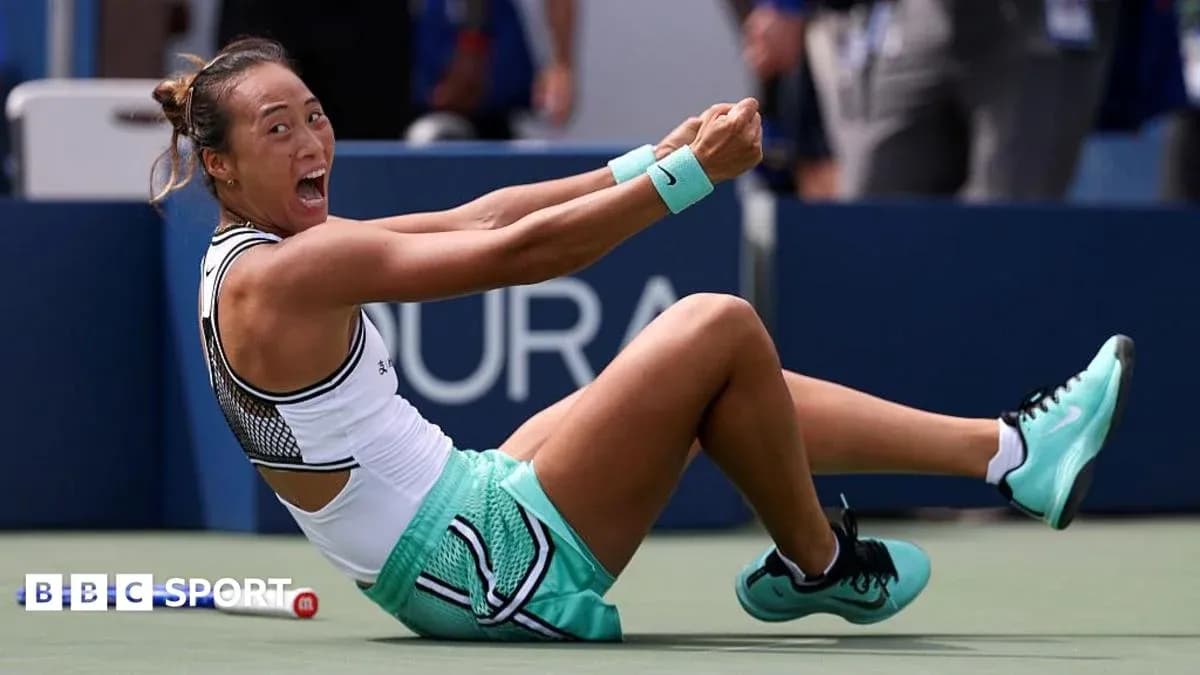
From match point down, the Chinese qualifier ripped through seven games in a row to complete a staggering 1-6 7-6 (7-3) 7-5 comeback and book her place in the fourth round. When the final ball from Keys drifted out, Zheng collapsed onto the court, face to the hard court, the weight of the past year spilling out in a single, disbelieving release.
From rout to revolt
For most of the first hour, this looked like a routine Keys demolition. The 2025 Australian Open champion bullied Zheng off the court, taking the opening set in just 23 minutes. Her forehand dictated, her serve bit hard, and Zheng’s timing deserted her. The scoreboard, and the mood, felt brutal: 6-1, and little sign of resistance.
Keys kept charging. She broke early again, the rallies short and one-sided, the American feeding off the noise. Zheng, who had come through qualifying just to reach the main draw, looked a step slow and a world away from the player who once stood in Grand Slam finals and on the top step of an Olympic podium.
But she refused to disappear.
Bit by bit, Zheng began to land more first serves, to stretch points, to ask one more question of Keys’ forehand. The errors from the American crept in, almost imperceptibly at first. Zheng clung to the second set, dragged it into a tie-break and, suddenly, she was the one striking freely. She swept through the breaker 7-3, and the match, which had seemed all but over, snapped back into life.
The roar from Zheng at set point wasn’t just about the moment. It was about the months that led her here.
A year of doubt
Twelve months ago, Zheng’s career had hit a wall. Elbow surgery in July 2025 had been unavoidable, the joint plagued by floating bone fragments that turned every serve and forehand into a risk. It came just as she was breaking through: Australian Open finalist, Olympic gold medallist, US Open quarter-finalist in 2024, then a Roland Garros quarter-final in 2025 and a climb to No. 4 in the world.
Then came the operating table, nine months out, and a brutal reset.
Her return at this year’s French Open ended in tears. Beaten in the first round by eventual runner-up Maja Chwalinska, Zheng broke down in the news conference, unable to hide how far away her old level felt. Her ranking had already tumbled, sliding as low as 160. For the first time in four years, she had to navigate the grind of Grand Slam qualifying just to earn a spot in the main draw.
“After coming back from injury I felt I lost the energy and I forgot how to compete,” she admitted.
That loss of instinct is what made this match, and this comeback, so stark. The player who once doubted she could still fight at this level found herself staring at 0-5, match point down in the third set of a major, and chose to swing.
“Finally, a bit of luck is on my side,” the 23-year-old said, still processing what had unfolded. “I am just telling myself ever give up. Somehow, little by little, it's just happened. Tennis sometimes feels like rollercoaster. You see many times people have a match point, but at the end we made a comeback.”
Seven games, one statement
The third set told the story in fast-forward. Keys surged to 5-0, her power once again overwhelming, Zheng’s resistance apparently broken. The American stepped up to serve for the match with a double-break cushion and a match point in hand.
The pressure finally told — not on Zheng, but on Keys.
The Chinese star saved match point, held serve, and then began to claw back game after game. Her groundstrokes grew heavier, her movement sharper. Keys’ forehand, so lethal for so long, started to misfire. The crowd, initially a wall of noise for the American, shifted into a murmur of disbelief as the lead shrank: 5-1, 5-2, 5-3.
Zheng barely celebrated each break, each hold. She turned, head down, straight to the towel, as if afraid that acknowledging the comeback might break the spell. Keys, by contrast, tightened. The first serve deserted her at key moments. The rallies lengthened. Zheng’s backhand began to pin her into the corners.
At 5-5, the match flipped entirely. Zheng was now the one dictating, stepping inside the baseline, punishing short balls. Keys, suddenly, looked like the qualifier fighting for air.
Zheng broke again for 6-5 and, serving for the match, did not blink. No panic, no drama, just clean, measured aggression. When the last point fell her way, she dropped to the court, the comeback complete, the doubt that had stalked her for a year briefly silenced.
Echoes of Raducanu
With this win, Zheng becomes the first qualifier to reach the women’s fourth round at the US Open since Emma Raducanu in 2021 — a run that ended with the Briton lifting the trophy. The parallel will not be lost on anyone in the locker room or in the stands.
Three months ago in Paris, Zheng was in tears, wondering if she would ever again feel like a contender on the sport’s biggest stages. Now she stands in the second week of a Slam, having taken out a top-25 seed and a recent major champion from the brink of defeat.
Her route here has not been clean or easy. It has been jagged, emotional, and at times brutal. But that is exactly what made this third-round epic resonate: it felt less like a single upset and more like a player rediscovering who she is.
The qualifier tag still sits next to Zheng Qinwen’s name on the draw sheet. The way she just survived Madison Keys, it may not be there much longer.