Wimbledon Bans Influencers to Preserve Tennis Etiquette
Wimbledon has drawn a clear white line on the grass: influencers are out.
In the wake of chaotic scenes at this year’s U.S. Open, the All England Club has decided it will not grant media credentials to social media content creators, shutting off a fast-growing avenue of access that tennis has flirted with but now views as a threat to its core values.
The message is blunt. If you want to film yourself for clicks, do it somewhere else.
Ring Lights, Notepads, and a Culture Clash
The new stance is about control and atmosphere as much as accreditation. Security at Wimbledon will now be instructed to confiscate items such as ring lights, tools of the trade for influencers but a glaring nuisance in a sport built on silence and concentration.
This is not a theoretical problem. At the U.S. Open, where around 100 content creators were officially accredited alongside traditional journalists and broadcasters, players complained about bright lights, constant filming, and a rising hum of background noise that never seemed to stop.
What was billed as a modern, open media ecosystem turned, at times, into a circus.
Wimbledon has watched that closely. The tournament, which guards its traditions more fiercely than any other in tennis, has decided that the experiment is not worth the risk. The priority, tournament officials believe, is the players’ ability to perform and the preservation of what they see as proper tennis etiquette.
When the Show Becomes a Distraction
The issues in New York were not subtle.
Fans repeatedly interrupted matches by snapping photos with flash or bright phone lights and by creating excessive noise during points. The line between spectator and performer blurred, and not in a way the players appreciated.
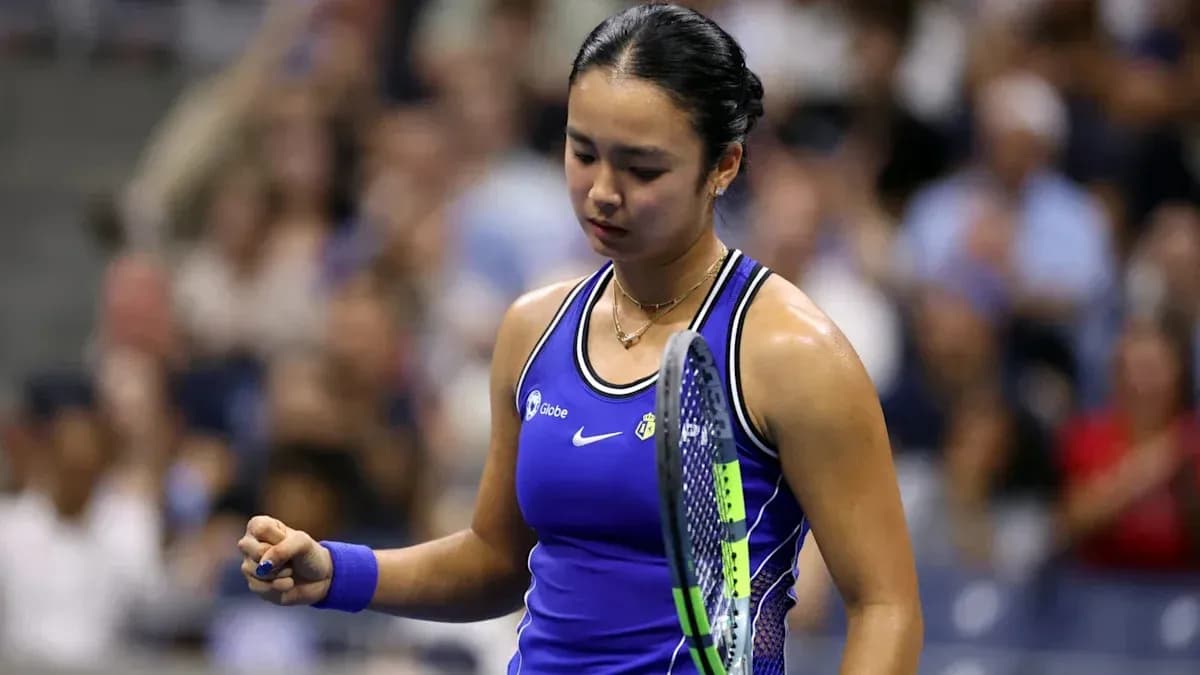
Coco Gauff and Naomi Osaka both spoke publicly about fan behavior, stressing that support is welcome but distractions are not. Their frustration echoed through a locker room increasingly exasperated by the sense that every point is being turned into background content for someone else’s feed.
Officials at the U.S. Open responded in real time. They pushed reminders about proper behavior on the big screens around the grounds. They went further too, revoking the credentials of two content creators whose presence and conduct crossed the line.
The warning signs were clear. Wimbledon has chosen not to wait for the same problems to arrive in SW19.
A Grand Slam or a “Zoo”?
The discomfort in New York went beyond phones and ring lights.
Players also complained about the pervasive smell of marijuana drifting across courts. During her third-round match, World No. 1 Aryna Sabalenka was forced to pause because of what she described as a “very strong smell” of marijuana, making her irritation clear. Adrian Mannarino went even further, likening the atmosphere at the Grand Slam to “a bit of a zoo.”
Those words cut to the heart of the debate. Is a major tennis tournament a sporting cathedral or just another backdrop for viral content?
Wimbledon’s answer is unmistakable. The All England Club is tightening the drawbridge, betting that in an era of constant filming and endless feeds, there is still value in a space where the players, not the influencers, remain the central act.