Venus Williams Returns to US Open: A Legend on Wildcards
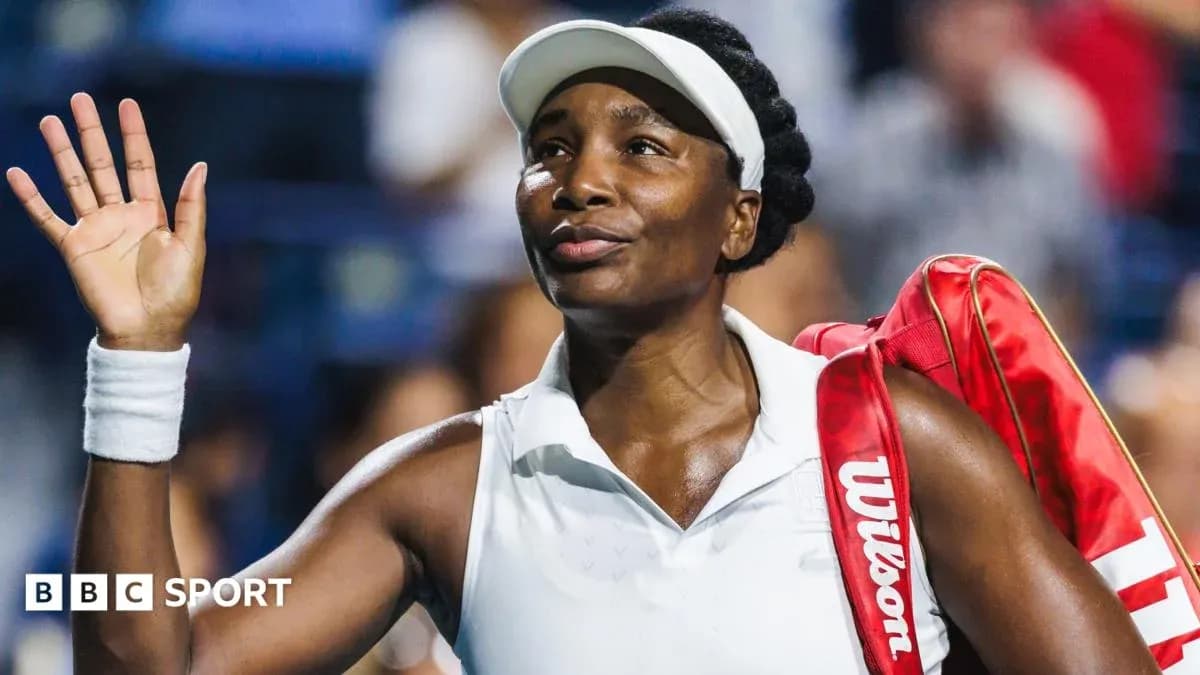
Venus Williams walks back through the doors of the US Open this year with a ranking in the 600s, 46 years old, and riding a 14-match losing streak in singles. She also walks in as a seven-time major champion and one of the defining figures of modern tennis.
That tension – between what she was, what she is, and what tournaments still want her to be – sits at the heart of every wildcard she receives.
A legend on borrowed invitations
Williams has been on tour for nearly three decades. Five Wimbledon singles titles, two US Open crowns, countless doubles glories, and a global impact that reaches far beyond the baseline. Yet right now, she cannot get into the biggest events on ranking alone.
World No. 611. Eleven wildcards already this season. A 12th now from the USTA, which hands her a place in the US Open main draw and a first-round meeting with fellow Grand Slam champion Sofia Kenin.
For some, that number is jarring. Fourteen straight losses in singles. Eighteen defeats in her past 19 matches, the lone win coming over Peyton Stearns in Washington last July. The argument is simple: how many wildcards can one player reasonably expect when others are fighting for a single chance?
But the rules are clear. There is no cap on the number of wildcards a Grand Slam champion can receive. And from Auckland to Madrid, from Stuttgart to Toronto, tournament directors are still lining up to invite her.
Why? Because Venus Williams still moves the needle.
The business of a Williams wildcard
Karl Hale, tournament director of this month’s WTA 1000 event in Toronto, did not hesitate. He offered Williams a wildcard and announced it early.
"The way we looked at Venus is that her legacy is phenomenal," Hale told BBC Sport. She is, he said, "really popular here in Toronto and our markets specifically" – and that matters.
Hale saw the impact instantly. Media interest spiked. Coverage grew. Ticket sales followed.
Wildcards, by design, help shape the early days of a tournament. They always start in the first round, and with expanded draws, they give organisers a chance to put star power on court from day one. In Toronto, Venus opened the show.
"Venus played opening day. She kicked off our tournament, so it added a lot of value," Hale said.
This is how wildcards work in the real world. On paper, they are a pathway for promising youngsters, returning champions, or players coming back from injury. In practice, they are also commercial tools.
Most events will first look after their own. National players often top the wildcard list. After that, the calculus changes. Name recognition. Ticket sales. TV interest. Social media buzz. A Williams sister still ticks every box.
There is also a quieter trade in invitations. Hale talks about "trades" between federations or with agencies such as IMG, which manages players and until recently owned the Miami and Madrid Opens. The most established example is the reciprocal wildcard agreement between the USTA, Tennis Australia and the French Tennis Federation: each grants a men’s and women’s wildcard to the others, knowing their own players will benefit when the tour rolls around.
Into that world steps Venus – not as a favour, but as a valuable asset.
Still competitive, just not winning
Strip away the emotion and the numbers look brutal. Williams has not qualified for a Grand Slam by ranking since Wimbledon 2021. That same tournament provided her last singles win at a major.
Yet her recent Slam outings have not been walkovers. At last year’s US Open, she pushed 11th seed Karolina Muchova to three sets. In January at the Australian Open, she lost another tight three-setter to Olga Danilovic. At Flushing Meadows last year she also reached the doubles quarter-finals.
This month in Cincinnati, she lost to qualifier Emiliana Arango. Another first-round defeat, another line in the losing column. But Hale, who watched her in Toronto against Kamilla Rakhimova, insists the story is not as simple as the scoreline suggests.
"You never want to put a player out there that you are unsure about," he said. "Venus lost 6-4 6-1 to Kamilla Rakhimova, and the first set was really competitive. She's still competitive, but just not winning these matches."
That distinction matters to tournament directors. They are not simply handing out ceremonial spots. They need to believe a player can still hold her own, still offer a contest that justifies the stage.
Should there be a line?
Golf has already drawn one. The Open Championship used to allow past winners under 65 to play whenever they wished. Now the cut-off is 55, a move designed to free up places for younger, higher-ranked professionals.
Tennis has no such boundary. Martina Navratilova received wildcards for Roland Garros and Wimbledon in 2004 at the age of 47, and even won a singles match on the grass. The sport leaves the question of when to stop to the players themselves – and to the tournament directors who choose whether to invite them.
So where is the line for Venus Williams? At what point does a wildcard for a legend become a lost opportunity for a rising player?
Hale’s answer is blunt.
"When the time comes that Venus is not competitive in sets, then I think she will make that call," he said.
For him, and for many in the game, the Williams sisters occupy a different category.
"Venus and Serena have done so much for women's tennis and the sport that they should be able to play as long as they want," he said. "I'm very happy they are continuing and they make their decision when they are ready, or each tournament makes their decision when they are ready."
Respect, earned over decades
Among the players, there is little debate over what she deserves.
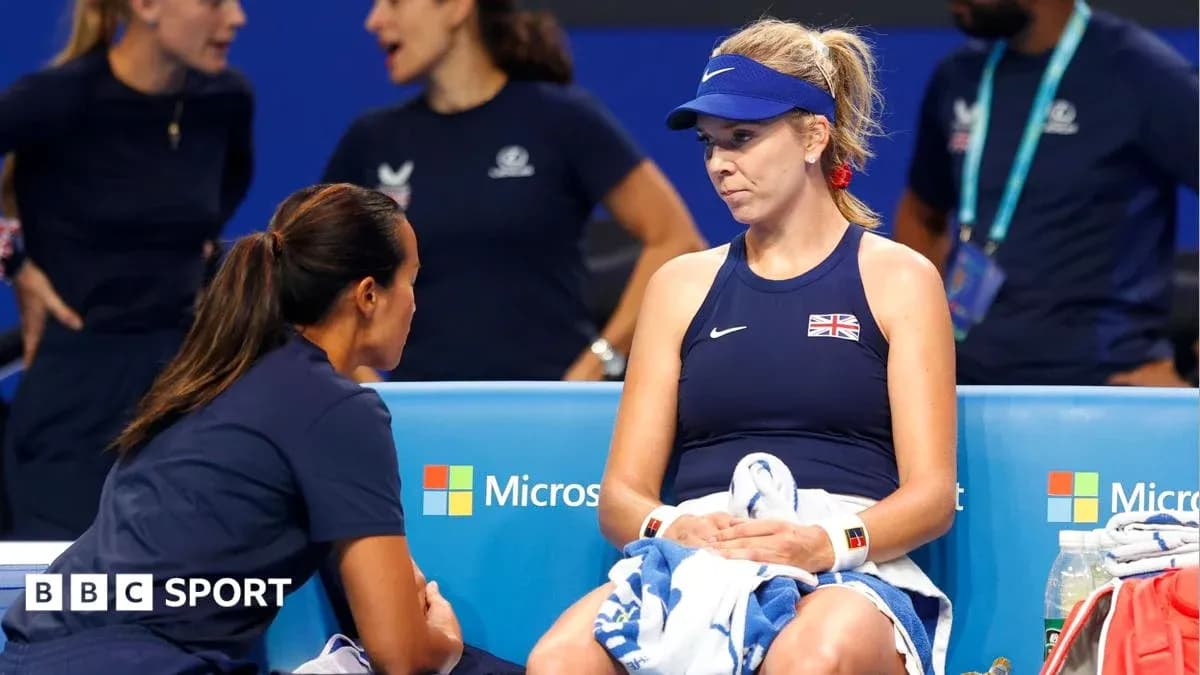
British number one Katie Boulter partnered Williams in doubles in Madrid in April and called her an "absolute icon". After their match, Boulter summed up a sentiment widely shared in locker rooms around the world.
"Venus has given so much to our sport that she deserves to get what she needs back," she said. "We have to be grateful that she is still out there, doing the best she can."
That is the crux of it. Venus Williams is no longer the force who bullied opponents off the court, redefined power tennis, and changed the economics of the women’s game. But she is still out there. Still training. Still competing. Still willing to walk into stadiums where the odds, the rankings and the recent results all lean heavily the other way.
Tournament directors look at that and see more than a struggling veteran. They see a generational figure who continues to draw crowds, headlines and emotion.
So she returns to New York on another wildcard, facing another dangerous opponent, with another chance to prove that the story is not quite over yet.
At some point, the invitations will stop. The question is not whether Venus Williams has earned them. It is who, in the end, will decide when enough is enough.