Vaibhav Sooryavanshi: Teenage Prodigy Shaking Up Cricket
In a country that has seen teenage prodigies come and go, Vaibhav Sooryavanshi is already bending the usual script.
At just 15, the right-hander is not only stacking up milestones, he is dragging eyeballs to tournaments that rarely command prime-time attention. The Duleep Trophy, usually a connoisseur’s preserve, suddenly has a headline act. People are tuning in for a boy who is still in school.
Kris Srikkanth has seen enough to believe this is no fleeting craze.
“He's playing outstandingly well. He must be encouraged and never be discouraged. If he's moulded properly, he'll be a superstar in the making,” the former India opener said on his YouTube channel, barely hiding his excitement. In a single breath he went further: “He'll bring Test cricket back to its glory… He'll be a big asset going forward for world cricket.”
Big words. But Sooryavanshi is giving people reasons to say them.
A teenager who won’t back down
His Duleep Trophy campaign began quietly. Turning out for East Zone, he barely made a mark in the quarterfinal against North East Zone. For many youngsters, that first failure on a bigger domestic stage can tighten the grip, shrink the backlift, and plant doubt.
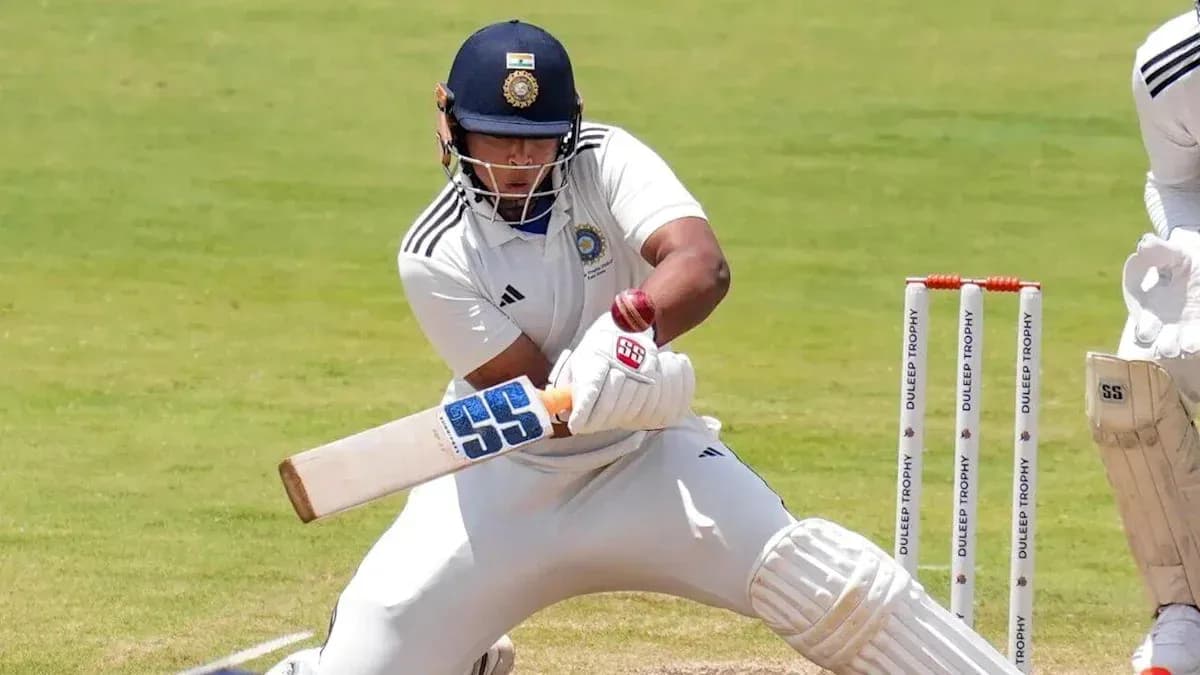
The response from Sooryavanshi? An 81-ball 92 in the semifinal against Central Zone that crackled with intent.
He walked out and batted as if the previous game had never happened, as if the weight of his age and the noise around him simply didn’t exist. Then, when the chase tightened in the final innings, he added a crucial 40, helping East Zone close out a four-wicket win and secure their place in the final.
Those two knocks were not just about numbers. They told selectors he could reset after failure, that he could influence both innings of a high-stakes match, that he wasn’t just a highlights-package slogger riding IPL hype.
At 15 years and 157 days, he had already become the youngest batter to score a half-century in Duleep Trophy history, erasing a record that had stood for 57 years. A dusty line in the record books, rewritten by a boy barely old enough to drive.
Red ball, same swagger
Plenty of young batters look electric under lights with a white ball and fielding restrictions. What has really caught the eye with Sooryavanshi is how little his game shrinks when the ball turns red and the field spreads.
Srikkanth couldn’t hide his admiration for that fearlessness.
“He played incredibly well. How can people even doubt whether this boy… is capable of playing higher-level cricket?” he asked. “He can play every level of cricket, and he is going to rule world cricket shortly in all formats. He's smashing medium pacers with no worries for straight sixes in red-ball cricket. He's toying with the bowlers.”
That last line matters. Straight sixes in red-ball cricket are not just about power; they’re a statement of intent, a refusal to be dictated to by the format. It’s the kind of batting that forces captains to change fields, bowlers to alter lengths, coaches to rethink plans.
And it’s not just the purists taking notice. Srikkanth revealed that even at home, the ripple effect is real: “Everyone watched the Duleep Trophy because of him. Even my wife is watching because of him.” When a domestic zonal match becomes must-watch television in a cricket-saturated country, you know something unusual is happening.
From IPL buzz to a bigger stage
Sooryavanshi had already lit up the IPL and made waves on the international stage, but the Duleep Trophy is a different kind of examination. It tests temperament, patience, and the ability to build innings under pressure rather than explode for 20 balls and disappear.
By stepping into that arena and imposing himself so early, he has sent a message that his game is not format-bound.
For now, the numbers are a teaser, not the full story. The real intrigue lies in the way established voices speak about him, the way audiences rearrange their schedules to watch him, the way domestic cricket suddenly feels a little less routine when his name is on the teamsheet.
If this is what 15 looks like, the real question is not whether he can make it, but how far and how fast he will go—and whether the sport can keep pace with the storm he’s threatening to unleash.