USA Women’s Team Wins Fifth World Cup Title Against France
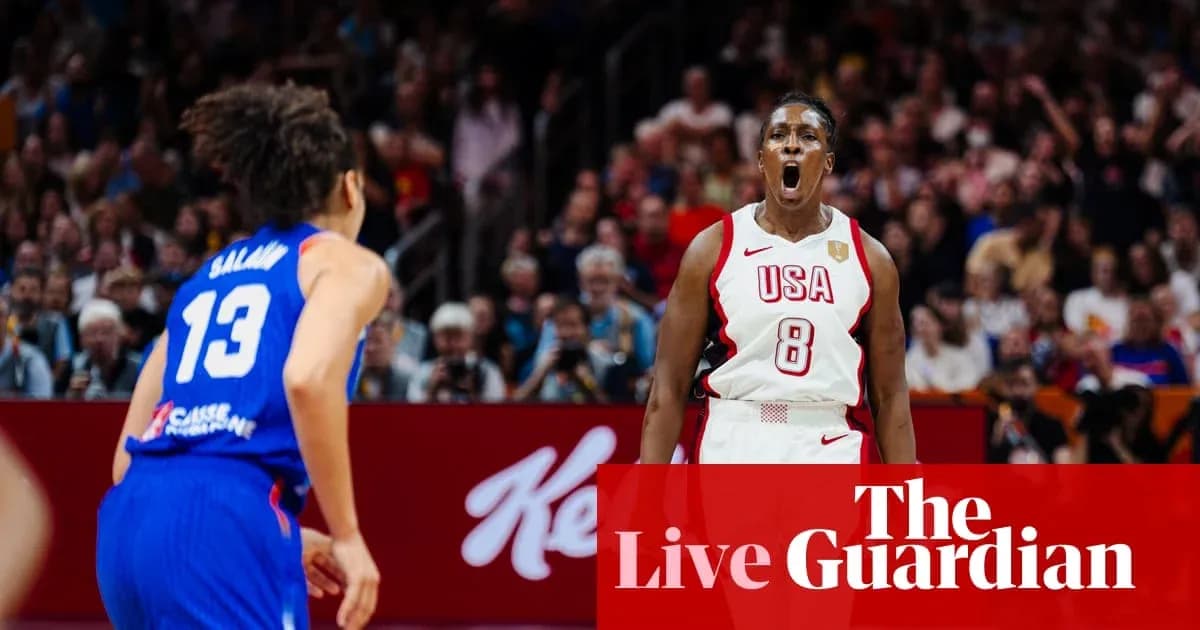
The USA women’s team walked into Berlin carrying four straight World Cup titles and a decade of dominance on their shoulders. They walked out with a fifth, a 97-79 win over France, and a reminder that their empire now survives on savvy as much as sheer talent.
For a while, though, it looked like the coronation might be cancelled.
France land the first punch
France came out fearless. They sliced up the US defense with layups, pushed the tempo and, crucially, hit shots. Lots of them.
Marine Fauthoux Lacan found open lanes. Gabby Williams glided to the rim. Dominique Malonga owned the paint. When Ayayi and Janelle Salaun started joining in from deep, the scoreboard turned startling in a hurry: 31-17 France. In a World Cup final. Against the USA.
The Americans looked rushed, scattered. Breanna Stewart forced a couple of early looks. Turnovers crept in. Kara Lawson went to her bench, rolling out the new generation – Caitlin Clark, Paige Bueckers, Angel Reese, Aliyah Boston, Rhyne Howard – searching for a group that could simply steady the ball.
France, meanwhile, looked like the more composed, more connected team. They led 20-17 after one, stretched it to double digits in the second, and were still in control late in the half. Williams drilled a three. Badiane hit one from the corner. Every US surge met a French answer.
Then, on the buzzer, Clark finally announced herself.
Her first real mark on the game – after two ugly turnovers and a quiet spell – was a corner three to end the half, trimming the deficit to 45-43. A small moment, but an important one. The US had been outplayed. They were still within one possession.
“We’ve got ourselves a game,” the numbers said. The body language on both benches said the same.
Veterans flip the script
Whatever Lawson said at halftime worked. Or maybe it was just the old guard deciding they’d had enough.
On the first possession of the third quarter, Stewart tied it at 45. Collier muscled through traffic for the first US lead “in eons.” Jackie Young started to carve France apart, on and off the ball. Chelsea Gray, who had cooled off after a blistering start, rediscovered her touch.
The turning point wasn’t a single shot. It was the suffocation that followed.
France, so fluid for 20 minutes, suddenly found no air. Open looks dried up. Johannes, who had been a constant threat, went cold. Williams – brilliant in the first half – started to drift to the margins of the offense. The US defense tightened, then tightened again.
On the other end, the veterans picked their spots with clinical precision. Stewart on the glass. Young probing, kicking, finishing. Gray hitting the kind of fadeaways that should be illegal in a final. Copper slashing into gaps that hadn’t existed in the first half.
The numbers tell the story of the swing. What had been 31-17 France became 73-57 USA by the end of the third quarter. A 16-point US lead, built not on a single avalanche but on possession after possession of grown-up basketball.
France’s wheels weren’t just wobbling. They were off.
The Copper spark and a brutal third-quarter blow
The game’s most chaotic moment underlined the shift.
Late in the third, Copper blew past Johannes and took a hard whack across the arm. Officials went to the monitor to check for an “act of violence.” The call went the Americans’ way: four free throws and the ball. Copper hit three of four, Clark fed Boston inside on the ensuing possession, and the lead ballooned to 17.
That sequence summed up the new reality. France, desperate to halt the US momentum, were now the ones overreaching. The US, once chasing, were now calmly exploiting every mistake.
By then, Gray and Young were dominating the plus/minus column, just as they had all tournament. Stewart, already into double figures, controlled the glass. The starting five – Gray, Young, Stewart, Copper, Collier – were doing exactly what Lawson needed: winning the minutes decisively so the younger group could spot in without the game teetering.
France, who had lived off shot-making in the first half, suddenly found that margin for error gone.
Clark’s flashes, fire and a technical
Clark’s night was a microcosm of her World Cup: flashes of brilliance wrapped around rough edges.
She finished with 12 points on 4-of-5 shooting, including 2-of-3 from deep, plus a handful of incisive plays in limited time. She also had four turnovers and a technical foul.
Early on, she looked rattled. Two straight turnovers, both from over-dribbling and holding the ball too long, handed France easy chances. In the fourth, she was whistled for a foul, argued the call and picked up a tech – a scene that would’ve looked perfectly at home in a WNBA arena.
But when the game loosened, her talent surfaced. A quick-release three in the third. A smooth drive and finish in the fourth. That buzzer-beater three to close the half. Even in a final dominated by veterans, she stamped a reminder of what’s coming.
Lawson, though, never fully handed her the keys. As France made one last push, Clark went out and Gray came back in. Bueckers barely featured. Sonia Citron and Kiki Iriafen never left the bench. This was still Stewart and Young’s team, with Gray steering.
Malonga’s stand and France’s late surge
France refused to go quietly.
Down 27 in the fourth, they could have folded. Instead, Malonga went to work. The 20-year-old center poured in points – threes from the corner, bully-ball finishes inside, an and-one through contact against Collier. She finished with 21, a standout line in a losing effort.
Williams, so electric in the first half, struggled badly after the break. She still wound up with 20 points and seven assists, but her second half was littered with misses, a turnover on a wild drive and long stretches without a touch. When she finally buried a late three, the damage was already done.
Johannes chipped in from the line. Toure hit a late three. A 13-2 French run cut the deficit from 27 to something more respectable. The US starters, curiously, stayed on longer than expected, their plus/minus numbers sliding as Malonga feasted.
Only in the final minutes did Lawson fully empty the bench: Clark back in, Citron and Iriafen finally getting a taste of the floor, Stewart, Gray and Young taking their applause.
By then, the trophy was already headed to the USA’s hands.
Stewart, Young and Gray: the spine of a dynasty
The final box score underlined where this title really came from.
Stewart led the USA with 22 points and nine rebounds, narrowly missing a double-double and dominating the glass as the Americans won the rebounding battle 36-27. She also passed Cheryl Miller earlier in the night to become the fifth-leading scorer in US history.
Young added 18 points and five assists, her fingerprints all over every key run. Gray had 12 points and five assists of her own, orchestrating the offense and hitting big shots when the game demanded them. Copper chipped in 15, including that pivotal stretch in the third and early fourth.
Clark’s 12 came in just over 10 minutes, a burst of efficiency that contrasted sharply with her overall tournament shooting numbers. Reese, used sparingly, provided a couple of trademark hustle plays and a late basket off a Stewart feed.
For France, Malonga’s 21 and Williams’ 20 led the way. Ayayi added eight. Williams’ seven assists kept the offense flowing for a half, but once the US defense locked in, France never found a second creator to match her.
A dynasty under pressure – and still standing
Strip away the scoreline and this World Cup told a different story than the blowout era of old.
The USA were pushed hard by Italy in the group stage, surviving 55-52 after blowing a 15-point lead. Spain had them tied 58-58 late in the semifinal. France led by 14 in the second quarter of the final and looked, for long stretches, like the more polished side.
That’s not a sign of decline so much as a sign of progress – for everyone else.
Women’s basketball has gone global. Eight French players in the WNBA. A generation of young US stars – Clark, Reese, Bueckers, Boston, Howard – fighting for minutes behind a veteran core that still delivers when it matters. European teams no longer arrive hoping to keep it close. They arrive believing they can win.
On this night, belief wasn’t enough. The US veterans read the moment, adjusted, and closed the door with the kind of ruthless composure that has defined this program for four decades.
They leave Berlin with five straight World Cups, a 97-79 win over a fearless French side, and a question that now hangs over the next cycle:
As the rest of the world keeps closing the gap, how much longer can the USA keep finding one more gear when it matters most?