USA Women’s Basketball Edges Spain to Reach FIBA World Cup Final
BERLIN — For once, the U.S. machine stuttered. It still won.
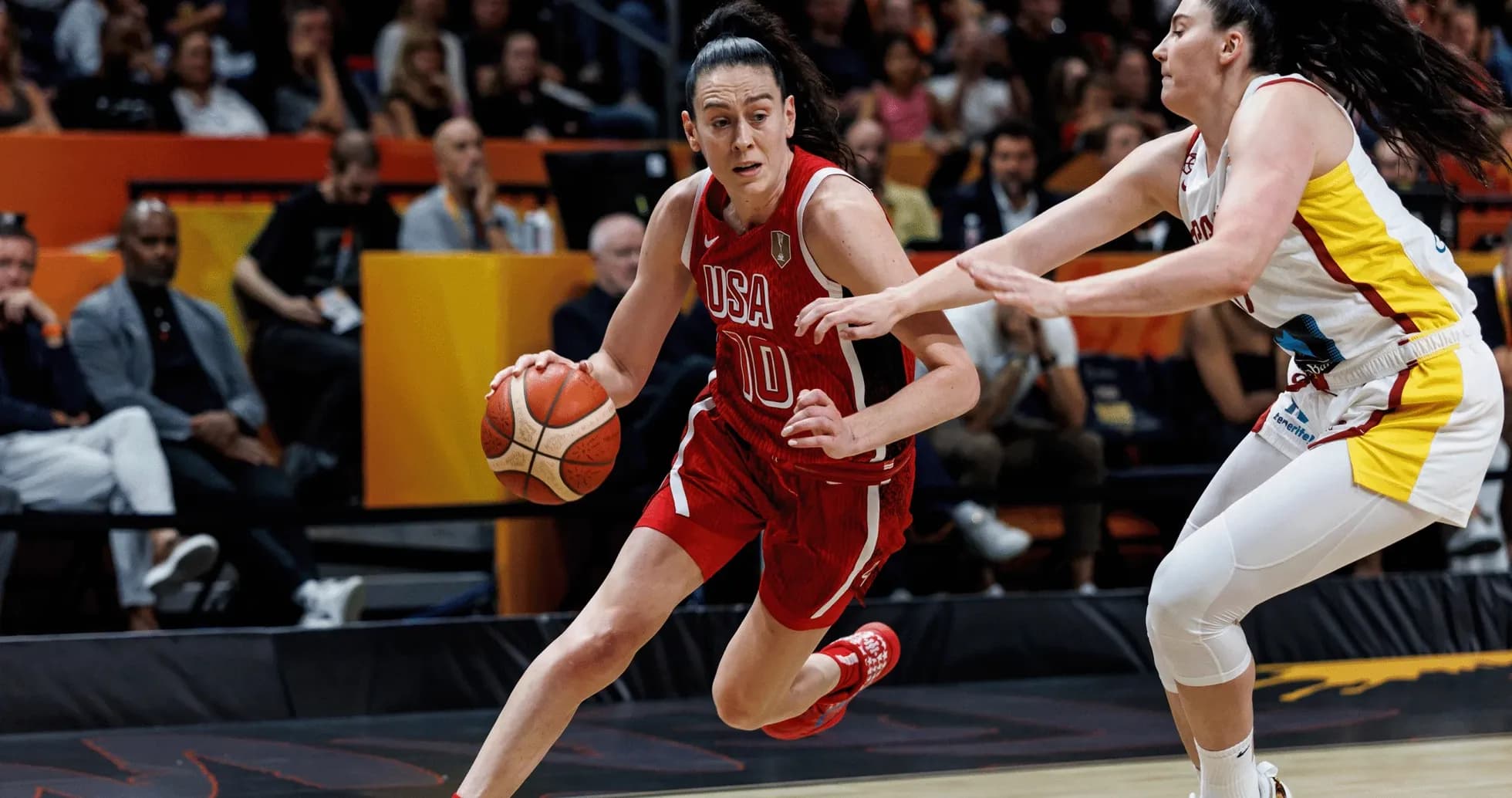
Breanna Stewart and Kahleah Copper dragged the Americans through a bruising 76-66 win over Spain on Saturday, booking a place in the women’s FIBA World Cup championship game and setting up a thunderous rematch with France — the same opponent they edged by a single point in the 2024 Paris Olympic final.
Stewart finished with 16 points, Copper added 13, and the United States extended one of the sport’s great streaks: 35 consecutive World Cup victories, a run that stretches back to a semifinal loss to Russia in 2006. One more win and the U.S. will claim a fifth straight world title, pulling level with the former Soviet Union for the longest run of championships in the tournament’s history.
A Rare Fight
This wasn’t the smooth, ruthless U.S. performance that had blown past opponents in recent games. Spain turned it into a grind.
From the opening tip, the European side refused to play the part of overawed underdog. Spain came out firing, hitting nine of the first 10 points and jumping to a 16-9 lead — the largest deficit the Americans have faced in this tournament, surpassing the modest three-point hole they dug themselves into against Italy in that tight 55-52 win.
The response came from fresh legs. U.S. newcomers checked in and immediately changed the tone, sparking a 12-2 run to close the first quarter and snatch back control. The scoreboard shifted, but the rhythm never quite did.
Spain’s plan was clear: body up, bump cutters, and make every catch a negotiation. It worked. The U.S. offense never really flowed in the second quarter, stuck in a stop-start battle that turned the game into a parade to the free-throw line.
By halftime, the numbers told the story. The Americans had taken 27 free throws — and just 26 field-goal attempts. They hit 19 of those foul shots and carried a narrow 39-36 lead into the break, but Spain had succeeded in dragging them into a slog.
Game in the Balance
The pattern held into the third. Every time the U.S. looked ready to pull away, Spain’s resistance stiffened. Defensive pressure, smart fouls, and enough shot-making to keep the Americans honest. The contest turned into a test of patience as much as talent.
By the end of the third quarter, nothing separated them. Tied at 58. A powerhouse with decades of dominance on one side, a fearless challenger on the other, and 10 minutes to decide who would play for gold.
That’s when the U.S. finally punched through.
The Americans opened the fourth quarter with the urgency of a team tired of trading blows. They strung together stops, attacked the rim, and leaned again on the one thing Spain couldn’t fully control: discipline. Trips to the line piled up, and this time they came attached to momentum plays, not just whistles.
A 12-2 surge broke the game open. In what felt like a blink, the U.S. turned 58-58 into a 70-60 advantage with 5:20 to play — their biggest lead of the night. Spain never got closer than eight from there.
Over the full 40 minutes, the foul line became the Americans’ lifeline. They finished 27 of 35 from the stripe, a volume that underlined both Spain’s physical approach and the U.S. refusal to settle when the offense misfired.
From Debut to Destiny
This semifinal carried a thread of history. The last time these nations met at a World Cup, the stakes were just as high. In 2014, the U.S. beat Spain for the gold medal, a game that doubled as Breanna Stewart’s debut with the senior national team.
Ten years on, Stewart is the anchor, not the newcomer. The context has changed, the role has not: when the U.S. needed composure in a choppy, ill-tempered contest, she provided it again.
Spain walked off knowing it had dragged the champions into a genuine fight. The U.S. walked off knowing it had survived one.
Now comes France, and with it a different kind of pressure. The Americans stand one win from a fifth straight world crown, level with a dynasty from another era. The question is no longer whether they can handle the moment.
It’s whether anyone can stop them from making history.