U.S. Open's Influencer Dilemma: A Night of Distractions
The Arthur Ashe light show was supposed to be on Naomi Osaka. Instead, on Monday night, it was on a suite of influencers trying to nail content while a former world No. 1 tossed the ball to serve.
Midway through Osaka’s match against Anastasia Zakharova, the chair umpire repeatedly broke the usual hush to plead for silence from a noisy suite, where a group appeared to be filming a TikTok-style dance under a glaring phone-sized light. The distraction cut straight through the stadium’s soundscape and, within hours, straight across the internet.
The clip, posted by lifelong tennis fan Katherine, went viral, drawing more than 1,500 comments and a torrent of frustration from traditionalists who feel the U.S. Open has drifted from major championship to social content backdrop. Years of simmering annoyance — the Honey Deuce era, the curated outfits, the endless shots of tennis WAGs and VIP boxes on Instagram — spilled into the comments section.
Inside Ashe, it wasn’t just one suite.
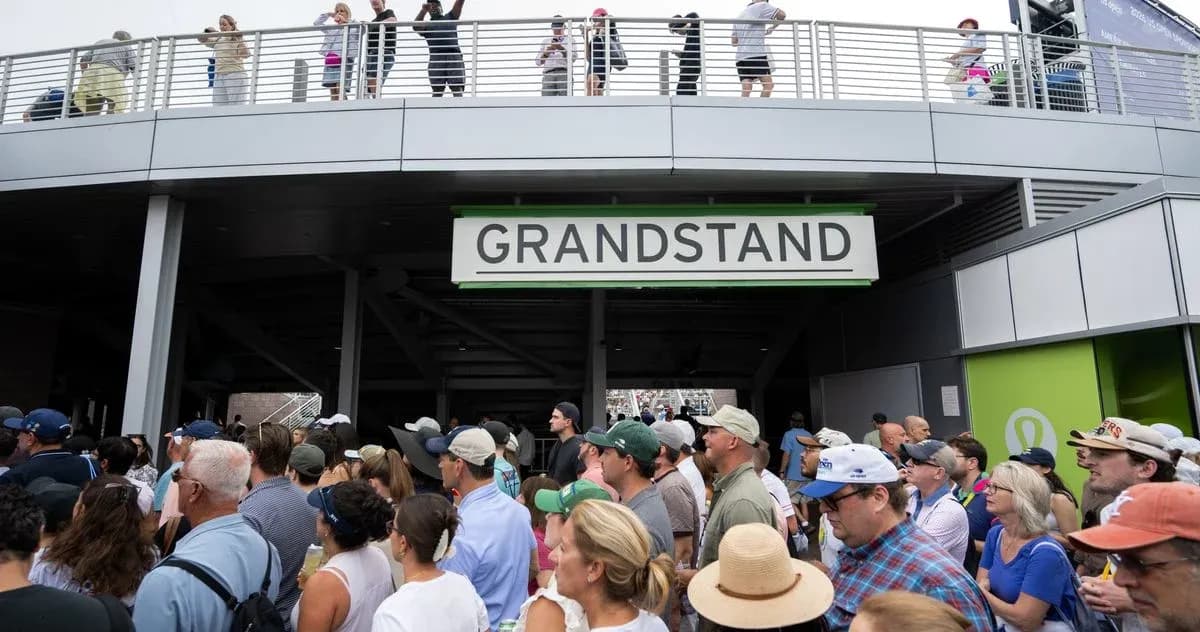
“All around the stadium, there were people — in the middle of serves and in the middle of points — getting up, walking through the crowd down to the closest they could get to the court in their section, and taking pictures, taking videos, using ring lights,” Katherine said.
In tennis, the etiquette is simple: you sit still during points. You move at the changeovers. Maybe between games. That rhythm is part of the sport’s DNA.
This year, the U.S. Open loosened those rules. Fans can move more freely during play. The policy shift collided head-on with a new reality: a tournament that has aggressively courted influencers now has to manage what happens when the show in the stands starts to compete with the one on court.
Katherine described the flashpoint. The umpire turned toward a suite of about a dozen people, asking them several times to quiet down. An usher, holding a powerful light to film them, added another layer of distraction.
“It didn’t seem like they were aware that the umpire was talking to them because they weren’t really watching the match,” she said. “I’ve never seen that in the middle of a point. The flash was the craziest thing.”
The pressure on the court finally gave way to pressure online.
One of the people caught in Katherine’s video, influencer Mriganka Chawla, quickly found herself at the center of the backlash. In the clip, she’s seen taking a selfie while Osaka plays. Chawla, a fashion and lifestyle creator, said she hadn’t come to Ashe on a brand deal. It was her first time at the Open, a night out with her fiancé’s tennis-obsessed family.
She insists she wasn’t in the rowdy suite that drew the umpire’s ire. Her own photo, she said, happened while she was away from her seat grabbing an ice-cream sandwich. She spotted a relatively empty section, asked an usher to snap a picture “because my man can’t take a photo to save his life,” and thought little of it.
“I was seriously so far away,” she said. “I’m really sorry if I disrupted any playing.”
Once she identified herself in the comments, denying that her flash had bothered anyone, the internet did what the internet does. She says she received a bizarre mix of “death threats” and gear questions — people asking which selfie light she used. (Answer: the same one popularized by Alix Earle.)
“This is such an influencer thing, and I understand that now, but everybody has really cute photos [from the Open]. I just wanted one cute photo,” she said. “I wish somebody had told me, ‘You can’t do that.’ This is also on me. I should have researched it. I wish there were some guidelines or something.”
Her misstep landed in the middle of a bigger storm.
The U.S. Open has spent the past few years rebranding itself as more than a tennis tournament. The USTA’s leadership has openly pitched the event as a kind of “tennis Disneyland,” with family activations, sponsor-driven experiences, and Instagram-ready installations wrapped around the matches. Inviting creators is not a side project; it’s strategy.
Sportico reported that the USTA issued media credentials to 100 influencers and podcasters this year, double last year’s total of 50. That figure doesn’t include the creators ushered into corporate suites by sponsoring brands, who then build their own content around the night session’s backdrop of blue court and New York skyline.
For many long-time fans, the numbers now feel like an invasion.
They’ve already swallowed rising ticket prices and heavier crowds. Now they say they’re sharing their sport with people who either don’t know the etiquette or don’t care. A recent piece in culture magazine the Mercer Edition labeled it the U.S. Open’s “influencer problem,” arguing that a sport built on “a level of concentration that can’t be understood until fully observed” is a poor fit for the churn of content and “vanity metrics.”
Katherine hears that fatigue every time she talks to other regulars.
She’s quick to say the Open has always been loud, always been different from Wimbledon’s strict quiet. Ashe thrives on energy. The roars, the celebrity sightings, the night-session buzz — that’s part of its charm. But there is a line.
“The tournament has always been known for its loud and rowdy crowds, but the rush of selfies is a bridge too far,” she said. “Once it’s impacting the play of the game, that’s a breaking point.”
The irony? After all the uproar, Chawla says the photo that helped ignite the debate wasn’t even worth posting.
“It looks like I’m mid-sneeze,” she said, laughing. “Hey, everyone knows I went to the U.S. Open now, so I guess I don’t have to post anything.”
The USTA wanted the Open to be more shareable, more clickable, more visible. It got its wish. Now it has to decide how much of the spotlight it’s willing to take off the court.