US Open Finals Weekend: Skupski, Sabalenka, and Shelton's Big Moments
Finals weekend at the US Open has a different pulse. The air feels heavier, the noise sharper, the margins thinner. Today in New York, it’s stacked from first ball to last.
Skupski hunts another Major in men’s doubles
Before the spotlight swings fully onto Arthur Ashe Stadium for the women’s singles final, there’s serious business in the men’s doubles – and a British player chasing more history.
Neal Skupski and his American partner Christian Harrison step out as the No. 6 seeds, chasing a second Major title of the season. They were barely a team when they won the Australian Open in January, a partnership still finding its language and rhythm. Now they arrive in Queens as established contenders, their chemistry hardened by months on tour and the pressure of big courts.
Across the net stand Kevin Krawietz and Tim Puetz, a German duo steeped in doubles nous and big-match experience. Krawietz knows what it is to win at the sharp end of a Slam; Puetz brings his own steel to the partnership. This is no soft landing.
They’re scheduled for 12pm local time, 5pm in the UK. A lunchtime start in New York, a teatime final back home. For Skupski, it’s another chance to plant a flag on one of the sport’s grandest stages and add weight to a season already defined by that Melbourne triumph.
This is her house: Sabalenka defends her New York throne
When the doubles dust settles, Arthur Ashe belongs to Aryna Sabalenka and Elena Rybakina.
Sabalenka is chasing a third straight US Open title, a staggering bid for dominance in an era that rarely allows it. Rybakina arrives as the new world No. 1, the player who has taken the ranking Sabalenka once held. The storyline writes itself: the queen of Queens against the woman who has overtaken her in the numbers.
Inside Sabalenka’s camp, there is no sense of retreat. Quite the opposite. Her performance coach, Jason Stacy, laid out the mentality in blunt terms after she reached a fourth consecutive final at Flushing Meadows.
“The way I like to put it, no disrespect to anybody, is that, like, this is her house, and all the other girls are just guests, and it’s time for them to go home,” he said, framing the night ahead as a defence of territory as much as a shot at another trophy.
He went deeper on the mindset that has turned Sabalenka into a relentless force on these hard courts: she must dictate, impose, refuse to drop to the opponent’s level. “Her showing up and understanding that, hey, it’s her job to dictate the pace, to understand what her strategy is, and to not go to the level of the person across the net, not to meet them where they’re at, but I’m here to just do my job, and that’s it.”
Rybakina will not care whose “house” this is supposed to be. She has the ranking, the serve, and the temperament to silence a stadium. But Sabalenka walks into the final with a sense of ownership that few can match in this city.
Shelton’s big day, Rodman’s clash of commitments
Away from the centre court glare, one of the day’s most intriguing subplots unfolds across two sports and two cities.
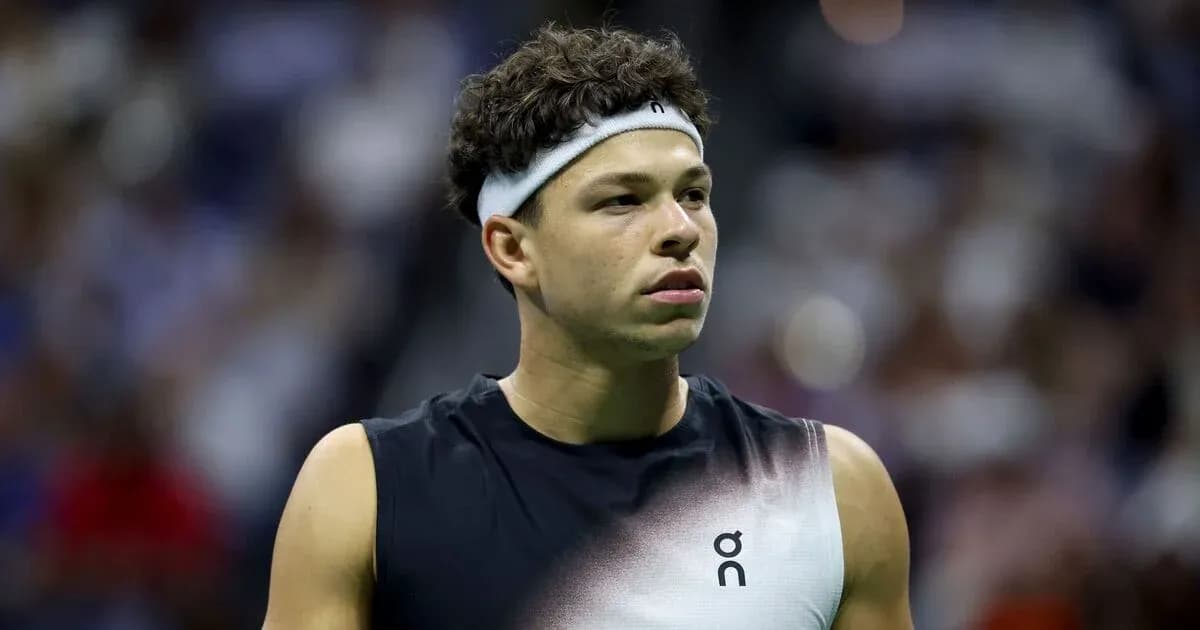
Ben Shelton plays the biggest match of his career, a US Open final against Alexander Zverev. It’s the kind of occasion every player dreams of, the kind of night when you want the people closest to you in the stands, living every point with you.
Yet his partner, Trinity Rodman, has her own stage to command. A professional footballer for Washington Spirit, she is scheduled to play against Boston Legacy at the same time as Shelton’s final. Two careers, two peak moments, one impossible clash.
Everyone wants to be there for their partner on a milestone day. For Rodman, that desire runs straight into the reality of elite sport. She has a match, a team, a responsibility. The question hangs in the air: what are the chances of her calling in sick? In truth, both know the answer. At this level, you show up. On both courts, in both sports.
Zverev’s run of finals and a late-night turning point
On the other side of the net from Shelton stands a man on a remarkable streak. Alexander Zverev has reached his third Grand Slam final in a row, a run that underlines his consistency on the biggest stages, whatever storms have swirled around his career.
He pointed to a low point in New York as a strange kind of catalyst. After a ragged second-round match that finished at 3am, Zverev and his team sat in the dressing room and laughed at how poorly he had played.
“After the second round at 3am, me and my team were in the dressing room actually laughing at how bad I was playing. That sense of humour helped me,” he said after booking his place in the final. From there, he sharpened his game, tightened his patterns, and built momentum.
“I have improved a little bit, otherwise I wouldn’t be in the US Open final,” he added, a dry understatement that barely covers the scale of his turnaround.
Now he stands one match away from another major title shot, facing a fearless American in front of a crowd desperate for a home champion.
Shelton’s flashpoint with the umpire
Shelton’s path to the final has not been short on emotion. In his semi-final against Frances Tiafoe, frustration boiled over in a tense exchange with chair umpire Aurelie Tourte.
The incident came when Tiafoe was allowed to replay a point. Tourte ruled that Tiafoe had put his hands up, signalling for the point to be stopped and justifying the retake. Shelton did not buy it.
He marched to the chair, bristling, and challenged the timing of the call. He argued that the umpire had intervened too late and should have spoken up immediately. “Why did you not say something then? How are you going to call it after. You’ve got to say something immediately,” he said, clearly unhappy with the explanation.
It was a flash of raw competitiveness, the kind of edge that has driven his run but will need careful channelling when the stakes rise again in the final.
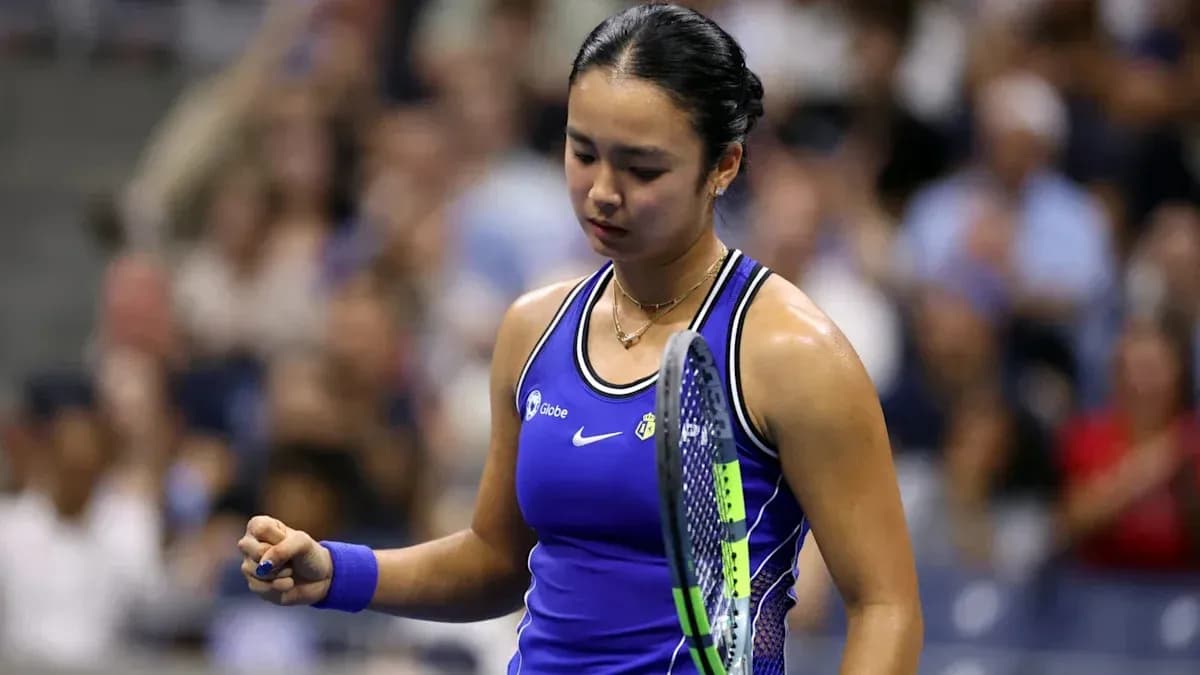
Eala faces ranking hit over Asian Games decision
Beyond New York, a different kind of calculation is playing out for Alex Eala.
The Filipino talent is reportedly unlikely to receive a WTA exemption to compete at the Asian Games, a ruling that would force a harsh choice. The Games in Japan clash with a mandatory WTA 1000 event in China, and skipping that tournament could cost her ranking points.
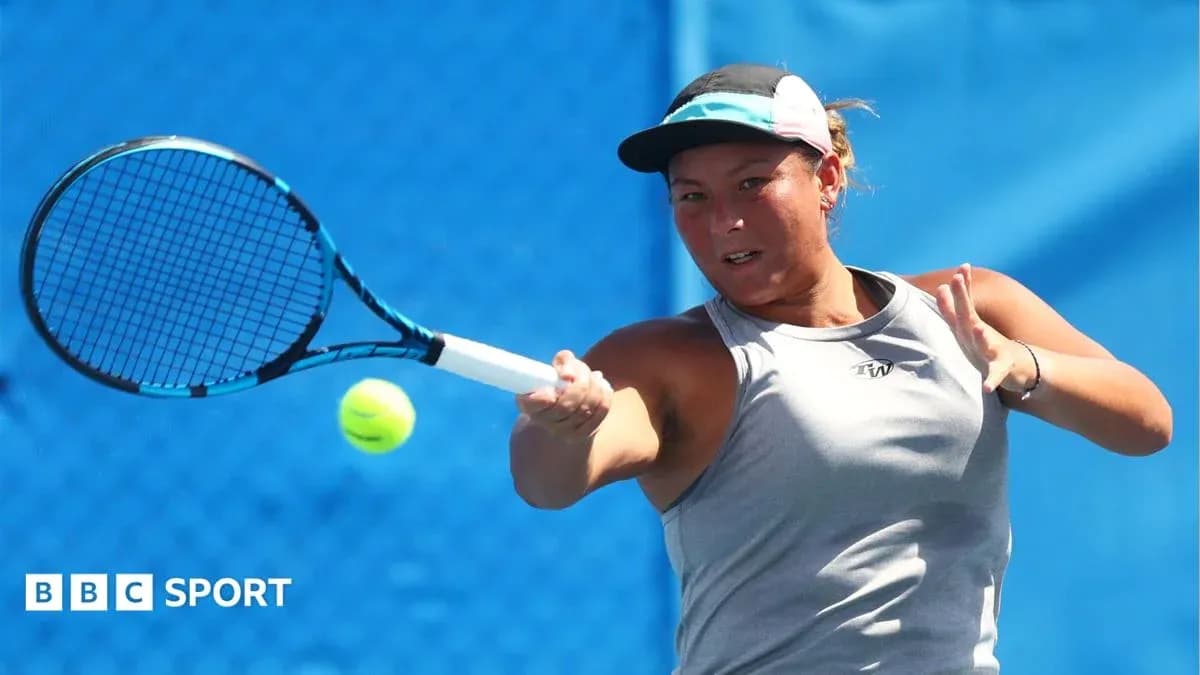
The precedent is not encouraging. Janice Tjen, world No. 36 from Indonesia and another Southeast Asian standout, has already gone public with her own setback. In a statement on Instagram, Tjen confirmed the WTA had denied her request for an exemption, leaving her unable to play the Asian Games.
“After a lot of consideration, I’ve had to make the difficult decision that I won’t be able to compete at the Asian Games this year which take place at the same time as the mandatory WTA 1000 event in Beijing,” she wrote. “We have received confirmation from the WTA that unfortunately, I have not been granted an exemption to compete at the Asian Games.”
For Eala, the likely outcome is similar: a painful compromise between representing her region on a multi-sport stage and protecting the hard-earned ranking that shapes her week-to-week career.
From packed stands in New York to tough choices in Asia, tennis on this US Open weekend feels unforgiving, unsentimental, and utterly compelling.