US Open 2026: Chaos Amidst Stellar Tennis Performances
By the time the last stragglers shuffled out of Flushing Meadows and the clock lurched towards another New York dawn, the tennis was over but the chaos was not. In one of the tournament shops, under a jagged hole in the ceiling, a small army of workers huddled around a burst pipe, wrestling with torrents of water threatening to drench thousands of pounds’ worth of merchandise.
It felt less like the US Open and more like a construction site that had accidentally hosted a grand slam.
Walk into Arthur Ashe Stadium this year and the welcome was a warning: “Pardon our appearance while we write the next chapter of Arthur Ashe Stadium.” The message tried for optimism. The reality was grim. Inside the bowels of one of the sport’s great cathedrals, the place looked and felt as if it were coming apart at the seams.
Leaks appeared in the media centre with such regularity they almost deserved their own schedule. Plastic sheets hung from the ceiling like ghostly curtains, funnelling water into buckets that filled with a relentless, mocking splash. In the nearby workers’ restaurant, a violent burst from above shut the place down for a day. Photographers, stationed in the photo pit, complained of nausea after breathing in rancid fumes seeping up from the drains.
This was a grand slam in name, but in too many corners it resembled a health-and-safety case study.
And that was only part of the story. On court, the tennis often soared. Off it, 2026 will go down as the US Open’s year of the influencers — and not in a good way. Ring lights popped up in the stands like invasive species. TikTok videos were filmed mid-rally, voices raised and phones held high while points were still live. Spectators repeatedly stood to take selfies as play unfolded behind them.
The modern mantra insists everyone must “grow the game”. At Ashe, it felt like the game needed protection instead. At times the chatter inside the stadium swelled so loudly that even Aryna Sabalenka’s trademark shrieks vanished into the din.
The scheduling only underlined the sense of a tournament at odds with itself. Between 11.30am on Tuesday and 3.33am on Wednesday, Ashe staged 16 hours of tennis that produced one of the great quarter-final days in recent memory: four matches, four deciding sets, drama stacked upon drama. Yet those early-morning finishes, lauded on social media for their insanity, remain a glaring symbol of a sport still unwilling to confront its own dysfunction.
For all that, the game itself refused to be drowned by the leaks or the noise.
Women’s Tennis
Women’s tennis owned this US Open. The entire top six reached the quarter-finals, a show of order and quality rarely seen in this era. For the first time in 51 years, the semi-finals belonged exclusively to the top four seeds, the rest of the tour locked out by sheer excellence.
Sabalenka’s run became one of the defining stories. Her comeback against Linda Noskova, the 21-year-old Wimbledon champion, stood as one of the matches of the year: brutal hitting, wild swings in momentum, and a reminder of the Belarusian’s sheer stubbornness. After a wretched summer, she somehow patched herself together, fought through the field and clawed her way into the final. When the dust settles, that alone will feel like an achievement.
At the other end of the emotional spectrum stood Elena Rybakina, calm in the eye of every storm. She arrived with the No 1 ranking, an achilles problem and a draw that looked like a trap. She left with the title. Her level on hard courts over the past year has been relentless, a quiet domination that matches her personality. While Sabalenka rages and roars, Rybakina glides — a reserved champion whose tennis does the shouting for her.
Zheng Qinwen lit up the middle rounds with the kind of defiance that can reshape a career. Down 0-5 in the third set against Madison Keys in the third round, she somehow reeled off seven straight games to steal it 7-5. She did it again in the first set of her fourth-round clash with Iga Swiatek, turning another 0-5 deficit into another 7-5 masterpiece. Those back-to-back escapes were staggering, the work of a player refusing to let the big stage slip away from her again.
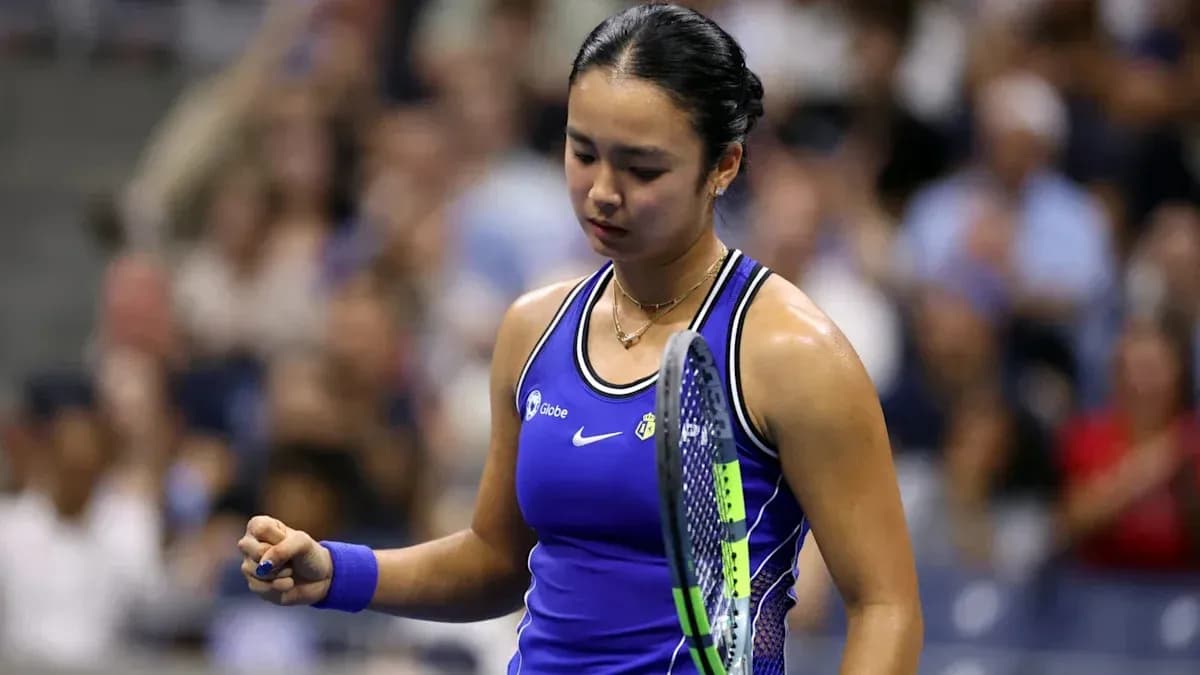
On the outer courts, Iva Jovic and Alexandra Eala showed another side of the sport. Friends off court, they fought deep into the night with a ferocity that never once dulled their respect for each other. It was a reminder that ruthlessness and warmth can coexist, even at the sharp end of professional tennis.
And then there was Coco Gauff. Twelve months ago, a broken serve left her in tears on court, her confidence visibly cracked. This time, she came back as a more complete player and a more resilient competitor, her run to the semi-finals a clear marker of just how far she has travelled in a year.
Men’s Event
The men’s event told a darker story.
Injuries have carved through the younger generation, and 2026 has felt like a year lost. Carlos Alcaraz and Jannik Sinner’s struggles have dominated the headlines, but they are only the most visible faces of a wider problem. Jack Draper, Holger Rune, Lorenzo Musetti, Arthur Fils, João Fonseca — all have spent long stretches on the sidelines. Even those who made it to New York are still paying for the time their bodies took away from them.
Yet the men’s draw still produced one moment that will live far beyond the broken pipes and the burst drains.
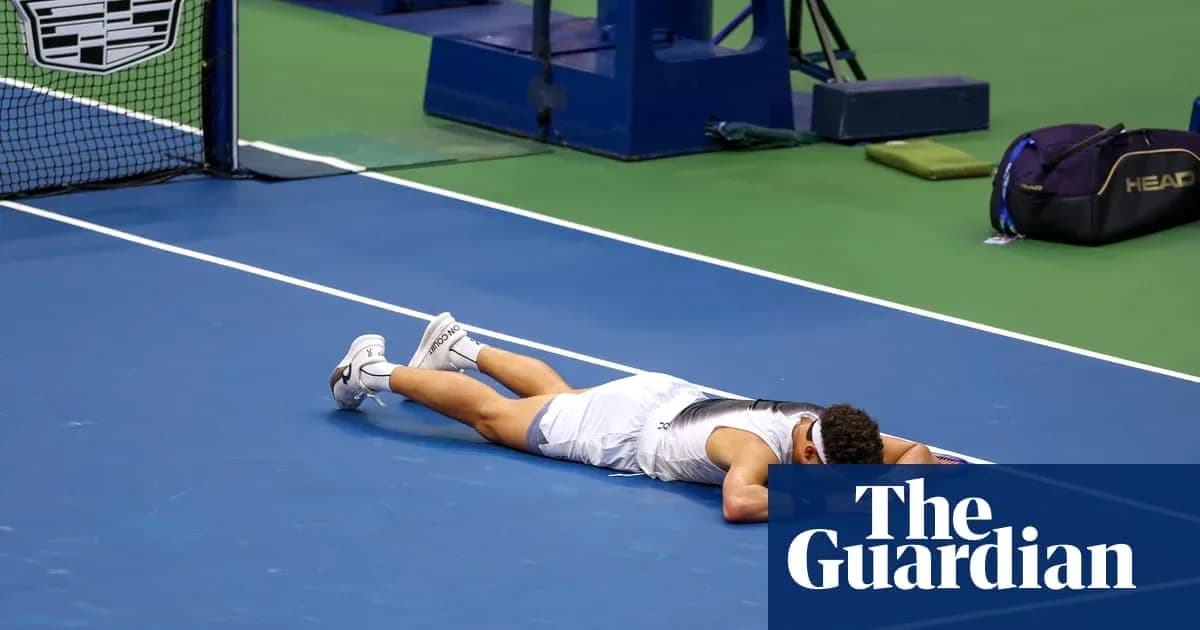
At 3.40am on Wednesday, after 4hr 28min of ferocious, lung-burning tennis, Ben Shelton finally put away Alcaraz in a fifth-set tie-break. The American’s victory was monumental. Alcaraz’s effort was something else entirely. He had pushed himself to the edge, vomiting repeatedly, refusing to back off, losing by the thinnest of margins.
Four and a half months earlier, a wrist injury had forced him out, left him unsure how his body would respond when he came back, whether he could still trust it under the heaviest load. In New York, in the small hours, he got his answer. He walked off Arthur Ashe defeated but restored, a player who had finally been allowed to feel like himself again.
As he disappeared into the tunnel that has seen so many shattered dreams and red eyes, his face broke into a wide, unguarded smile.
In a tournament where ceilings leaked, pipes burst and the circus in the stands sometimes threatened to drown out the sport, that image — a soaked, exhausted, grinning Alcaraz heading back to the locker room — may be the truest measure of what still makes the US Open matter.