US Open 2023: Late Nights and Player Fatigue
New York never sleeps. This year’s US Open is trying its best not to either.
Under the lights at Flushing Meadows, tennis has drifted deep into the small hours, turning the final Grand Slam of the year into a test of body clocks as much as backhands. Matches are starting late, finishing later, and spilling into the time usually reserved for street sweepers and bakery vans.
For some, it’s pure New York theatre. For others, it’s starting to look like an uneven playing field.
Zverev’s night shift
No one still in the men’s draw has lived the night-life quite like Alexander Zverev.
The top seed has seen three of his five matches finish after 1am. His sleep schedule has been so shredded that he described himself as “kind of a bit jet-lagged” and joked: “I feel like I'm playing the Australian Open in New York right now.”
It’s no exaggeration. Zverev says he has been to bed as late as 6:45am in the past week. After his first three wins, he didn’t get to sleep until after 5am. On his supposed night off, he stayed up to watch Ben Shelton’s marathon win over Carlos Alcaraz.
On Friday, he finally gets something resembling normality: a daytime semi-final against Karen Khachanov, scheduled not before 15:00 local time (20:00 BST). Remarkably, it will be the first time the German has played in daylight at this US Open.
Khachanov’s path could hardly be more different. Unseeded, unfussy, and unburdened by the night session, he has not been on court beyond midnight. His quarter-final win over Alexander Blockx wrapped up shortly before 19:00 on Wednesday. He’s had his evening, his dinner, his sleep. Routine. Rhythm. All the things Zverev has been denied.
At this level, those details matter.
Shelton and Tiafoe on different clocks
On the other side of the draw, the contrast is just as stark.
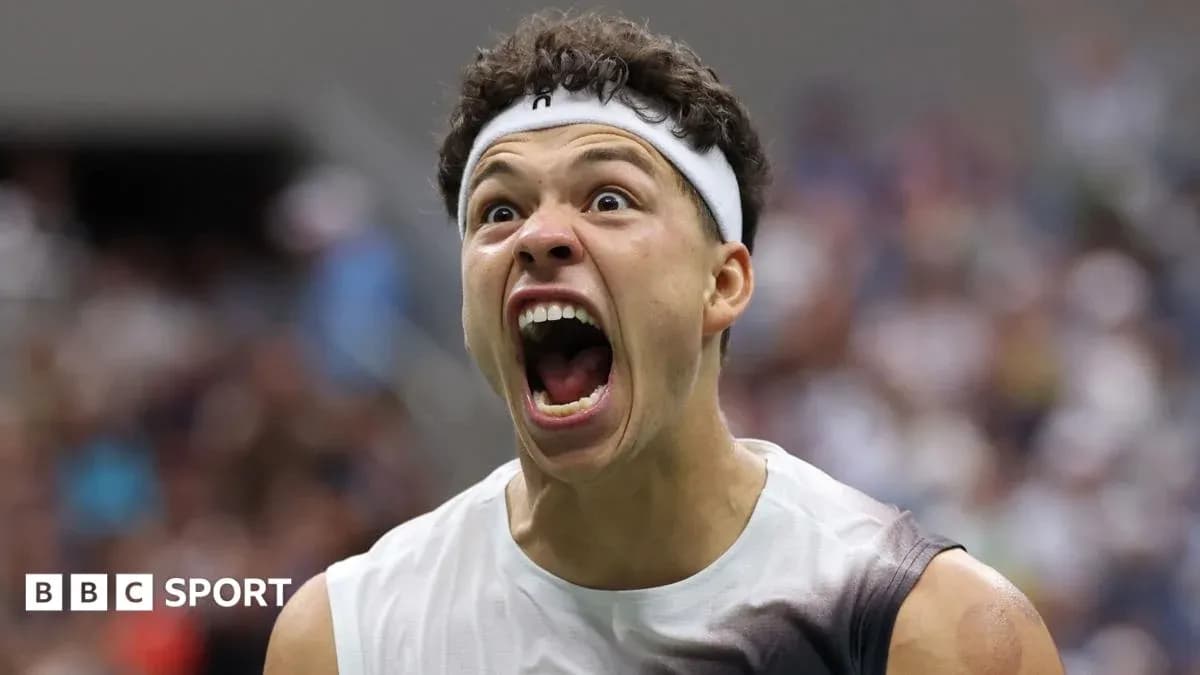
Ben Shelton’s quarter-final against Carlos Alcaraz did not end until 3:34am on Wednesday, the latest finish in US Open history. By the time he walked off Arthur Ashe Stadium, the city’s night owls were sharing the streets with early commuters.
Shelton now faces Frances Tiafoe in Friday’s night session (19:00 local time/00:00 BST, Sat). The American eighth seed insists he will be “all right” after two days without a match. He’ll need every hour.
Tiafoe, the 11th seed, has had a very different schedule. He finished his own quarter-final – a five-set battle against fellow American Alex Michelsen – at around 19:00 on Tuesday. Hardly an easy match, but it ended at a time that allowed a normal recovery: food, treatment, sleep.
Matt Little, Andy Murray’s long-time former strength and conditioning coach, does not sugar-coat the impact of that disparity.
“The advantage of the opponent who has played earlier in the day will be big – they've had that full evening's rest and a good night's sleep,” he told BBC Sport. “We can all relate to it – if you have one really bad night's sleep, you have the knock-on effect of that for the coming days.”
Little expects Shelton to spend the build-up in survival mode: napping whenever he can, loading up on carbohydrates and protein, fighting to restore some kind of routine. Hydration monitored, sleep maximised, but not so deep that the body shuts down completely.
You don’t prepare for a Grand Slam semi-final like that by choice.
A problem tennis already knows
This is not a new story for the sport. Murray lived the extreme version.
At the 2023 Australian Open, he famously finished his match against Thanasi Kokkinakis at 4am in what became the second-latest finish in Grand Slam history. He grabbed roughly three hours of sleep before returning to Melbourne Park around 11am. Later, he called the whole situation a “farce”.
The backlash forced some change. The Australian Open cut the number of day-session matches on its main courts from three to two, trying to reduce the chances of the night session being pushed deep into the night.
In early 2024, the ATP and WTA introduced rules preventing tour-level matches – the best-of-three kind – from starting after 23:00. But those rules stop at the Slam gates. The majors still operate on their own terms.
This fortnight in New York has underlined that gap.
Last week, Venus Williams and Sofia Kenin walked on court for a first-round match at 12:13am – the latest start in US Open history. It was one of three matches that finished after 2am in the first seven nights. Three others ended after 1am. Then Shelton and Alcaraz pushed the limits again with their 3:34am finish.
Martina Navratilova, an 18-time Grand Slam singles champion, did not mince her words: “Something has got to give. This is not OK and it is not normal.”
Essence of New York, or unfair edge?
Ask around and you hear two competing visions of what the US Open should be.
For some, these late-night epics are the tournament’s soul. The roars on Arthur Ashe Stadium at 2am, the sense that anything can happen under the lights, the way the city’s “never sleeps” identity seeps into the tennis – it all feels uniquely New York.
But the volume of early-morning finishes this year has pushed that romance into uncomfortable territory.
Tuesday’s programme on Ashe, which ultimately finished at 3:34am on Wednesday, was the perfect storm. All three preceding quarter-finals went the distance: Aryna Sabalenka outlasting Linda Noskova, Jessica Pegula edging past Emma Navarro, with Tiafoe’s five-setter squeezed between them. The schedule backed up, and the night session bled into dawn.
No one doubts the spectacle. The question is whether the sport can keep selling the chaos without compromising the competition.
When semi-finalists are going to bed as Manhattan heads to work, and rivals in the same round are already deep into recovery, the late-night buzz stops being just a show. It becomes an advantage – or a handicap – written into the draw.
At some point, the US Open will have to decide which it values more: the myth of the city that never sleeps, or the players who need to.