US Open 2023: Alcaraz and Sabalenka Lead the Charge
The lights are back on in Queens, the final Grand Slam of the year is in full swing, and the draw already carries the scars of a brutal first week. The US Open has begun with a familiar roar and a very unfamiliar sight: Novak Djokovic is gone.
While the tennis world digests that shock, the chase for the title — and for screens to watch it on — is wide open.
Alcaraz leads a shaken men’s field
Carlos Alcaraz returns to New York with a target on his back and a question over his body. This is his first event back from injury, yet he still opens as the man to beat. The defending champion, the favorite with the bookmakers, and now the de facto standard-bearer in a men’s draw missing some of its usual giants.
Jannik Sinner, one of the few players who can match Alcaraz’s firepower and intensity, is out injured. That removes one major obstacle. It doesn’t clear the path.
Alexander Zverev lurks with his heavy serve and uncompromising baseline game. Ben Shelton brings a left-handed cannon and a home crowd that feeds off every fist pump. Flavio Cobolli continues his rise, and Daniil Medvedev — a former champion here — knows exactly how to turn this hard court into his chessboard.
Yet the biggest jolt came from a name few expected to headline the early rounds.
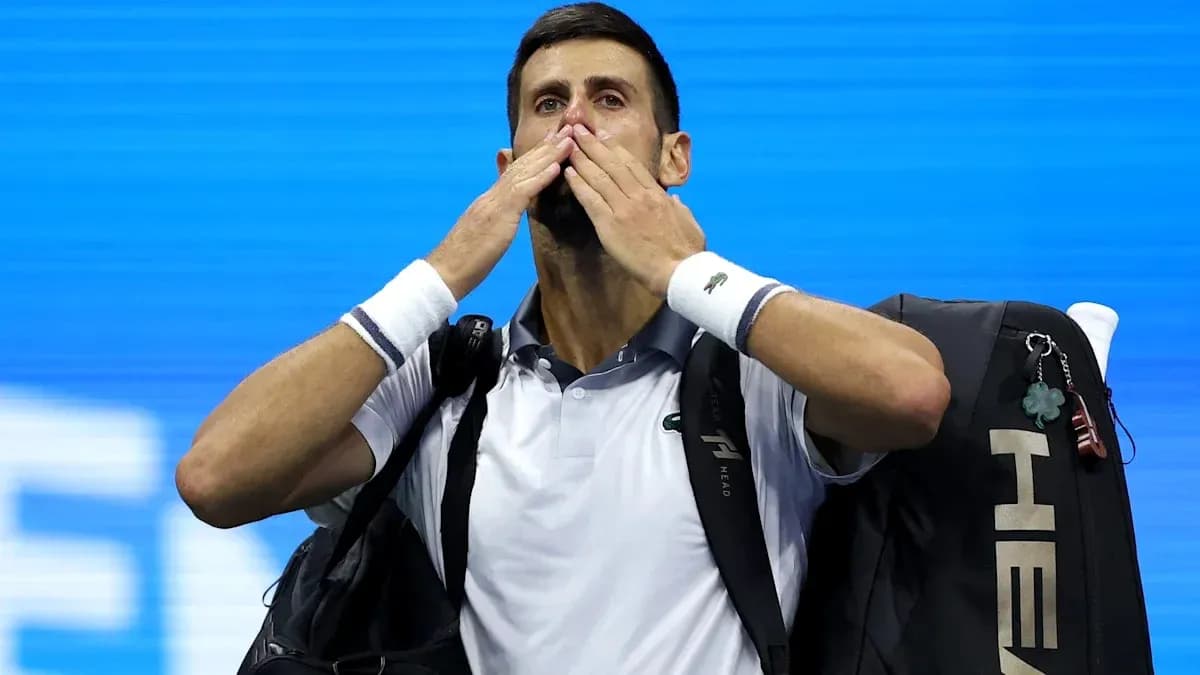
Djokovic, a four-time US Open champion and the sport’s great escape artist, fell in the first round to Mariano Navone in a punishing five-set duel. A marathon. A statement. And a reminder that New York, perhaps more than any other Slam, shows no mercy to reputation.
Alex de Minaur, Felix Auger-Aliassime, and Lorenzo Musetti have also exited, stripping away more seeds and adding a sense that this men’s tournament could tilt in any direction. For now, though, the odds still lean toward Alcaraz. At the start of the event, DraftKings had him as the +120 favorite for the title.
Sabalenka defends crown with No. 1 on the line
On the women’s side, Aryna Sabalenka stands at the center of the storm. She’s not just defending her US Open title; she’s defending her status at the top of the sport.
The women’s world No. 1 ranking is in play. Elena Rybakina, Coco Gauff, and Jessica Pegula all have a shot at knocking Sabalenka from that perch if results fall their way. Every round carries ranking weight. Every service game feels a little heavier.
Iga Świątek, the 2022 US Open champion, isn’t in position to reclaim No. 1 right now, but her form is turning heads again. After a rocky stretch earlier this season, she’s strung together a strong month and has slipped back into that familiar role: the player nobody wants in their section of the draw.
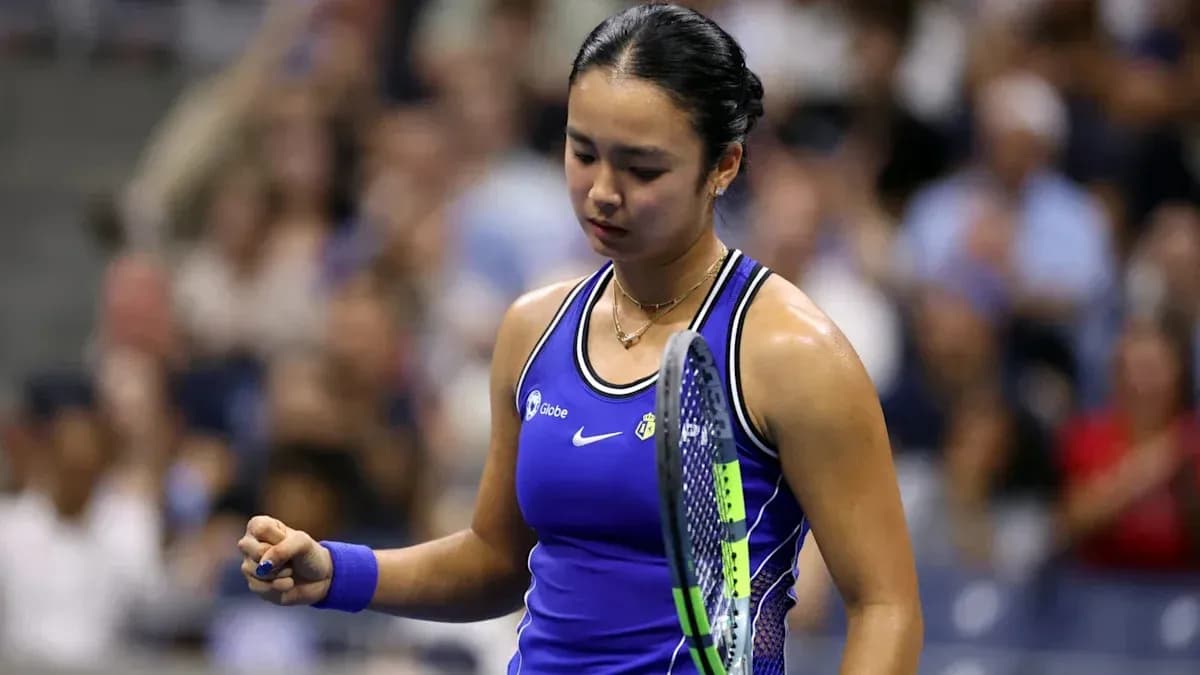
Alex Eala has emerged as another name to track, bringing fearless ball-striking to the big stage. Naomi Osaka, a multiple champion in New York, remains one of the most compelling figures in the tournament, her every appearance measured against the heights she once set here.
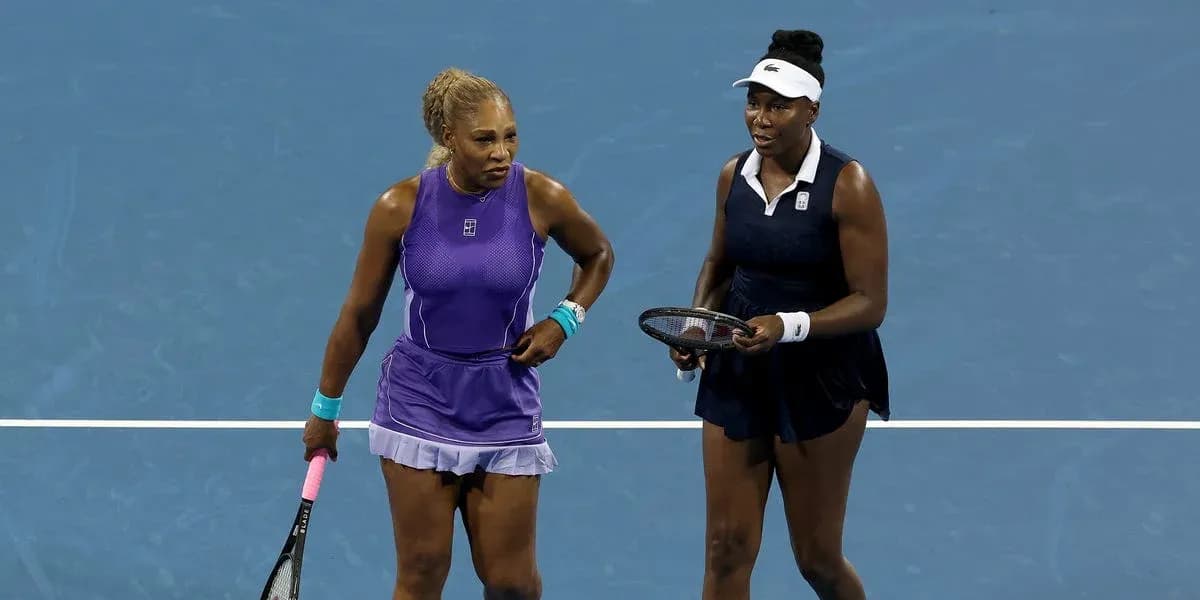
Venus Williams has already departed the singles draw after a first-round loss, but her story in this tournament isn’t finished. She teams up with Serena Williams in women’s doubles, a pairing that guarantees at least one more surge of nostalgia and noise on these courts.
So far, the women’s event has held form. Upsets have been rarer, the top names largely intact. The sense is that the real collisions — Sabalenka, Rybakina, Gauff, Pegula, Świątek — are still coming.
Sabalenka, for now, stands as the favorite with DraftKings pricing her at +290 to lift the trophy again.
Where the drama unfolds: Flushing Meadows
All of this plays out in Queens, at the USTA Billie Jean King National Tennis Center in Flushing Meadows-Corona Park. Hard courts that reward aggression, punishing humidity, night sessions that feel like prizefights — the US Open remains tennis’s loudest stage.
From Arthur Ashe Stadium under the lights to the outer courts where early-round epics unfold in front of packed bleachers, the setting adds its own pressure. Players don’t just face an opponent here. They face the city.
How to watch in the US
For American fans, the coverage is sprawling.
ESPN, ESPN2, and ABC carry broadcast coverage across the United States. Matches that don’t make it onto those linear channels land on ESPN+ as streaming exclusives.
The most complete option is ESPN Unlimited. At $32 a month, it unlocks live streams from the main ESPN channels, ESPN on ABC content, and ESPN+ programming, which means access to those tucked-away matches that never hit traditional TV.
Cable-cutters have strong alternatives. Fubo and YouTube TV both carry ABC, ESPN, and ESPN2 and sit at the center of most US Open viewing plans.
Fubo’s Sports + News plan, at $65 a month, includes those key channels among roughly 30 in total. New users can start with a free trial and then receive $10 off the first month. The Pro and Elite packages, which climb past 200 channels, also include ABC, ESPN, and ESPN2 — and all three Fubo plans fold in ESPN Unlimited at no extra charge, covering both broadcast and ESPN+ exclusives in one move.
YouTube TV offers ABC, ESPN, and ESPN2 in both its Main and Sports plans. The Main plan lists at $83 a month, but a current promotion cuts $15 off the first five months for new users. The Sports plan, normally $65 a month, is discounted to $45 a month for the first six months for a limited time. Both plans come with a free trial, giving fans a way to test the setup while the tournament heats up.
Watching from the UK
In the UK, the US Open belongs to Sky Sports.
Fans can tune in through a Sky TV plan, with pricing shaped by contract length and bundled channels. Those who don’t want a long-term commitment can opt for Now, which streams Sky Sports and offers flexible memberships, including a single-day pass at £15 — a one-off ticket for a packed day of New York tennis.
How Australia is tuning in
Australian viewers chasing every ball, every court, every late-night finish will need Stan Sport. The service costs $30 a month in total: $10 for a base Stan subscription and an extra $20 for the Sport add-on. That combination delivers comprehensive US Open coverage.
Channel Nine and its streaming platform 9Now provide select matches for free once viewers create a login. Historically, as the tournament progresses, that free coverage has broadened, with a clear emphasis on top seeds and Australian players.
The same pattern is emerging again. If an Aussie is making noise, or a major name is in trouble, chances are it will find a home on Nine or 9Now.
Watching from anywhere: the VPN route
For fans traveling or living outside their usual broadcast region, a VPN has become a common tool to keep up with familiar services.
A virtual private network can temporarily change the apparent location of a device, helping users access streaming platforms they subscribe to at home while abroad and adding a layer of cybersecurity in the process.
Proton VPN stands out among the established options. It’s built with an emphasis on ease of use, even for newcomers, includes a range of security features, and offers a broad spread of global servers.
Legal rules vary by country, and some streaming platforms forbid the use of VPNs to bypass regional restrictions in their terms of service. Using a VPN in such ways may breach those terms, and VPNs are outright illegal in certain jurisdictions. Business Insider does not endorse or condone illegal use.
The draw has already ripped up a few scripts. Djokovic is out. Seeds have fallen. The favorites, Alcaraz and Sabalenka, still stand at the front of their fields, but New York has a habit of turning certainty into rubble.
The question now is simple: who will still be standing when the noise finally dies at Flushing Meadows?