Uefa's Legal Battle Against Fifa's Infantino: A Fight for Reform
The language is incendiary, even by football’s often brutal political standards.
“Criminal mismanagement.”
“A stunning dereliction of duty.”
“A fraudulently off-market price promoted by Infantino for his own benefit.”
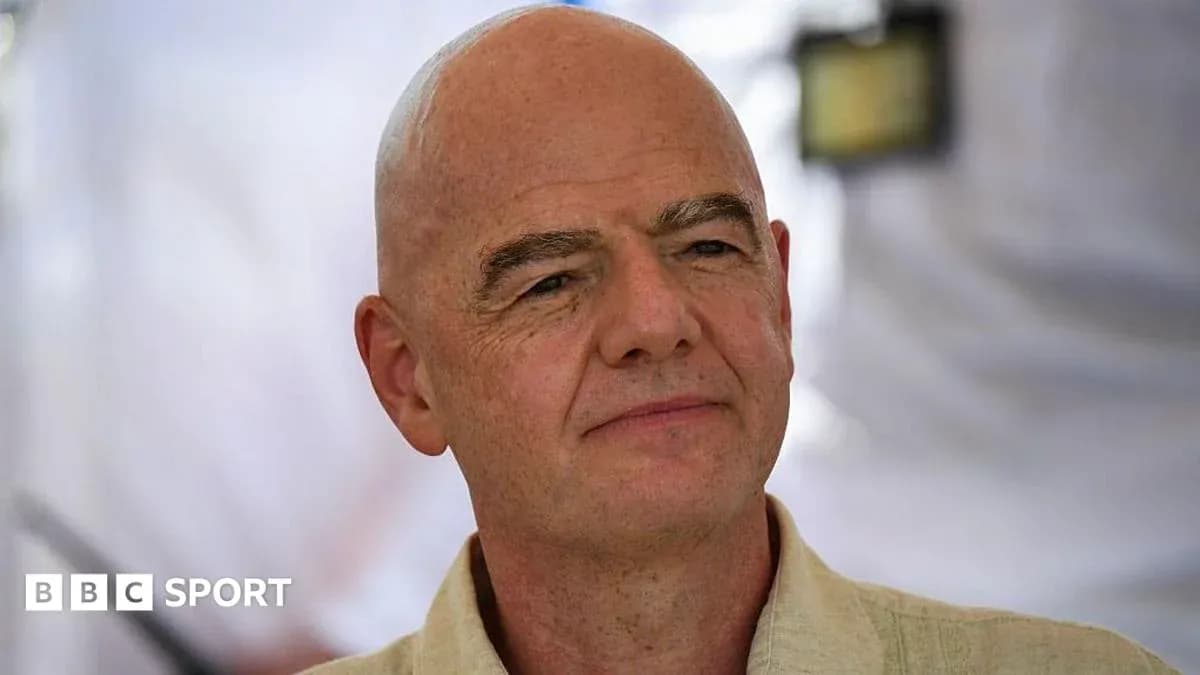
Those are not the words of activists or anonymous briefings. They are written by Uefa’s own lawyers in legal filings lodged in the United States, aimed squarely at Fifa president Gianni Infantino and his now-abandoned Fifa Forward Enterprise (FFE) plan.
At the heart of the documents is a simple, explosive claim: that Infantino tried to sell chunks of Fifa’s crown-jewel competitions to private investors at an “absurdly low enterprise value” for the World Cup, in a deal “neither the product of an open, competitive auction, nor tested by any independent valuer”. Uefa says the scheme inflicted “direct and concrete injury… to the detriment of Fifa as well as its 211 members”, all under “a veil of secrecy”.
This is no longer just a political feud. It is being prepared as a legal war.
Uefa goes to court
The filings, which refer to Infantino’s “cronies” and “co-conspirators” and even devote a chapter to “the enduring history of corruption among Fifa officials”, ask US courts to unlock evidence and documents for use in potential criminal proceedings in Switzerland against the Fifa president.
More than a month has passed since the FFE project burst into public view and then collapsed within days. The fallout has only grown darker. There have been coordinated statements from former players, politicians and fan groups. There was the leak of claims – “categorically untrue”, Infantino insists – that an alleged lover received a severance payment from Uefa while he worked there.
Now comes the threat of criminal action.
For Uefa, this is a dramatic escalation, a clear signal that it is not content with political pressure or moral outrage. It wants to build a case that could, in theory, end Infantino’s presidency in a courtroom rather than a congress hall.
Infantino’s unlikely “good week”
The timing is laced with irony. On the pitch and in the corridors of power, Infantino has just enjoyed arguably his strongest week since the scandal broke.
He secured a carefully worded but symbolically important endorsement from the Saudi Arabian Football Federation, which declared that “at this time [it] supports the continued efforts of Gianni Infantino to restore unity”. Uefa, having rattled its sabre with talk of boycotting Fifa competitions, stepped back after receiving assurances that the FFE model would not return. That retreat was widely read as another victory for the president.
Infantino, for now, survives. More than that, he looks emboldened.
While lawyers trade accusations, he has been on the move. Dominican Republic. Paris. Vietnam, where he posted video of what he called a “wonderful” visit. The itinerary resembles a world tour of reassurance, an attempt to lock in support across the global game before the next storm hits.
Inside Fifa, officials insist their focus is on delivering the U20 Women’s World Cup in Poland next week. Outside, Uefa is loading its legal ammunition.
The battle for disclosure
The next key move lies not in Zurich but in the US legal system. Uefa wants American courts to compel disclosure of documents and communications relating to the FFE scheme.
Targets include Fifa itself, Thrive Capital – the venture capital firm lined up as the lead investor – its founder Josh Kushner, and former Formula 1 boss Greg Maffei, described as “the key commercial adviser” on the proposed deal. Uefa’s lawyers are seeking subpoenas for documents, communications and deposition testimony from Thrive and Kushner.
Kushner, brother of Jared Kushner, has stayed silent so far. Legal specialists suggest he could try to block any subpoena, arguing that the details of the proposed investment must remain confidential to protect his business and future deals. His plate is already full: he has just agreed a record £9.3bn purchase of the Los Angeles Lakers.
No-one can yet say how long this process will take, or whether Uefa will get the material it believes will show that the World Cup was deliberately undervalued at around £15bn. Nor is it certain that Uefa will ultimately file a criminal complaint in Switzerland. Even if it does, there is no guarantee prosecutors will act.
History offers a sobering reminder. In 2002, amid another bout of Fifa infighting, several executive committee members filed a criminal complaint against then president Sepp Blatter. Zurich’s public prosecutor declined to proceed, and Blatter denied any wrongdoing. Last year, the Swiss Attorney General’s long-running attempt to convict Blatter and former Uefa president Michel Platini ended with both men fully cleared.
Nick De Marco KC, one of sport’s leading barristers, believes the first hurdle – disclosure – is where Uefa’s chances look strongest.
“What Uefa have to show is that they have an arguable case for criminal proceedings to be brought against Infantino,” he explains. “If they can show that… then they ought to be given disclosure of a lot of the documents.”
He expects the disclosure application to succeed, but warns that what follows will rest entirely with Swiss prosecutors. “We’re a long way off from that,” he says of any trial. His prediction is narrower but telling: expect “very interesting documents” and “more light shone onto this plan”.
Reform promises and raw politics
Uefa knows it is entering a complex legal landscape. Perhaps with that in mind, it has framed its campaign in broader terms, promising to “secure fundamental reform, restore proper limits on presidential authority and ensure that Fifa is once again governed as an institution – not around one individual”. It also demands a “genuinely independent external review of FFE”.
This is about Infantino, but not only about Infantino. It is about the structure that allowed a plan of this scale to reach the brink of reality with so little transparency.
Yet the political arithmetic remains stubborn. Infantino still enjoys significant support in South America, Africa and parts of Asia. He has, so far, ridden out every wave Uefa has sent his way. Many insiders expect him not only to complete his term but to stand again in the spring for a fourth mandate.
Uefa has already drawn its line in the sand. If he runs, it says it will “join forces with its partner confederations to ensure that member associations are offered a credible alternative – one committed to integrity, accountability, development and genuine institutional change”.
Finding that figure is the next great challenge.
Who dares to run?
The question is not whether there are qualified candidates. It is whether any one of them can unite a fractured sport.
“We would want to have a candidate, obviously, who would champion that agenda and be committed to a process of reform and change,” Uefa vice-president Laura McAllister told BBC Sport in Monaco. “I think there are lots of credible candidates out there, but it has to be a candidate that can unite that standpoint and somebody who has the credentials and the credibility and the buy-in to really champion that agenda.”
Her checklist is clear: transparency, independence, proper scrutiny, due diligence. Governance anchored in principles, not personalities.
“We knew this wouldn’t be a simple process and we knew that change wouldn’t happen overnight,” she added.
That patience will be tested over the next few months. In October, Infantino will sit across the table from some of his most outspoken critics at what promises to be a combustible Fifa Council meeting – the first since the FFE rebellion. A month later, the deadline for presidential nominations arrives. In March, the election is due. If Infantino’s name is on the ballot, the vote will define not just his future, but the direction of the sport he controls.
Until then, the game lives with an open wound. The legal filings, the accusations of “criminal mismanagement”, the talk of “co-conspirators” – all of it underlines a simple truth: football’s most powerful institution is at war with itself.
Reunification? Right now, it feels like the most ambitious project of all.