Towhid Hridoy Shatters Record with Unbeaten 350 in South Africa
In Potchefstroom, the past and the future collided for Towhid Hridoy.
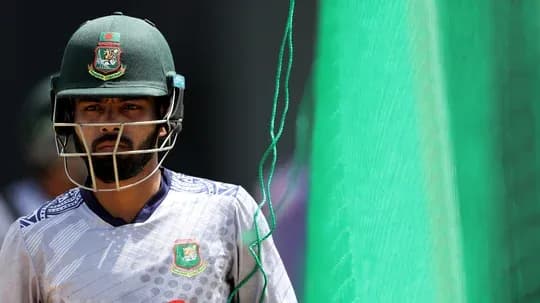
On the same South African ground where he lifted the ICC Under-19 World Cup trophy in 2020, the Bangladesh batter returned this week and carved his name into the record books with an unbeaten 350 against South Africa A – the highest first-class score ever by a Bangladeshi.
He did it almost by accident.
Hridoy was not originally part of some grand red-ball plan. He flew out to join Bangladesh A alongside Nurul Hasan, Rishad Hossain and Mohammad Saifuddin only after injuries and visa complications left the touring squad short of players. He was, in effect, a reinforcement. A problem-solver.
At the airport in Dhaka, there was no talk of a Test audition, no bold declarations about reclaiming a red-ball spot. He spoke about something else entirely – white-ball cricket, the upcoming tour of South Africa, and the ODI World Cup next year.
“The preparation is very important and as we have a national team tour and the World Cup (ODI), will try to prepare for it,” he told reporters before boarding. His eyes were on the white ball, not the red.
That mindset told its own story.
Hridoy has already lived through the brutal side of Test selection. He waited more than three years after his white-ball debut to finally get a crack at the Test side, only to be discarded after a single match – the second Test against Zimbabwe in Harare – when he failed to make an impression. Three days of Test cricket. One chance. Then the door shut.
Since then, the narrative around him hardened. Some said he had been picked too early for the longest format. Others questioned his technique, arguing it was built for the tempo and angles of white-ball cricket rather than the demands of a five-day game. Very few stuck their necks out to argue he deserved a sustained run in Tests.
All this sat awkwardly against the message from the national selection panel, which has repeatedly stressed that breaking into the national side in any format is difficult, but that once a player gets in, they will be given a fair stretch to prove their worth. That promise never really applied to Hridoy in red-ball cricket. He was in, then abruptly out, and the scars of that experience still shape the way he talks about his Test ambitions.
So when he landed in South Africa this time, he did not carry the burden of a Test trial. He was not auditioning in his own head. That absence of pressure turned into a quiet gift.
Freed from the noise, he batted. And batted. And batted.
The right-hander became only the third Bangladeshi to score a triple hundred in first-class cricket, and he did not stop there. Tamim Iqbal’s unbeaten 334 and Raqibul Hasan’s unbeaten 313, once towering landmarks, were both swept aside as Hridoy surged past them to claim the highest first-class score by a Bangladeshi batter.
It was not just a big innings. It was a statement – even if he refused to dress it up as one.
“This is not entirely my call, as a professional player I always want to do well, I have said this on many occasions before, how many matches I will play for the national team will depend on the selectors, if I get the opportunity I will try to do well,” he said after the game when asked about his red-ball future.
No demands. No ultimatums. Just a reminder that his bat had done the loudest talking of all.
Now, the conversation shifts to the selectors’ room.
Bangladesh’s next Test series will arrive with Hridoy’s 350 looming over every discussion. It is impossible to ignore a score of that magnitude, especially when it comes against South Africa A, away from home, at a venue where conditions can expose technical flaws quickly. His name will be on the table. It has to be.
Yet the real question is not whether he makes the squad. It is what happens after that.
Bangladesh cannot afford a repeat of Harare – a token opportunity, a quick judgment, and another swift exit. If they bring Hridoy back into the Test fold now, they must do more than hand him a cap. They must convince him, and themselves, that he will be allowed to grow into the role, to make mistakes, to learn the rhythms of the format he has just dominated at A-team level.
For now, he seems determined not to let his future cloud his present. His lack of concern about red-ball selection, intentional or not, gave him the clarity to express himself fully in Potchefstroom. No fear of failure. No mental calculations about averages and chances. Just the simple, old-fashioned act of batting long.
The result was a marathon that has changed the tone of his story.
From white-ball specialist to record-breaking first-class run machine, Hridoy has forced a rethink. The next move belongs to the selectors.