Towhid Hridoy Sets New Record with Unbeaten 350 in Potchefstroom
Six and a half years ago, Towhid Hridoy walked off the field in Potchefstroom as a world champion, part of the Bangladesh Under-19 side that stunned the cricketing hierarchy. He has returned to the same South African town as something else entirely — a record-breaking run machine.
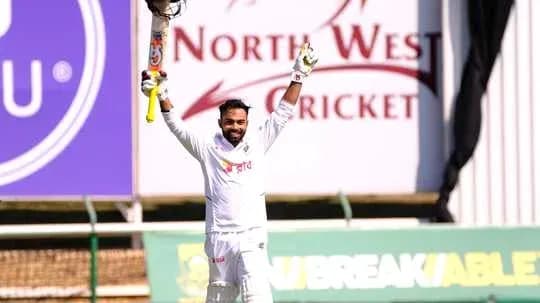
On Wednesday at the NWC Oval, the Bangladesh ‘A’ captain carved his name into history with an unbeaten 350, the highest first-class score ever by a Bangladeshi batter. No Bangladeshi had ever reached 350 in first-class cricket. No Bangladeshi had ever made a triple hundred outside home. Hridoy ticked off both, and kept going.
A marathon for the ages
He started the fourth day on 204, already in rare air. By stumps, he had turned it into a landmark innings that will be spoken about every time Bangladesh discuss their greatest knocks.
Hridoy finished 350 not out from 481 balls, laced with 27 fours and 10 sixes. He batted through the entire innings, shepherded the lower order and turned a strong position into an unassailable one.
On the way, he vaulted past two giants of Bangladesh’s first-class history. Tamim Iqbal’s unbeaten 334 and Raqibul Hasan’s unbeaten 313 had stood as the country’s benchmark scores. Hridoy swept them aside, setting a new summit that will take some climbing.
He also stepped into a different kind of club. Only three Bangladeshi batters have ever scored a triple hundred in first-class cricket; Hridoy is now one of them. And unlike the others, he did it in alien conditions, on South African soil, against South African quicks.
The scale of the feat goes beyond Bangladesh. His 350 is the highest first-class score by an overseas batter in South Africa, and only one player in the country’s long domestic history has ever gone higher in a single innings: Stephen Cook, with 390.
Records, then a handshake
Bangladesh ‘A’ declared on 676 for eight, a towering reply that gave them a 164-run lead after South Africa ‘A’ had piled up 512 in their first innings. Hridoy walked off unbeaten, bat raised, his teammates lined up on the balcony.
South Africa ‘A’ reached 18 without loss before both captains agreed to the draw. The match fizzled out on the scoreboard, but the contest had already delivered its defining story.
For Hridoy, the numbers were only part of the tale. “To be honest this innings gave me a lot of confidence. After picking the Man of the Match trophy I was feeling that someday I will play an innings like this in the national team,” he said afterwards, already looking beyond Potchefstroom to the highest level.
Tamim’s record falls, and he applauds
Back home, the man whose record fell did not hesitate. Tamim Iqbal — former national captain and now BCB president — watched his own mark disappear and chose celebration over sentiment.
“Scoring a 350-run innings anywhere, at any level and in any context, is a remarkable achievement. But if that innings comes in South Africa, it has to be described as extraordinary,” Tamim wrote on his Facebook page.
“They say records are meant to be broken. I am very happy that my record has been broken.
“Congratulations to Towhid Hridoy on making history. Becoming the first Bangladeshi batter to reach 350 is not just a personal achievement; it is also a symbol of the progress of cricket in the country.”
From one left-handed trailblazer to a new standard-bearer, it felt like a passing of the torch.
Series to South Africa, statement to the future
On the series ledger, South Africa ‘A’ still walked away on top. Their innings-and-413-run demolition in the opening game in Pretoria sealed a 1-0 win in the two-match four-day contest.
But within that scoreline sits a different kind of result. Bangladesh ‘A’ arrived bruised after that first thrashing; they leave with a historic innings, a mountain of runs, and a captain who has just proved he can dominate in tough overseas conditions.
Next comes white-ball cricket. The two sides now turn to a three-match one-day series, starting in Bloemfontein on September 6.
Hridoy will walk into that game as the man who turned Potchefstroom into his own canvas. The question now is simple: how long before he paints something similar in full Bangladesh colours?