Tory Burch's New York Fashion Week Show: A Bold Reinvention
NEW YORK – Ready or not, Tory Burch is in total control of the moment.
Just when her playbook seems familiar, she tears it up. On Thursday night, deep in the Sunken Garden by Isamu Noguchi in downtown Manhattan, Burch turned the first official day of New York Fashion Week into a quiet power move, staging a show that felt both subterranean and skyward at once.
This was not an underground designer searching for relevance. This was a major American name choosing to go below ground to reset the atmosphere, then rising with a collection that pushed her ongoing reinvention another step forward.
A front row with its own soundtrack
The guest list alone could have been the headline. Lauryn Hill arrived like a living reference point for the show’s mood board, flanked by daughter Sara Marley and niece Kymora Marley. Amanda Seyfried slipped into her seat. Chloe Fineman brought the downtown wit. Anna Wintour, the immovable center of any fashion week orbit, took her usual place.
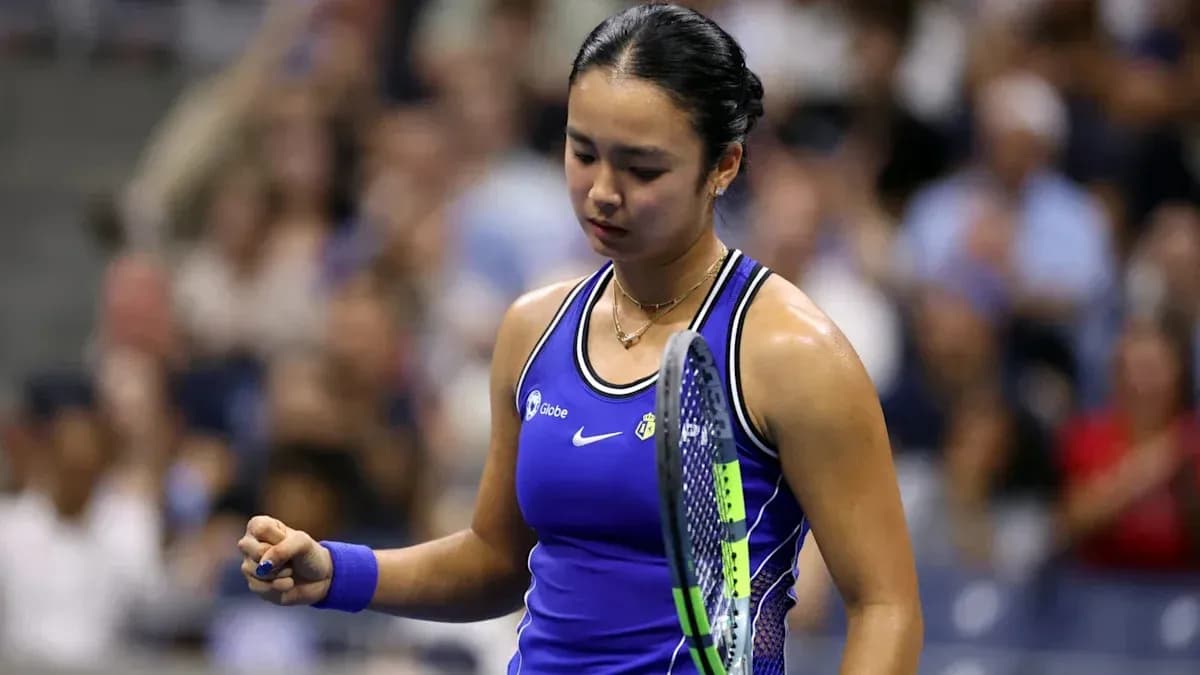
Alex Eala, the teenage tennis talent who lit up the US Open before bowing out to close friend Iva Jovic, crossed over from the court to the catwalk sidelines. Emerging musician Ravyn Lenae joined more established names like Padma Lakshmi and director Janicza Bravo, a mix that underlined Burch’s current sweet spot: somewhere between establishment and edge.
Hill drew the cameras the moment she appeared. Oversized sunglasses. An olive-green cinched top and tiered skirt. A silk scarf draped over her head with the ease of someone who has nothing left to prove. On her lap, and on nearly every lap in the front row, sat the same object: Burch’s newly released Bunny Knot bag. Hill’s version came in butter yellow, its dark knot detailing reading like playful polka dots under the flashes.
Music as message
Burch has turned her soundtracks into a second language. After blasting Dolly Parton’s “9 to 5” at her fall/winter 2026 show in February, she opened this one with “Bad Moon Rising” by Creedence Clearwater Revival. The choice set an almost ominous twang over the sculptural space.
Then the mood shifted. Enya’s “Boadicea” floated in — the same haunting instrumental Lauryn Hill and The Fugees sampled for “Ready or Not” on their 1996 album “The Score.” With Hill sitting steps from the runway, the reference landed with precision. It was less nostalgia, more a reminder of how Burch now threads culture, memory, and clothes into one narrative.
An hour later, over in Chelsea, the Public School runway would spin the same track. On this night, though, it belonged to Burch.
The Tory-ssance, continued
The last time Burch showed in a dramatic, circular space — the Gilder Center at the American Museum of Natural History in September 2023 — she effectively hit reset. That show marked the start of what’s been dubbed the “Tory-ssance”: a shift from polished, preppy reliability to a cooler, sharper, more experimental brand of American elegance.
Thursday’s collection pushed that evolution further. Spring florals, a fashion cliché if there ever was one, suddenly felt alive again.
She worked with unexpected color pairings: lavender clashing gently with teal, aubergine cutting against emerald green. Florals appeared as embroidery and as garlands, draped around the neck or carried like gajra alongside a purse, turning decoration into almost ritual adornment.
Butter yellow met deep gray. Kelly green snapped against eggplant purple. One standout look featured a golden brown textured jacket that seemed to bloom off the body, like a plant mid-flower. The familiar Burch draping at the bodice loosened into flowing skirts, the silhouettes less rigid, more about movement and ease.
Emily Ratajkowski, a frequent Burch muse, took the runway in a look that summed up the collection’s new tension: a slightly sheer navy tank with red detailing, a matching pleated navy midi skirt, and a brown medallion belt. Sexy, but not shouting. Controlled, but not stiff.
Beauty, utility, and a wink
In her show notes, Burch called the collection “opulent femininity meets American pragmatism, seen through the collector’s eye.” She described spring/summer 2027 as an exploration of “the psychology of how women pull things together. They want beauty, utility, and humor – the joy of getting dressed.”
On the runway, that translated into clothes that looked built for real lives, not just red carpets: pieces that could move from a meeting to a gallery opening, from a downtown dinner to a late-night concert, without losing their edge. The humor arrived in those clever color clashes, in the Bunny Knot bag perched everywhere you looked, in the sly musical nod to the woman sitting front row.
Burch didn’t need pyrotechnics or viral gimmicks. She had a sunken garden, a perfectly calibrated soundtrack, a front row that told its own story, and a collection that made florals feel new again.
The question now isn’t whether Tory Burch can surprise. It’s how much further she’s willing to push this American renaissance she’s already set in motion.