Tilak Varma's Role in India's T20I Resurgence
India’s T20I reset rolls on this week, but one question refuses to go away: where exactly does Tilak Varma fit?
A three-match series against Afghanistan, starting September 13, offers India another chance to search for rhythm and identity in the shortest format. On paper, the squad is loaded. In reality, the batting order still feels like a puzzle with one stubborn, undecided piece – the vice-captain.
A world title, then a wobble
India should have been riding a wave after clinching back-to-back T20 World Cup titles earlier this year. Instead, the comedown has been sharp.
Under Shreyas Iyer, they crashed to six straight defeats in T20Is against Ireland and England, a run that stripped away the aura built on the global stage. A 3-0 sweep of Zimbabwe steadied the ship, but it did not fully answer the bigger questions about structure, roles and long-term planning.
Now comes Afghanistan. Then a historic T20I against Japan. Then the Asian Games 2026. The calendar is packed. The vision, less so.
AB de Villiers spots the fault line
From the outside, one of the sharpest assessments has come from AB de Villiers. Speaking on his YouTube channel, the former South Africa great did not hold back on where he sees India’s main headache.
“There will definitely be some selection issues with regard to the batters,” he said, before listing the names that crowd the middle of the order: Shreyas Iyer as captain, Ishan Kishan, Sanju Samson, Vaibhav Sooryavanshi, plus the all-round options. Then came the key line on Tilak Varma: “I think that’s where the balance is quite tricky. Where will he bat?”
That single question cuts to the heart of India’s T20 conundrum.
Tilak’s numbers – and the fine print
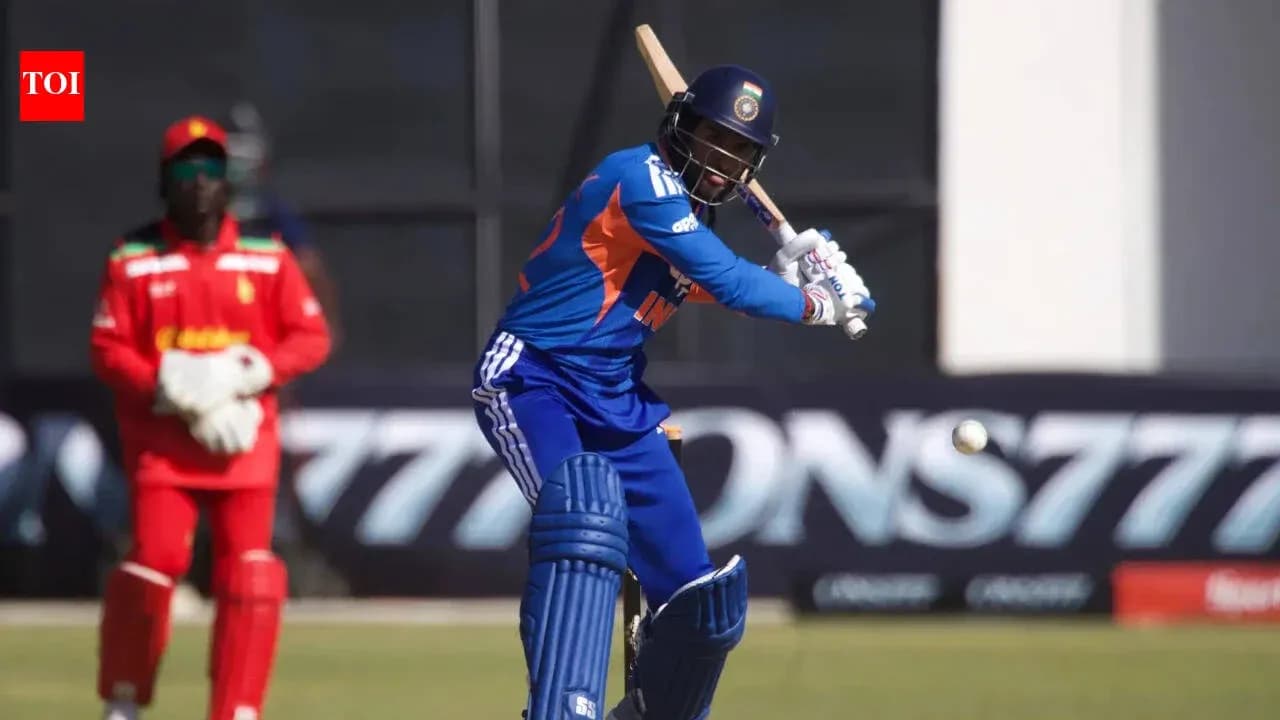
On the surface, Tilak’s recent T20I returns look impressive. Since the 2026 T20 World Cup, the left-hander has piled up 255 runs from 10 innings at a strike rate of 159.36, with three fifties.
Those figures scream impact player. They hint at a modern T20 batter capable of changing games in a handful of overs.
But context dulls the shine.
One of those half-centuries arrived in the Zimbabwe series, where India finally found some relief after their European struggles. Another came in the fifth T20I against England, a dead rubber with the series already lost. The big scores are there, but they sit alongside a run of inconsistency, especially on the difficult tour of the UK.
Taken in isolation, the stats flatter. Viewed across the entire period, they raise as many questions as they answer.
A crowded dressing room
That is why Tilak’s role now looms so large heading into the Afghanistan series.
Shreyas Iyer is locked in as captain and a central batting pillar. Ishan Kishan brings left-handed explosiveness at the top. Sanju Samson offers class and range through the middle. Abhishek Sharma adds another aggressive left-hander, while Vaibhav Sooryavanshi is pushing hard as well.
Then come the all-rounders, who complicate everything. Their presence stretches the batting, offers bowling options, and squeezes the space available for someone like Tilak, who is being asked to justify both his runs and his designation as vice-captain.
For de Villiers, the issue is no longer about simply picking the “best” players. It is about carving out roles that make sense, that do not overlap, and that give each batter a clear brief.
Clarity against a dangerous opponent
De Villiers likes what he sees in terms of depth.
“Really, really strong squad, but the balance will be tricky to figure out,” he said, adding that T20 cricket allows India to shuffle and experiment across the series. The warning sat in what followed: role clarity, he stressed, will be “incredibly important” against what he called a “dangerous” Afghanistan side.
Afghanistan have built their reputation on exactly that – clarity. Defined roles, sharp plans, and a fierce competitiveness that punishes any opponent still working things out on the fly.
India, by contrast, enter this series with a wealth of options but a lingering sense of flux. The batting order has not yet settled. The vice-captain’s slot is still being debated on television panels and YouTube channels. The recent form line swings from world champions to winless in six to comfortable victors over Zimbabwe.
Tilak at the crossroads
All of that funnels back to Tilak Varma.
Is he a top-order aggressor who can take on the powerplay? A middle-overs enforcer against spin? A finisher trusted to close out tight chases? At the moment, his career is being pulled in all three directions without a definitive answer.
The Afghanistan series will not just test India’s ability to bounce back from a turbulent stretch. It will test their willingness to commit to a structure and live with it, even when it means a big name sits out or a vice-captain is asked to adapt.
Soon, Japan await in a landmark T20I. Then the Asian Games 2026, where medals and momentum will both be on the line.
By then, will Tilak Varma be the heartbeat of India’s T20 batting, or still the unsolved piece in a lineup searching for its final shape?