The Hundred: Sacrifices and Financial Gains in English Cricket
Richard Thompson leans into the question, not away from it. The Hundred is stretching England’s cricket calendar to breaking point. He knows it. He accepts it. And he is still prepared to call the disruption “a price worth paying”.
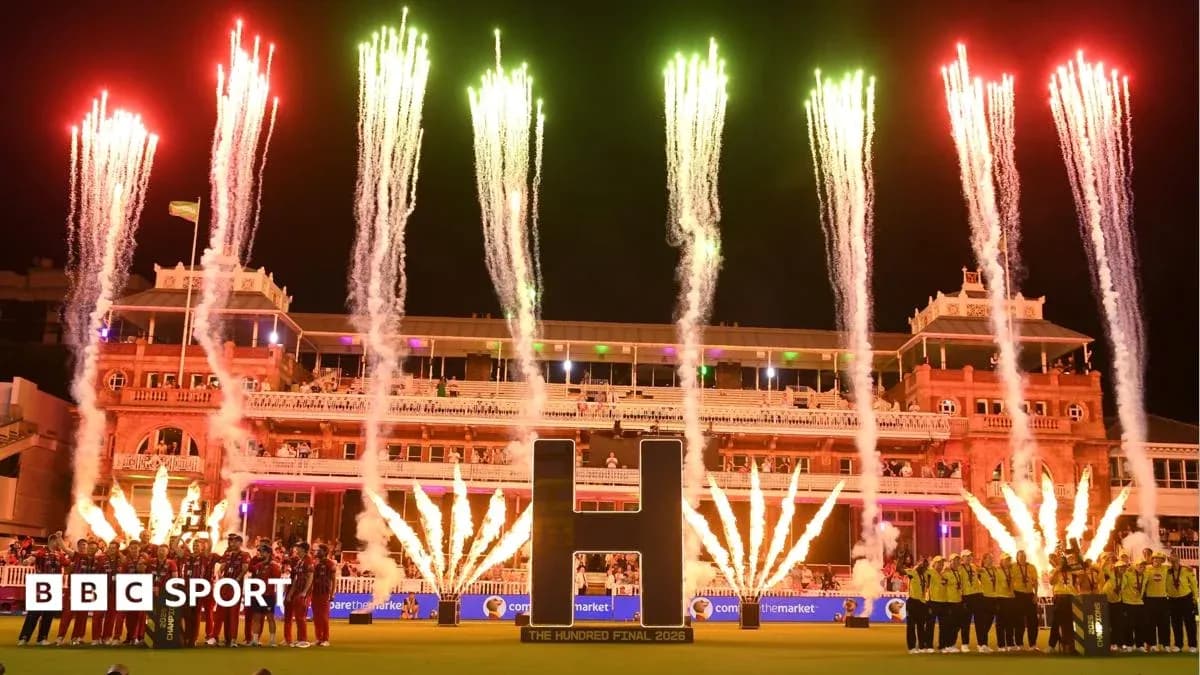
The England and Wales Cricket Board chair has watched the domestic schedule buckle under the weight of another format, watched a Test summer squeezed so tightly that this year there were only two days between The Hundred final and the first Test against Pakistan at Headingley.
He calls it what it is: sacrifice.
“Sacrifices have got to be made,” he told Sky Sports, standing firmly behind a competition that continues to divide opinion but has transformed the ECB’s balance sheet. “If we can take all of the debt out of the game, which we have, make a generation [of counties] which can reinvent themselves, that is a price worth paying.”
More than £500m poured into the game last year when stakes in the eight Hundred franchises were sold. That money has washed through the professional and domestic structure. Some counties have cleared historic debts. Others have finally been able to invest in infrastructure rather than just survival.
The cost comes in July and August.
To give The Hundred maximum impact, the ECB has carved out a dedicated window. No international cricket. England’s biggest names fully available for their franchises. The message is clear: this tournament sits at the heart of the English summer now.
The consequence is just as clear. England can no longer pull players out of The Hundred to prepare for Test series or white-ball tours. The turnaround from franchise cricket to the intensity of a Test has become brutally short. Fast bowler Josh Tongue called it “crazy scheduling”. Many in the game quietly agree.
Thompson has heard the criticism over that two-day gap before Pakistan. He shares at least one red line.
“We were criticised that The Hundred finished and two days later we were playing a Test match at Headingley,” he said. “Imagine if that becomes one day – that can’t happen.”
Yet the squeeze is everywhere. The Hundred hasn’t replaced competitions; it has been bolted on top of them. The County Championship still fights for space. The T20 Blast remains a key revenue stream for counties. The One-Day Cup has been pushed into the shadows, often functioning as a second-team tournament while first-choice players disappear into The Hundred.
“We are having to crowbar so much cricket in,” Thompson admitted, a phrase that captures the reality of a domestic calendar groaning under its own weight.
He is unapologetic about one thing: the financial logic. Only a handful of boards have managed to ringfence a lucrative, protected window for their flagship short-format competitions.
“There are only four countries in the world that have managed to create a window that can pretty much guarantee the financial success of their game – us, South Africa, India, Australia,” Thompson said.
England now sit in that group. The game is richer, the counties more secure, the ECB’s debt cleared. The trade-off is an increasingly unforgiving schedule and a constant battle to protect the primacy of Test cricket in a landscape dominated by franchise power.
Thompson’s concerns, though, are not limited to fixtures and finances.
He is also wrestling with the image of England’s men’s team after another off-field flashpoint. Bowler Brydon Carse was left out of the side for the second Test against Pakistan following a brief arrest on suspicion of being drunk and disorderly while on duty with Durham.
Carse was de-arrested, but investigations by both the police and the Cricket Regulator are ongoing. Images circulated on social media showed him in handcuffs, surrounded by police officers – a stark, uncomfortable picture for a national governing body that trades on heritage and pride.
Thompson did not hide his frustration.
He described the continued questions around the professionalism of England’s men as “enormously” disappointing. The standards, he insists, cannot slip.
“When you play for your country you are judged by far higher standards,” he said. “What comes with wearing those three lions comes with respect, responsibility and pride.
“Unless you live and breathe those qualities there is a problem. Every player has to understand the responsibility that comes with playing for England.”
The ECB chair has nailed his colours to the mast: The Hundred stays, the window stays, the money stays. The challenge now is whether England’s players – juggling formats, franchises and expectations – can live up to the demands that come with that financial revolution, on and off the field.