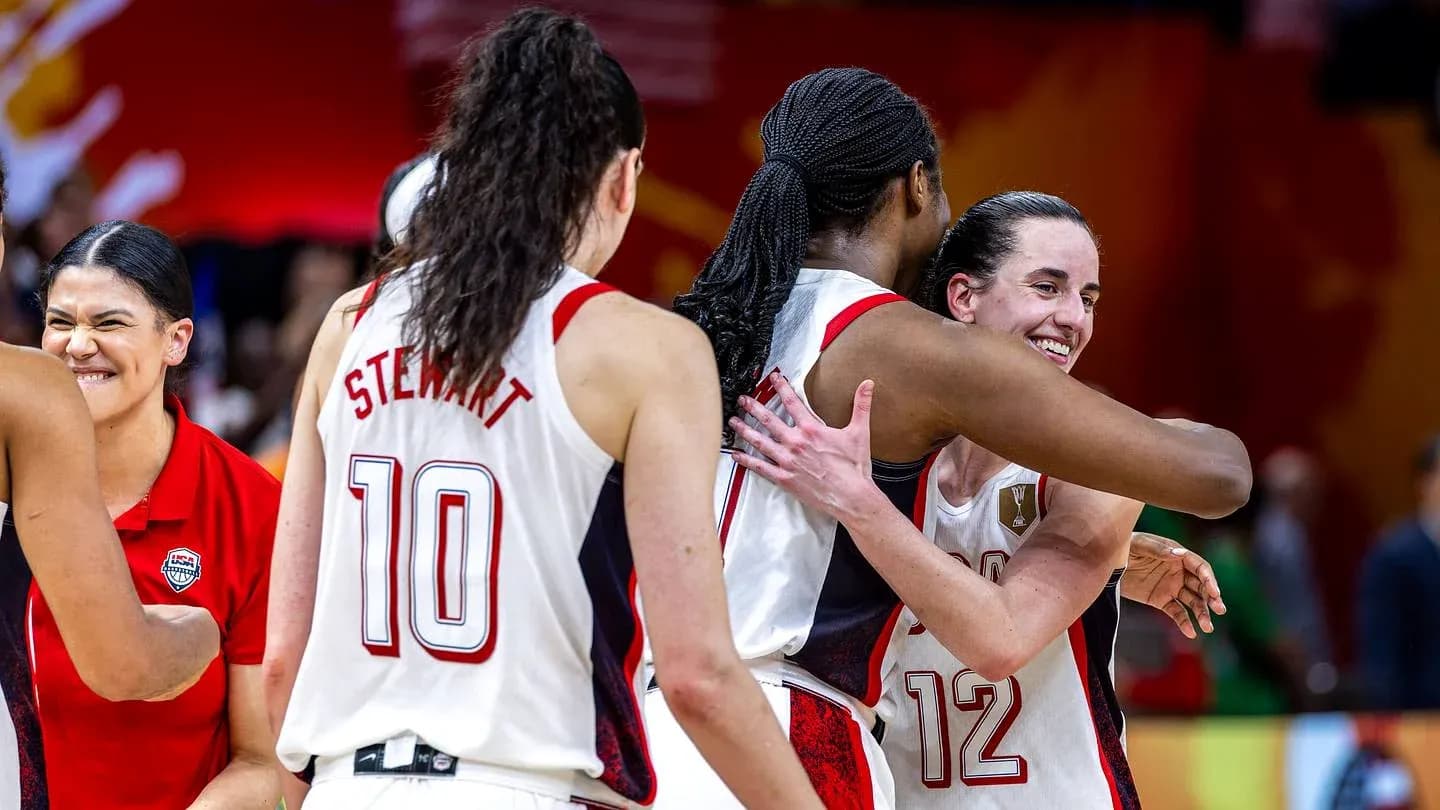
Team USA’s Ratings Surge at the FIBA Women’s World Cup
Team USA didn’t just leave France with a gold medal. They left with proof that women’s basketball can punch straight through the thickest wall on the American sports calendar.
The numbers from the FIBA Women’s World Cup tell the story.
A Final That Cut Through the Noise
Sunday’s final against France, a 97–79 win for the United States, averaged 1.2 million viewers across HBO Max, TNT, and truTV. That isn’t a gentle uptick. It’s a surge.
- Up 158% from the 2022 FIBA Women’s World Cup final.
- Up 750% from the 2018 final.
Those are not incremental gains. That’s a sport leaping forward.
The semifinal against Spain the day before pulled in 938,000 viewers. That made it the fourth most-watched FIBA Women’s World Cup game ever. The final against France ranked third all-time.
Only two games did better, and both came earlier in the same tournament: Team USA’s near-upset scare against Italy, which averaged 1.3 million viewers, and their final group-stage clash with Czechia, which matched the France final at 1.2 million.
So why did the knockout rounds trail the Italy thriller, despite higher stakes and a trophy on the line?
Look at the calendar.
Going Head-to-Head With the NFL Machine
The France game tipped off in the middle of Week 1 of the NFL regular season. That’s the single toughest window in American television. Every network is wall-to-wall football, every fan is locked into their team’s opener, and the NFL devours oxygen from every other sport.
Yet Team USA still cleared 1.2 million average viewers.
At the same time, the U.S. Open men’s final was unfolding, featuring American Ben Shelton and drawing its own sizable audience. Women’s basketball, the NFL, and a Grand Slam final all collided on one Sunday afternoon — and the World Cup final still carved out real space.
The semifinal had its own heavyweight rival. No NFL that Saturday, but a full slate of college football. Again, a crowded landscape. Again, women’s basketball held its ground, just shy of a million viewers.
It’s no surprise that media voices bristled at the scheduling. The sport’s biggest games were thrown into a ratings cage match against the two most dominant forces in American sports television. On another weekend, in a cleaner window, those numbers might have climbed even higher.
But the bigger point is this: they didn’t crumble.
A New Kind of Star Power
Breaking a million viewers in the heart of NFL Sunday used to feel impossible for a women’s basketball game. Not anymore.
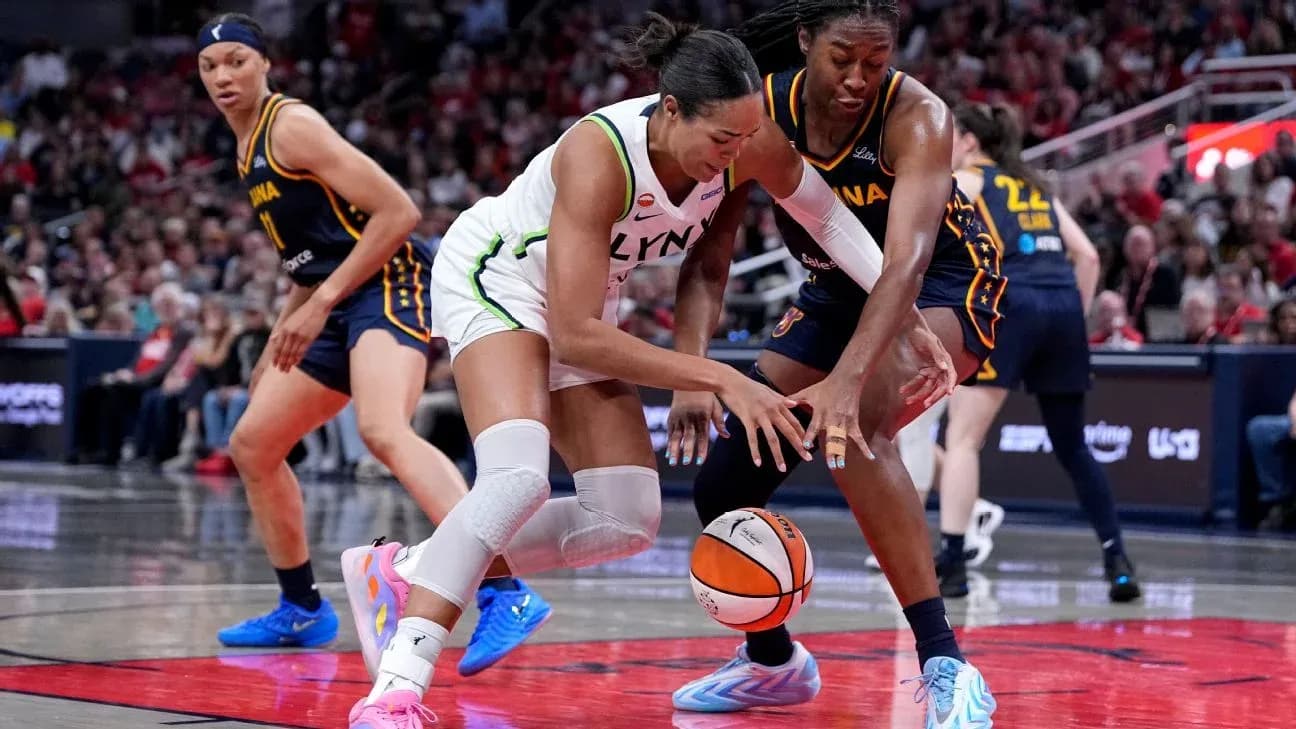
This tournament showcased not only the depth of the U.S. roster, but the pull of its emerging icons. Caitlin Clark sits at the center of that orbit, with Paige Bueckers and Angel Reese right beside her. They didn’t just bring scoring and swagger; they brought curiosity, conversation, and a new wave of casual viewers who tuned in to see what the fuss was about.
The World Cup served as a preview, a controlled experiment. Drop this generation of stars into a major international event, stack them against brutal competition, and see how many people follow.
The answer: a lot. Even with the NFL roaring in the background.
If this is what the audience looks like in September, fighting for scraps of attention against football and tennis, what happens when the stage is the Olympics, the schedule is kinder, and the hype has four more years to build?
Paris 2028 isn’t just another tournament for Team USA. It’s shaping up as a referendum on how big women’s basketball can become when its brightest stars finally get the global spotlight, and nothing stands in their way.