Stan Wawrinka's Farewell at the 2026 US Open
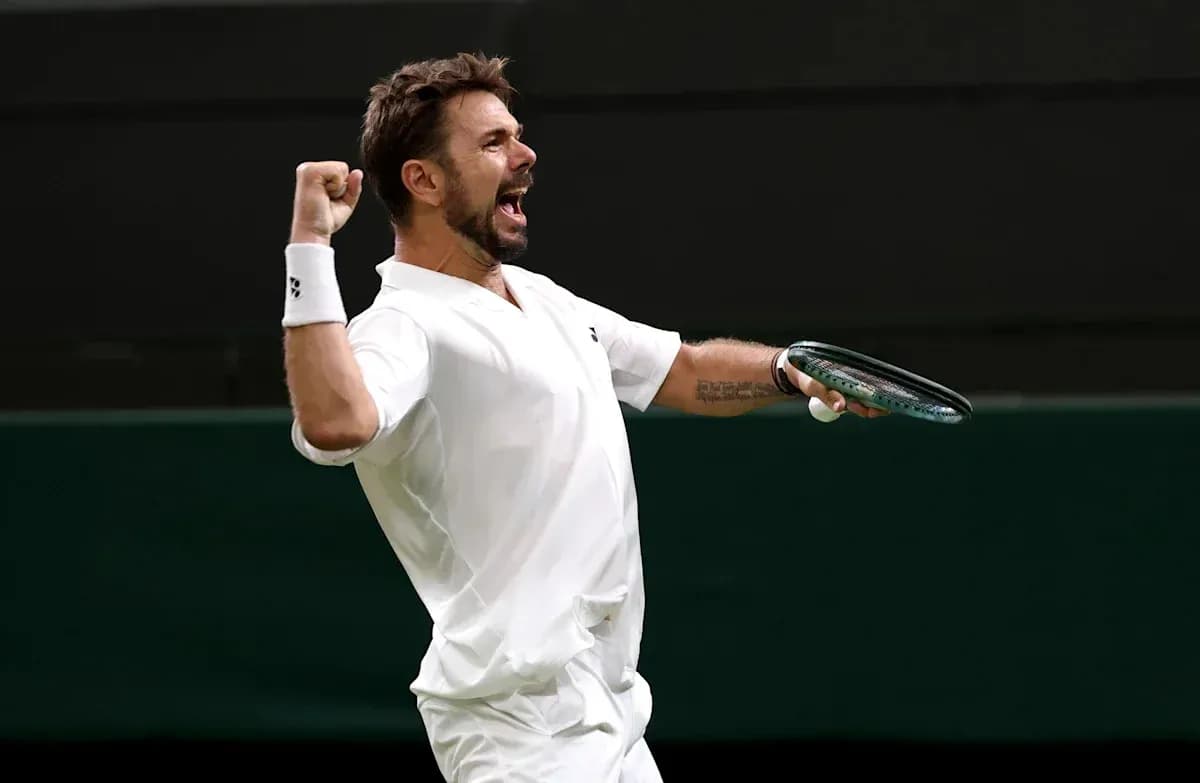
Stan Wawrinka will walk into the 2026 US Open knowing it is the end. A decade on from the night he owned Arthur Ashe Stadium, the one‑handed Swiss shot‑maker will receive the farewell his career demands.
For many, he has been a supporting act in the era of giants. For others, he has been something far more personal – a constant presence across 18 years of their sporting lives. An anchor. A reference point. A reminder that greatness can arrive late, and hit just as hard.
From unknown name to immovable presence
There was a time when Stanislas Wawrinka was just another name in a draw. In 2008 at Indian Wells, at what is now the BNP Paribas Open, he stepped onto court in the quarter-finals opposite a fresh-faced disruptor who had just broken through the Federer–Nadal duopoly by winning the Australian Open. Novak Djokovic.
Djokovic took that match 7-6, 6-2. It felt like a routine step on his climb to the top. It was not the end of the story between them. Not even close.
Wawrinka stayed. He worked. He hardened. While others flashed and faded around the edges of the “Big Four”, he became the one who would not go away. The one who, on the biggest stages, would look those giants in the eye and swing freely.
Juan Martin del Potro struck first, blasting his way to the 2009 US Open title. Yet it was Wawrinka who turned a single upset into a sustained assault on the sport’s hierarchy. Three majors: the 2014 Australian Open, the 2015 French Open, the 2016 US Open. Each one carved out of stubborn belief and a backhand that seemed to bend physics.
The most violent of beautiful strokes
There have been elegant one-handers in men’s tennis for decades. Few, if any, carried the same menace as Wawrinka’s. He didn’t just guide the ball. He detonated it.
At full flow, he was a spectacle. That Yonex racquet, the heavy spin, the brutal angles, the sheer audacity to stand on the baseline and trade with the sport’s most relentless athletes. For a generation of fans, that image is fixed: Stan, legs coiled, shoulders turned, unleashing a backhand that sent even Djokovic and Nadal scrambling.
His influence stretched beyond singles glory. In Beijing in 2008, he partnered Roger Federer to Olympic doubles gold, a landmark moment for Swiss tennis. Six years later, he was at the heart of Switzerland’s Davis Cup triumph in 2014, again delivering when the stakes were highest.
From “fluke” to serial giant-killer
When he finally cracked the Grand Slam code in Melbourne in 2014, it came against an injured Rafael Nadal in a strange, stop-start final. At the time, plenty wondered if this was a one-off, a moment born of circumstance rather than destiny.
He answered that doubt with a vengeance.
A year later at Roland Garros in 2015, he tore through the draw and stunned Djokovic in the final, ripping winners off both wings, denying the Serb the career Grand Slam he craved at that moment. Then in New York in 2016, under the lights, he did it again – another US Open title, another Djokovic final, another night where Wawrinka’s fearlessness on the big points defined the contest.
Those three trophies turned him from a curiosity into the era’s great disruptor. Not the man who dominated week in, week out, but the one who, when everything aligned, could knock the kings off their thrones.
One last swing
Now, as the 2026 US Open approaches, the farewell is set. Wawrinka is 41, his body long since marked by the grind of elite tennis. His opening opponent is Matteo Berrettini, a former Wimbledon finalist whose own career has been repeatedly checked by injuries. It is the kind of first-round pairing that sells itself – a meeting of big weapons, battered bodies and thick storylines.
Win, and Wawrinka may earn one last shot at Djokovic in the second round. The same Djokovic he beat in the French Open final in 2015 and that US Open final in 2016. The same Djokovic he first met in that Indian Wells quarter-final all those years ago.
The symmetry is almost too neat. One more night, perhaps, where memory and reality collide under the lights.
When the players leave
There is a particular kind of emptiness when a tennis player retires. Club sport offers continuity – Tottenham Hotspur will still be there next season, and the one after that, no matter which names are on the back of the shirts. In tennis, the connection is different. The bond is with the player, not the badge.
Harry Kane and Moussa Dembele can be replaced by Flavio Cobolli, Sandro Tonali and Savio in a fan’s daydreams. The club endures. In tennis, when a player steps away, that chapter closes. At best, they reappear in a player’s box, a fleeting reminder of what once was. Even Juan Carlos Ferrero, now a coach, is a presence borrowed from the past, not a continuation of it.
When a tennis player retires, it really is over. The tour moves on without mercy. New names fill the draws, new rivalries form, and those who refuse to move with it risk being left behind, clinging to ghosts of backhands past.
The decade-late goodbye
So Wawrinka will return to the scene of his greatest triumph for a final bow, 10 years after lifting the trophy in New York. He will not come back as a favourite, nor as a contender. He comes back as something more enduring: a champion whose legacy is secure, whose battles with the sport’s dominant forces reshaped how we talk about that era.
He will step out, unleash that backhand a few more times, and then it ends.
No guarantees of fairytale runs. No promises of one last miracle. Just the certainty that, when he walks away, an era of tennis – and a piece of many fans’ sporting lives – walks away with him.
GO GET EM STANISLAS WAWRINKA BABY.