South Africa's First-Class Season: Emerging Talents Shine
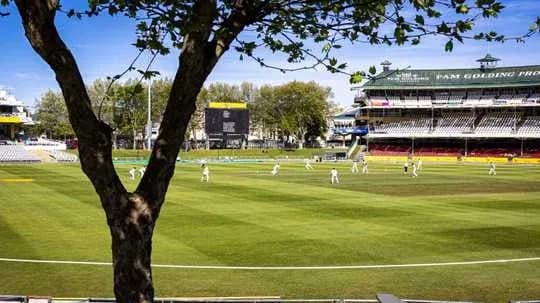
The wind told the truth at Newlands.
On the surface, nothing stirred on the second afternoon of South Africa’s new first-class season. Sparse pockets of spectators hunched into their jackets, the stands more concrete than crowd. Yet the north-westerly tore at shirts and flags, the grass shimmered too bright, too green, and a quiet game began to tilt.
At 57 for 3, Western Province Cobras – newly renamed, old identity reclaimed – were already in trouble in reply to the Warriors’ 347. Kyle Verreynne, rarely short of belief, marked his guard with intent. He tapped his bat, sank into that compact crouch and, with Daniel Smith, started to steady the innings with clean, measured strokes.
Then the real movement began.
Senuran Muthusamy came on, and the contest changed gear. His introduction sharpened the air. Lengths got tighter, questions more pointed. What had looked like a gentle wrestle became a scrap. Sparks flew through his spell and the Cobras folded, skittled for 143. Muthusamy walked off with 3 for 17 and, already armed with a composed 61 in the Warriors’ only innings, the game in his pocket.
He did not do it alone. Oliver Whitehead’s 5 for 70 framed the Warriors’ dominance with the ball, while Tristan Stubbs added a quieter note of significance. Stubbs faced 116 balls across his two visits to the crease, making 46 with seven boundaries and then 11, batting with a patience that hinted at a longer game in his own development.
The match, though, never reached its natural conclusion. Bad light and then rain smothered Saturday. No play, no result, just a scorebook full of intent and a draw that felt imposed rather than earned.
Hundreds of kilometres away, another draw refused to drift.
The Lions and Boland could not be separated, but the cricket in their match had bite. Temba Bavuma, back at the crease for the first time since June and in whites for the first time since Guwahati last November, ground his way into rhythm. He faced 146 balls for 91, an innings built on discipline and timing, a captain’s return shaped by patience rather than theatre.
Ryan Rickelton, caught behind for 49 in the first innings, made sure he did not waste his second chance. He converted ruthlessly, compiling 127 to underline his status as one of the most reliable run-makers in the country.
Still, neither Bavuma nor Rickelton owned the game.
Lehan Botha threatened to. In only his 13th first-class innings, he tore into the bowling, smashing 170 from 189 balls with 20 fours and five sixes. It was the kind of knock that usually steals the headlines.
Not this time.
The spotlight locked onto JJ Basson, an 18-year-old left-arm seamer still in his final year of high school, playing his first-class debut and bowling as if the stage had always been his. Given the new ball in both innings, he ripped through seasoned professionals, taking 7 for 62 and 4 for 37. Eleven for 99 in the match – the best figures ever by a South African debutant.
In a country that seems to grow fast bowlers like fynbos, one more name should barely ripple the surface. Yet the timing is impossible to ignore. Kagiso Rabada, Ottneil Baartman, Nandré Burger and Lutho Sipamla are all injured. Eight home Tests against Australia, Bangladesh and England loom between October and January. South Africa will have to interrogate their seam reserves more deeply than they might like.
Basson has bowled himself into that conversation. The selectors will have noticed. For now, though, the teenager has something more immediate than David Warner or Joe Root to worry about: his final exams.
Elsewhere, the results carried more finality.
In Bloemfontein, North West brushed aside the Knights by 135 runs. Diego Rosier’s 130 and Gihahn Cloete’s 118 laid down the batting platform, while the ball was shared around with a ruthless democracy. Dane Piedt, Daryn Dupavillon, Onke Nyaku and Malusi Siboto each collected four wickets in an innings. Siboto added three more in the other to close with 7 for 92, a craftsman’s match haul in a team performance built on accumulation rather than a single, blazing spell.
Centurion, though, delivered the statement win of the round.
The Titans crushed the Dolphins by an innings and 60 runs, a result that felt as emphatic as the scoreline suggests. Beyers Swanepoel, Dayyaan Galiem and Marco Jansen split nine wickets in the Dolphins’ first-innings 157, ripping through the order and never letting the visitors breathe.
Then Donovan Ferreira took over.
His 163 from 180 balls powered the Titans to 421, an innings full of intent and tempo, the kind that breaks opponents’ resolve as much as their figures. Around him, the score swelled and the gap widened.
Tristan Luus joined the long queue of South African quicks with a performance impossible to ignore: 7 for 110 in the match, another name to chalk on the fast-bowling board. At the other end of the spectrum, Keshav Maharaj endured a long, chastening outing. He sent down 32 overs for 1 for 111, numbers that will draw scrutiny for a bowler of his stature.
Chasing 264 just to make the Titans bat again, the Dolphins never got close. Swanepoel and Jansen finished the job, taking three and four wickets respectively. Jansen’s match figures of 7 for 100 underlined his growing authority with the ball. The Dolphins folded for 204, and the contest ended with a thud rather than a twist.
One small detail in Centurion carried its own story. Swanepoel stayed until the end.
Back in March, in the One-Day Cup final at the Wanderers, he did not. Then a Lions player, he left the ground before his side had completed a four-wicket win over the Titans, racing to catch a flight to England to join Worcestershire. The Lions responded by sacking him. The Titans, watching all of this, later signed him.
Now he was in their colours, taking wickets and walking off with his team when the job was done.
Across the country, the first week of the season did not deliver a single, defining epic. It did something subtler. It revealed form, exposed frailties, and pushed new names – Basson, Luus, Whitehead – into the national conversation.
With a bruised fast-bowling corps and a brutal Test schedule on the horizon, how many of these early-season stories will still matter when the real heat arrives?