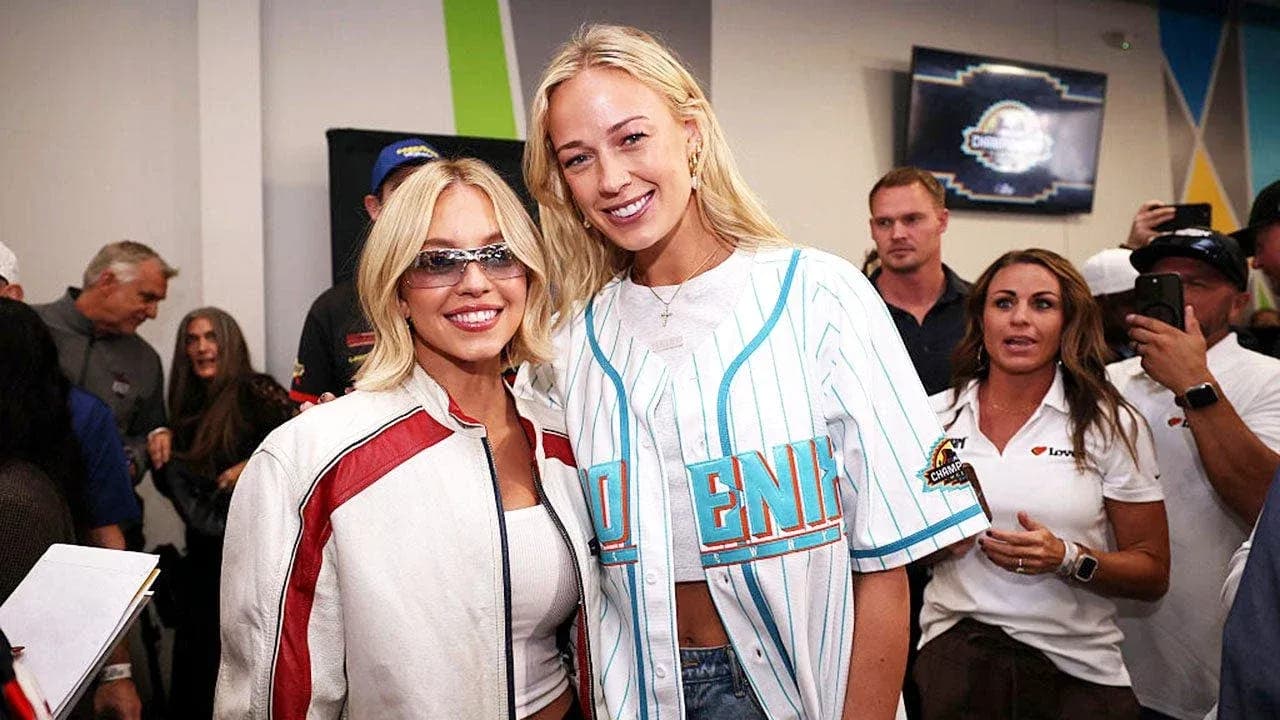
Sophie Cunningham Defends Sydney Sweeney's Gambling Ad
Sophie Cunningham has never been shy about saying what she thinks. This week, as debate raged over Sydney Sweeney’s provocative gambling commercial, the Phoenix Mercury guard cut straight through the noise.
On her revamped “No Hesitation” podcast, Cunningham challenged the outrage that has swirled around Sweeney and the ad.
“Why are girls mad?” she asked. “That is literally what she does. Why is anyone mad? It is a gambling ad: men, sports, naked women. Of course, that’s going to draw attention.
“Do I agree with it? Morally, I think it’s kind of weird, but each to their own. Go do your thing, sis.”
Cunningham pushes back on the backlash
The commercial, fronted by Sweeney for betting company Novig, has been criticized by some women’s sports advocates who argue it undermines progress made by female athletes. Cunningham doesn’t see it that way.
For her, the ad is exactly what it appears to be: a calculated attempt to appeal to a specific, overwhelmingly male betting audience. That’s not a commentary on women’s sports, she argued, but on the gambling industry’s target market.
Novig CEO Jacob Fortinsky backed up that framing during a panel earlier in the week, explaining that Sweeney wasn’t simply a hired face — she was a driving force.
“It really was Sydney who was driving a lot of the visuals and the messaging,” he said, noting that the company is “hugely supportive of women’s sports” and insisting, “We never intended to portray female sports.”
The message from Cunningham aligned with that: this is an ad about gambling, not a referendum on female athletes.
‘This has nothing to do with us’
Cunningham acknowledged the initial sting some women might feel when seeing the spot.
“I can understand when you first see that ad that like it could kind of deflate women, because it’s like we’ve worked so hard to get a little bit of respect around here,” she said.
The pressure on women’s sports to protect every inch of hard-earned credibility is real. Cunningham knows that. She lives it.
But she refused to place that burden on Sweeney.
“When you really think about it, it’s like, screw it, let that girl do her thing. This has nothing to do with us,” she continued.
Sweeney and podcast partner Drew Hanlen highlighted that the campaign was built for bettors, with Hanlen estimating around 75% of sports gamblers are men. Others would put that number even higher. Either way, the point stood: the ad spoke directly to a male-heavy market, and by that measure, it did exactly what it set out to do.
Drawing a line between image and impact
Cunningham’s stance wasn’t a blanket endorsement of the creative. She called the concept “kind of weird” morally, but refused to turn it into a culture war inside women’s sports.
“At the end of the day, I’m really loving seeing all these girls who are powerful, strong, showing young girls what it looks like to be an athlete,” she said. “I don’t think the ad was coming for women in sports.”
That distinction matters. Cunningham separated the ongoing fight for visibility and respect in women’s sports from a Hollywood star’s decision to lean into her established on-screen persona for a betting brand.
While others rushed to declare the commercial a setback, she treated it as something else entirely: a business decision in a gambling landscape that increasingly leans on celebrity, sex appeal, and shock value to cut through a crowded market.
The WNBA has plenty of battles to fight — on pay, coverage, facilities, and representation. Cunningham’s message was clear: this one doesn’t belong on that list.