Sophie Cunningham Critiques Sydney Sweeney's Gambling Ad
Sophie Cunningham didn’t bother dressing it up. She’s disappointed by Sydney Sweeney’s latest gambling ad — but she’s not even a little bit surprised.
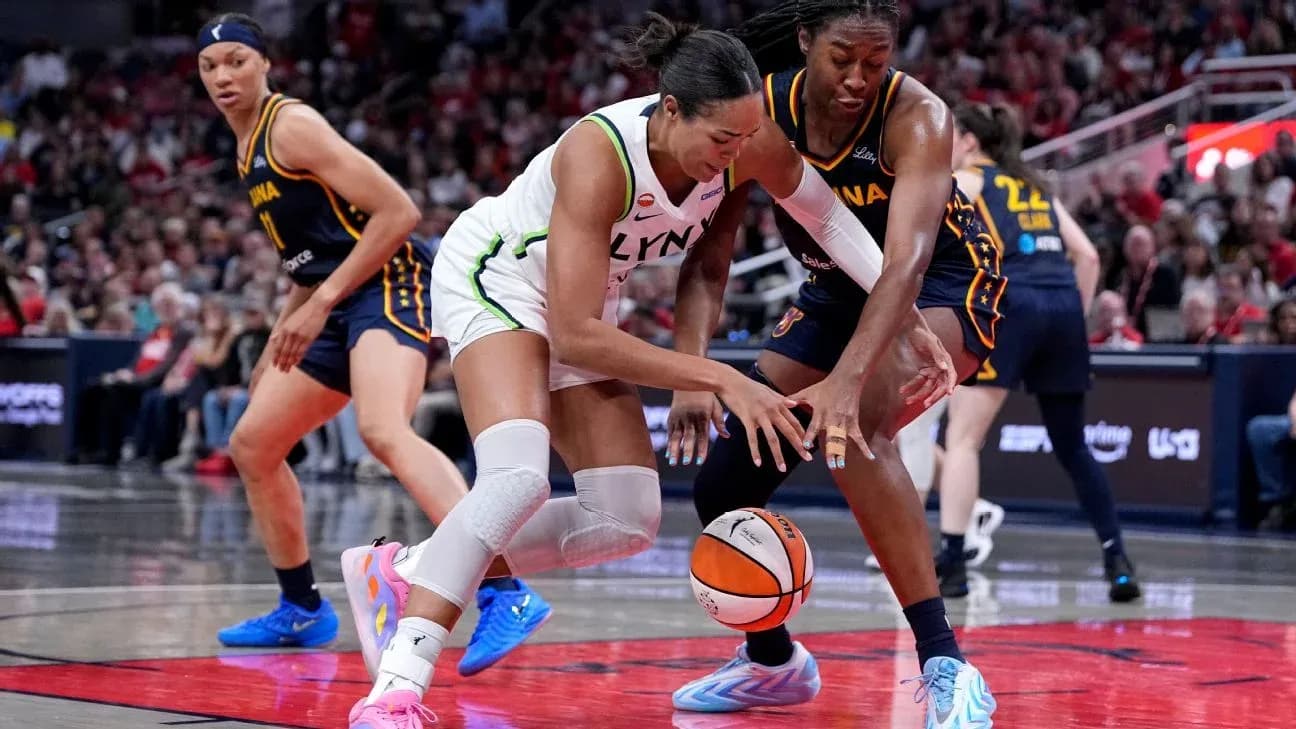
On the Sept. 17 episode of her podcast “No Hesitation,” the Indiana Fever guard laid out her thoughts after, as she put it, a rush of “text messages, DMs and comments” pushed the topic straight into her lap. Sweeney’s campaign for sports betting app Novig, which shows the “Euphoria” star mostly nude and strategically covered by sporting equipment, has sparked a fresh wave of criticism from athletes and fans.
Cunningham has seen enough to know exactly what she thinks.
“First of all, like, does she even gamble on sports? It’s just so unauthentic,” Cunningham said. “Like, am I surprised of how she represented the brand? No. That’s what she’s made her whole career off.”
The imagery — Sweeney using footballs, a basketball hoop and other gear to cover her body — has drawn public pushback from athletes including artistic gymnast Gracie Kramer and runner Mary McCarthy. It also arrives on the heels of backlash to Sweeney’s American Eagle jeans ad, which faced its own storm of criticism.
Cunningham, though, didn’t turn it into a personal attack. She made clear she actually likes Sweeney, even as she questions the campaign.
“Everyone knows she is beautiful. She is hot. She clearly has my chest,” Cunningham joked. “I really like her. And you know what, she sticks to her guns, and she does her thing and she’s her, so like props to her.”
That respect stops short of endorsing the ad itself.
Cunningham admitted she does “not really” like the Novig spot, telling co-host Drew Hanlen she’s “not surprised” by it because this is what Sweeney is “known for.” The concept — gambling, men, and a nearly naked actress — felt entirely predictable to her.
“Why are girls mad? That is literally what she does. Why is anyone mad?” Cunningham said. “It is a gambling ad. Men, sports, pretty much naked women – like of course that’s going to draw attention.
“Again, do I agree with it? Uh, morally, I think it’s kind of weird but like to each their own. Go do your thing, sis.”
‘I don’t think the ad was coming for women in sport’
While social media lit up with arguments about whether the spot objectifies women and undermines female athletes, Cunningham chose a different angle. She doesn’t see the ad as a direct shot at women’s sports, and she’s more interested in what’s happening on the other side of the conversation.
“… I’m really loving seeing all these girls who are powerful, strong, showing young girls what it looks like to actually be an athlete,” she said.
Cunningham pointed to the contrast between Sweeney’s hyper-sexualized imagery and the growing visibility of women whose bodies are built for competition, not campaigns.
“I don’t think the ad was coming for women in sport,” she said. “But I think it has been so cool to see girls who, you know what, they’re muscly, their thighs touch, they have broad shoulders, they might be taller than the average girl and probably the average boy, but you know what, I think that’s what it is. Like, you gotta embrace your power.”
At first glance, Cunningham understands why many female athletes bristled. For decades, they’ve fought to be seen as more than props in someone else’s marketing vision. Sweeney’s ad, on its surface, looks like a step back toward an old, tired playbook.
“… It could kind of deflate women because it’s like we’ve worked so hard to get a little bit of respect around here,” Cunningham said.
But she doesn’t stay in that place for long. After sitting with it, she separates the worlds: Hollywood’s version of sports culture on one side, the grind and growth of women’s athletics on the other.
“When you really think about it, it’s like, ‘Screw it, let that girl go do her thing.’ We can still, this has nothing to do with us,” she concluded.
The ad will run its course. The debate around it will, too. What lingers, in Cunningham’s eyes, is something else entirely: a generation of girls watching real athletes fill the frame, not as decoration, but as the main event.