Sophia Dunkley Shines in England's 3-0 Series Sweep Over Ireland
On a grey Worcester afternoon, Sophia Dunkley brought the colour.
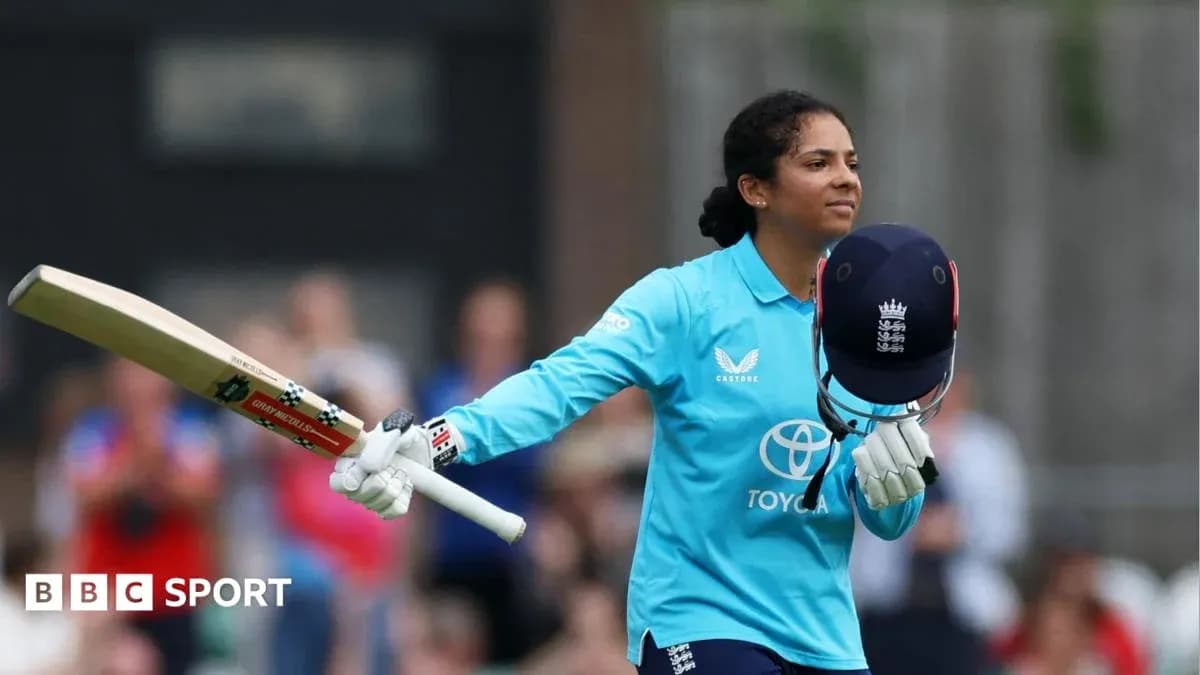
Her run-a-ball 119 at New Road did far more than decorate a dead rubber. It underpinned England’s 114‑run victory over Ireland, completed a 3-0 series sweep, and quietly answered one of the biggest questions hanging over the next phase of this side.
England’s 291 all out, followed by Ireland’s 177 in 44.2 overs, told the story on the scoreboard. Dunkley told it in strokes.
Dunkley takes charge of the vacancy
This has been an unusual series for England. No Lauren Bell, no Sophie Ecclestone, no Nat Sciver‑Brunt. A summer sign-off played without some of the biggest names, but with a clear purpose: find answers in a format they barely get to play.
Tammy Beaumont’s retirement left a vacancy at the top of the order and a nagging uncertainty. Over three games, Dunkley and Maia Bouchier have stepped into the gap with the sort of conviction selectors crave and coaches cling to.
Dunkley had threatened all series. She made 73 at Leicester, then fell short again in Derby, run out after Bouchier’s misjudgement. Twice she walked off with the look of a player who knew a big one was coming.
At Worcester, she cashed in.
She began quietly, content to let Bouchier hog the strike and the early attention. Her first fifty took 63 balls, measured and controlled. Then the tempo changed. The next fifty came in just 37 deliveries, the innings suddenly alive with intent.
The most striking shift was where she scored. Long tagged as a leg-side hitter, Dunkley spread Ireland’s attack across the ground, her runs almost perfectly split on either side of the wicket. Drives through the off-side, once a relative weakness, became a feature rather than an exception.
Ireland went short, pushed fielders back, tried to funnel her into the sweepers. For a long time, she simply worked them around, picking gaps, refusing to be rushed. When the end came, it took something special: a superb catch from Orla Prendergast at deep square leg in the 36th over.
By then, the damage was done.
Starts, stutters and a collapse
At the other end, Bouchier continued her own compelling audition. She rode her form into another neat contribution, 39 in a 73-run opening stand that set the tone. Confident, busy, and increasingly secure in the role, she has made herself difficult to ignore.
Jodi Grewcock added 35, again hinting at more before falling to a return catch. Alice Capsey’s 10 ended in frustration, run out backing up, a dismissal that said as much about her intent as her misfortune.
With Dunkley in full flow and England 260-4, 300 – and beyond – felt inevitable. Freya Kemp and Dani Gibson looked ready to launch. Kemp’s 23, full of promise, threatened to crack the game wide open.
Then the innings turned.
Kemp holed out to long-on. The momentum went with her. From 260-4, England lost their last six wickets for just 31 runs, bowled out with seven balls unused. After Dunkley’s exit, they managed only seven boundaries. What had looked like a record total suddenly became a reminder that this is a side still learning how to close out a 50-over innings without its most experienced finishers.
Gibson, though, offered a bright note amid the slide. Her ODI-best 41 suggested there is more to come from her as a late-order presence with the bat, another piece of depth in a squad that will need exactly that when the opposition sharpens.
Cara Murray deserved every one of her figures. The leg-spinner finished with 4-56, the standout of Ireland’s attack and the architect of England’s late stumble. She found drift, grip and, crucially, a way to drag the innings back from the brink of the unmanageable.
Filer and Villiers slam the door
If England’s batting left a faint sense of unfinished business, their bowling removed all doubt.
Chasing 292 was always a tall order for Ireland on a surface offering enough to keep England’s seamers interested and their spinners in the game. It never really looked on.
Amy Hunter battled for 39 from 58 balls, the top score in an innings that never broke free. No Irish batter managed a strike-rate above 100; the asking rate crept up, then raced away, and with it went any realistic hope.
Lauren Filer and Mady Villiers shared the spoils, three wickets each and a constant sense of threat. Filer, with her pace and heavy length, forced batters back and into mistakes. Villiers, more subtle but just as effective, probed and teased, picking off the middle order as the pressure mounted.
England’s attack, missing some of its star names, still looked far too strong. Ireland’s 177 felt a long way from the target and even further from turning this into a contest that would stretch England in the way they crave before an Ashes summer.
Answers found, questions looming
Strip away the margin of victory and the clean sweep, and this series has been about information.
Fringe players like Grewcock and Tilly Corteen‑Coleman have had a taste of international cricket. The management has seen new combinations, fresh roles, and the beginnings of a new opening partnership that might just stick.
The calendar, though, remains a frustration. With the autumn schedule still not fully nailed down, and the next home ODI not until the Ashes next summer, England’s one-day side lives in stop‑start rhythm. Their next confirmed assignment is the Champions Trophy in February, with a multi-format West Indies series and three ODIs against Sri Lanka pencilled in but not yet dated.
Some decisions are straightforward. Nat Sciver‑Brunt will walk back in at number three. Others are trickier. Does Capsey keep the gloves ahead of Amy Jones? How many all-rounders can they realistically fit into one XI? How much weight should they put on performances against an Ireland attack that, bluntly, bears little resemblance to what Australia will bring?
What they do have, as they pack away the kit for the international summer, is clarity at the top. Dunkley and Bouchier have not just kept the seat warm; they have staked a claim.
For coach Charlotte Edwards, one headache has eased. The next comes in February, when this refreshed, reshaped batting order must prove it can do more than dominate a developing Ireland side – it must stand up under tournament pressure, with trophies and reputations on the line.