Sophia Dunkley’s Century Sparks England Against Ireland
On a New Road outfield freshened by overnight rain and tinged a deeper green, Sophia Dunkley turned a steady platform into a statement. She moved from scratchy beginnings to a commanding second international century, the heartbeat of an England innings that surged, stuttered, then surged again against an Ireland side that never quite let the game drift.
By the time Dunkley finally miscued on 119, aiming for her first six and instead picking out Orla Prendergast at deep midwicket, England were 214 for 4 and the tone of the day had been set.
Dunkley grinds, then dominates
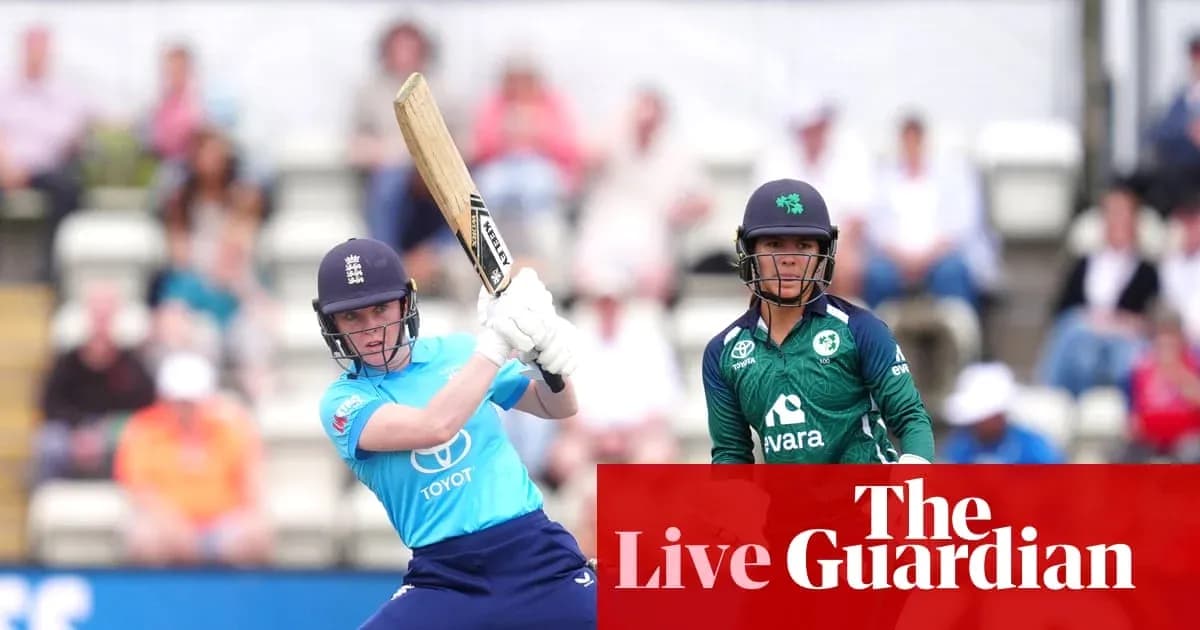
Her hundred arrived in style and symmetry: 100 from exactly 100 balls. The moment came in the 29th over, bowled by Cara Murray. A dinked single from Seren Grewcock handed Dunkley the strike; she adjusted her helmet strap, swayed under a not-quite-short ball from Arlene Kelly, then pulled for four to move to 99. One more nudge, and the milestone was hers.
Helmet off, bat raised, a punch of the glove. She looked emotional, and with good reason. From a slow, watchful start, Dunkley had taken control, threading 11 boundaries by the 26th over and repeatedly punishing anything loose. Kelly’s slower ball in the 28th over disappeared over long off, Dunkley rocking into the 90s with the authority of a player who knew the innings now belonged to her.
Ireland’s bowlers probed, but they rarely contained her for long. When they tried to go short, she swayed or pulled. When they overpitched, she drove with a flourish and often held the pose.
Grewcock’s supporting role and a cruel dismissal
At the other end, Grewcock played the foil. She took her time, her first boundary not arriving until her 26th ball – a gorgeous, classical on-drive in the 24th over. That loosened the shoulders. A back-foot swipe through cover in the same over brought another four and underlined her growing comfort.
She moved to 35 with some attractive strokes, including a checked drive for four in the 30th over, but her stay ended tamely. Shuffling down to Murray, she simply pushed the ball straight back, the bowler stooping to take a low catch by her ankles. England, 183 for 2, lost their second set batter just as the innings threatened to run away from Ireland.
Alice Capsey’s exit was harsher still. She had only just helped England to 200, turning Leah Paul McCartney into the leg side, when fate intervened. Dunkley drilled a straight drive; McCartney, in big sunglasses and a long ponytail, halted in her delivery stride, stuck out a desperate hand and got the faintest touch. The ball cannoned into the stumps at the non-striker’s end. Capsey, out of her ground on 10, could only trudge off, run out backing up in the unluckiest fashion.
At 200 for 3, England still held all the cards, but Ireland had a sliver of a grip.
Kemp and Gibson take up the charge
Freya Kemp’s response was immediate and emphatic. She announced herself with a majestic cut for four in the 35th over, helped by a slip on the boundary, then finished Murray’s next over with a glorious drive through extra cover that even a full-length dive from Gaby Lewis couldn’t cut off.
She stood tall, crouched low, and whipped Lewis through the covers in the 39th over for another crisp boundary, a shot that summed up her intent. A missed run-out chance at mid-off in the 41st over spared her on 21; had the throw hit, she would have been gone. Instead, she pushed on to a rapid 23 from 21 balls, only to fall to Murray in dramatic fashion.
Kemp launched the leg-spinner high into the sky, the ball seemingly destined for the stands. It dropped right on the edge of the rope, where Lewis, stretching full length behind her, clung on superbly. A soaring strike, a razor-thin margin, and a wicket that dragged Ireland back into the contest at 260 for 5.
Where Kemp had bludgeoned, Dani Gibson blended power with invention. She took her time early on, but once set, she changed the tempo. In the 40th over she muscled a cross-batted four over backward point, capitalising on another fumble in an Ireland fielding display that never quite convinced.
Then came the breakthrough blow: the first six of England’s innings, carved off McCartney in the 42nd over. Gibson clubbed her over long off, a shot of raw force that felt like a caveman’s swing on an away day, and with it England moved decisively into the closing phase.
Murray’s late surge and Kelly’s farewell moment
Just as England looked ready to sprint to 300, Murray ripped out the middle order. Kemp’s dismissal was the first strike in a pivotal spell. In her next over, she produced a double blow.
Charlie Dean began with intent, shonking a full toss for four first ball, but Murray gave the next delivery plenty of air, drawing a tentative nibble. Amy Hunter did the rest behind the stumps. Dean gone for 4, England 264 for 6, and the mood at New Road tightened.
Murray wasn’t done. In the very same over she tempted Villiers down the track. The batter dallied, never quite to the pitch, and lofted a gentle offering to deep midwicket. Another straightforward catch, another wicket. England, once cruising, were suddenly 270 for 7 and faltering.
Ireland’s spinners, backed by tighter fielding at last, found a measure of control. McCartney, who had worn the brunt of England’s aggression earlier, finished with a tidy 1 for 53 from her 10 overs, her last over yielding no boundaries as England searched in vain for the rope.
Gibson, though, refused to disappear. She moved through the 30s with a blend of hustle and clean striking, cutting McBride for four in the 46th over and then, in the 47th, unfurling a deft ramp for another boundary, all style and touch at a moment when brute force had started to misfire around her.
At the other end, Ryana MacDonald-Gay offered support, slog-sweeping her second ball just beyond Lewis’s reach at deep midwicket, then nudging singles to keep Gibson on strike. Ireland reviewed a huge lbw shout against Gibson early in the 47th over, but the decision stayed with the batter, and England’s finisher carried on.
The late drama belonged to Kelly. Playing in her farewell appearance, she had watched Dunkley dismantle her earlier spells. With England 288 for 7, she finally had her moment. MacDonald-Gay heaved to long on, gifting Kelly a simple catch. A neat, almost sentimental symmetry: the departing seamer claiming one more wicket, England slipping to 288 for 8.
Ireland’s test of resolve
By the close of that passage of play, England sat 286 for 7 at the end of the 47th over, then 288 for 8 when MacDonald-Gay fell. The scoreline told its own story: dominance built on Dunkley’s hundred, acceleration through Kemp and Gibson, checked by Murray’s guile and a late flicker from Kelly.
Ireland’s fielding wobbled at times – fumbles at backward point, a key missed run-out on Kemp – but their bowlers refused to disappear. Murray’s triple strike, McCartney’s resilience after the Capsey deflection, and Lewis’s outstanding catch on the rope kept England honest.
For England, the innings revolved around that one towering constant: Dunkley, helmet raised in the 29th over, bat aloft, New Road acknowledging a player who had not just made runs, but seized the day.
The question now is whether Ireland’s spirited fightback with the ball can carry into their chase, or whether Dunkley’s hundred has already tilted this contest beyond their reach.