Serena Williams: The $400 Million Gap in Women's Sports
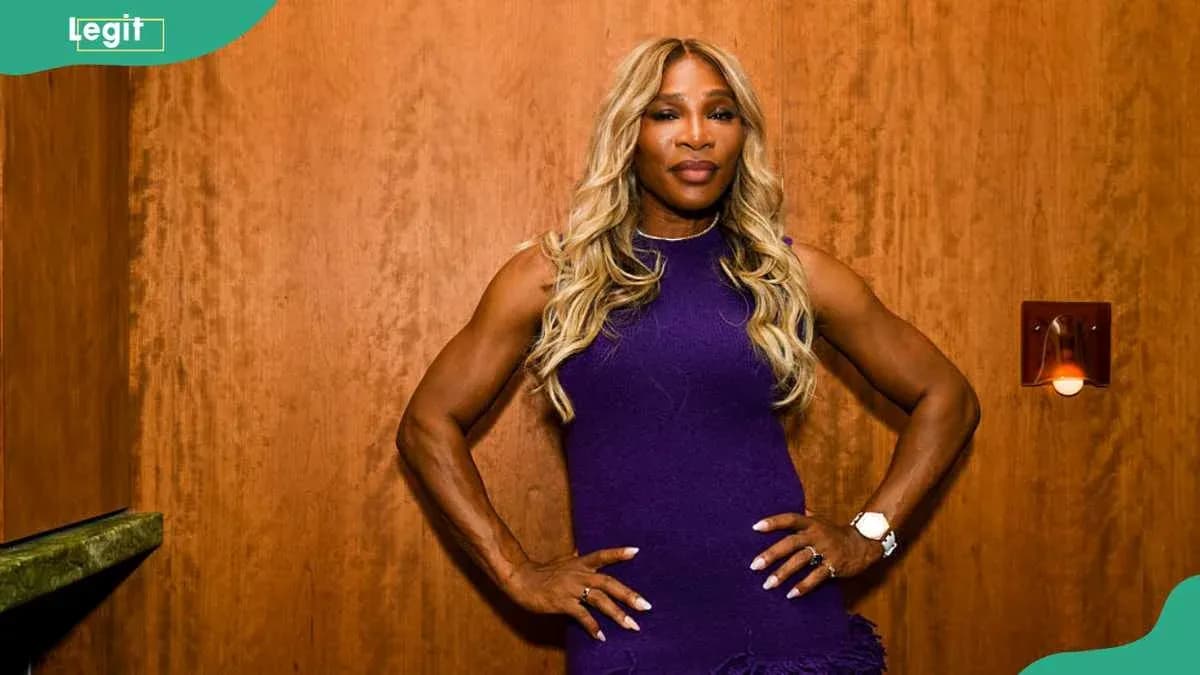
In a sporting era obsessed with records and rankings, one number towers over the rest of women’s sport: $400 million. That is the estimated net worth of Serena Jameka Williams — not just the richest female tennis player, but the wealthiest woman in sporting history.
She has not played a full competitive season in years. It hasn’t mattered. The distance between her and everyone else keeps widening.
At the peak of her career, Serena bullied scoreboards. Now she dominates balance sheets. Her $94.8 million in prize money is the highest total in WTA history, built on 23 Grand Slam singles titles and 73 career trophies. Yet even that haul is only a fraction of the empire. Long-term sponsorships with the likes of Nike, Wilson, Audemars Piguet and Lincoln, plus a venture capital firm — Serena Ventures — that has raised $111 million for its first fund and invested in 16 companies, have pushed her into a financial stratosphere no other woman in sport has reached.
She also holds minority stakes in the Miami Dolphins, Angel City FC and the WNBA’s Toronto Tempo. Her last serve on tour came in 2022. Her earning power barely flinched. Over the last 12 months alone, she is estimated to have pulled in another $50 million before taxes and fees.
A chasing pack that still can’t see her
Look down the list and the scale of Serena’s dominance becomes even clearer. Only one other woman has even reached half of her net worth.
Maria Sharapova sits in a distant second at around $175 million. For more than a decade, the Russian was the commercial face of women’s tennis, fronting Nike, Porsche, Head, TAG Heuer and Evian all at once. A five-time Grand Slam champion with a career Grand Slam, she turned that visibility into an estimated $300 million in combined prize money and endorsements over her career and added her own confectionery brand, Sugarpova, in 2012. When she retired in 2020, the fortune was already banked. Even so, she remains miles behind Serena.
Third is Venus Williams at roughly $95 million. The older Williams sister has earned $42.8 million in prize money — fourth all-time in WTA history — and changed the sport off the court by pushing for equal prize money at the majors. Her business ventures, from the EleVen fashion label to VStarr Interiors, have turned her into a powerful entrepreneur as well as a seven-time Grand Slam singles champion and five-time Wimbledon winner. A joint podcast with Serena, Stockton Street, launched in 2025, only underlines how the sisters have kept building after their prime tennis years.
Between them stands an outlier from a different world. Danica Patrick, with an estimated net worth of $80 million, is the richest non-tennis athlete on the list. The only woman ever to win an IndyCar race — the 2008 Indy Japan 300 — Patrick converted her trailblazing status into a formidable commercial machine. GoDaddy, Coca-Cola and Peak antifreeze turned her into one of the most recognisable faces in American motorsport. She retired in 2018 but has kept investing, including a stake announced in early 2025 in Unrivaled, the women’s basketball league.
Below that top tier, the numbers compress quickly. Naomi Osaka stands at about $45 million. Annika Sörenstam at $40 million. Simone Biles at $30 million. Coco Gauff and Lindsey Vonn at $28 million apiece. Ronda Rousey at $25 million. From Serena at $400 million to Rousey at $25 million, the spread tells its own story.
Endorsements, not paychecks, built this world
One pattern cuts across almost every name: the real money comes when the cameras are off.
For the top-earning women, around 70% of income stems from endorsements and commercial deals, compared with roughly 35% for the highest-paid men. Prize money and salaries still lag behind, so the marketability of a champion has become as valuable as the trophy itself.
Osaka is the clearest modern example. Her net worth of about $45 million sits well below Sharapova’s and miles from Serena, yet between 2019 and 2025 she earned an estimated $230 million, with only around $25 million of that coming from on-court winnings. The rest flowed from a portfolio that includes the Evolve sports agency, KINLÒ skincare and production company Hana Kuma. She topped Forbes’ list of highest-paid female athletes for three straight years, peaking at $57.3 million in 2021 and $51.1 million in 2022.
Sharapova’s fortune tells a similar story. Her two-decade run as a sponsor’s dream — long before Sugarpova entered the picture — laid the foundation for that $175 million estimate. Analysts still consider Osaka’s $45 million figure “very conservative,” but even generous projections do not yet push her into Sharapova’s bracket, let alone Serena’s.
Golf’s Annika Sörenstam, with an estimated $40 million, built her wealth across 72 LPGA Tour titles and 10 majors, then pivoted into business: golf course design, a wine label and the Annika Foundation. Her partnerships with Rolex and Callaway continued well after she stepped away from full-time competition in 2008. She even returned to the US Women’s Open in 2022, a cameo that underscored her enduring pull.
The new generation cashing in
If Serena defines the summit, Coco Gauff represents the climb. At just 21, the American is already the world’s highest-paid active female athlete on an annual basis. Forbes pegs her 2025 earnings at $33 million — $8 million from the court, boosted by a French Open title, and $25 million from endorsements with New Balance, Bose and Baker Tilly.
Her current net worth, around $28 million, still trails her yearly income, a reminder of how early she is in her career. Yet the trajectory is unmistakable. Only five women have ever broken $30 million in a single year — Naomi Osaka, Serena Williams, Coco Gauff, Maria Sharapova and Aryna Sabalenka — and Gauff has joined that club before her mid-20s.
Gymnastics icon Simone Biles, estimated at $30 million, sits at the intersection of excellence and influence. The most decorated gymnast of all time, she has turned her platform into a powerful commercial and cultural force, partnering with brands such as Audemars Piguet, Lilly, Nulo Pet Food, K18 haircare, GK Elite and Spieth America. Her Netflix documentary Simone Biles Rising drew an Emmy nomination, and her decision to step away from several events at the Tokyo Olympics to prioritise mental health made her one of the defining athletes of the decade — and, crucially, did nothing to dull her market appeal.
Winter sports and combat sports have their own standard-bearers. Lindsey Vonn, with around $28 million, is the most decorated American alpine skier in history, her four overall World Cup titles and 2010 Olympic downhill gold backed by long-running deals with Red Bull, Under Armour and Rolex. She retired in 2019 but remains a regular presence in advertising and media.
Ronda Rousey, on roughly $25 million, shattered barriers in a different arena. The first woman to headline a UFC pay-per-view and the first female inductee into the UFC Hall of Fame in 2018, she became a crossover star from MMA to WWE to Hollywood. Endorsements with Reebok and Monster Energy, plus a peak earning window between 2014 and 2016 when she was one of the most recognisable athletes on the planet, anchored her wealth. In 2024 she added author to her résumé with Our Fight: A Memoir.
A changing landscape, but one constant
The broader picture is shifting. In 2025, a record 15 female professionals earned more than $10 million in a year through salaries, prize money and endorsements, up from just six in 2023. Tennis still dominates the top end, but women’s football is rapidly building its own financial ecosystem, with stars such as Aitana Bonmatí, Alexia Putellas, Sam Kerr and leading African talents landing record-breaking club deals.
Yet even as new money flows into women’s sport, the hierarchy of accumulated wealth remains stark.
Serena Williams stands alone at the top, a $400 million benchmark that no active athlete is close to touching. Coco Gauff may own the present in annual earnings. Osaka, Sharapova and Biles still command global attention. Patrick, Sörenstam, Vonn and Rousey have carved out legacies that stretch beyond their disciplines.
The question now is not whether another woman can build a fortune in sport. That door is wide open.
The question is who, if anyone, will ever scale the mountain Serena has already claimed.