Sanju Samson Shines with Explosive 57 in T20I Against Afghanistan
At the Arun Jaitley Stadium on Tuesday night, Sanju Samson’s answer to months of noise came flying off the bat in a blaze of fours and sixes. It ended, fittingly, with a man leaping at the long-off rope, toes checked, fate hanging on a replay.
Mohammad Nabi shuffled left, sprang just enough, cupped the ball inches from the boundary cushion and then turned, arm raised, to signal the end. Rashid Khan, ever the perfectionist, checked the landing. Once he got the nod that Nabi’s foot was grounded inside the rope, he wheeled away in celebration. Second wicket of the over. Samson gone.
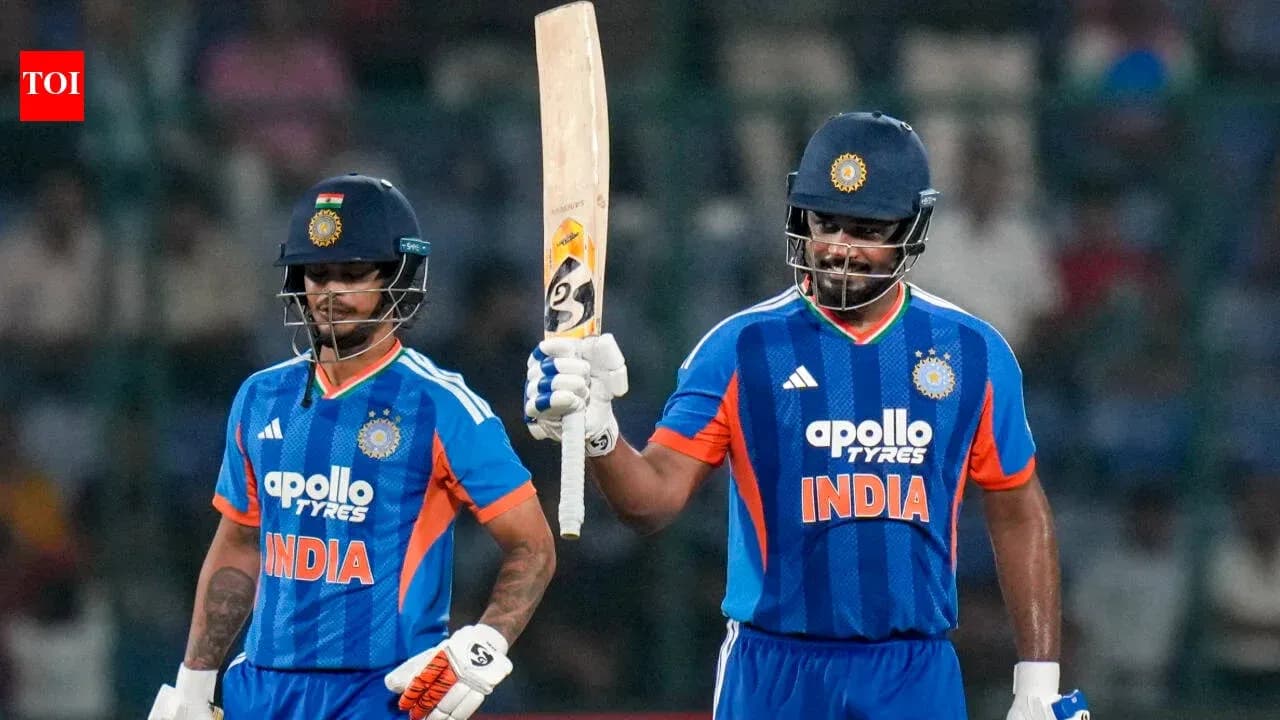
But by then, Samson had already left his mark: 57 off 22. Seven fours. Four sixes. Fifty-two of those runs in boundaries. A statement, not an innings.
A musical chair with sharp edges
Samson has lived this selection game for years now, a relentless round of musical chairs with Vaibhav Sooryavanshi for the top-order slot. The perception, often, is that he’s the one left standing when the music stops and the chairs vanish.
He arrived in this series carrying both weight and credit. Fresh from a stellar T20 World Cup where he played a major role in India’s title run, he should have been walking on air. Instead, one poor outing against Ireland, and he found himself on the bench without ceremony.
Sooryavanshi stepped in, but his first taste of international cricket didn’t quite explode as hoped. Samson returned for the last two T20Is against England, only to miss the flight to Zimbabwe. In Harare, Sooryavanshi finally detonated, went hard from ball one, and walked away with a Player of the Match award.
When Afghanistan arrived, the debate reignited. Samson or Sooryavanshi? Form or faith? On the team sheet for the first T20I, it was Samson opening with Abhishek Sharma, not Sooryavanshi. The split in opinion was instant.
Kris Srikkanth questioned the handling of Sooryavanshi, saying he wasn’t being treated properly. R Ashwin, looking at the bigger picture, urged the decision-makers to understand the youngster’s position. The noise grew.
Samson started the series quietly, just 10 in the opener. The whispers about his inconsistency stirred again.
Then came Delhi.
Hitting back in boundaries
On a surface where timing mattered, Samson didn’t just find it, he owned it. The most striking feature of his knock was familiar to anyone who has watched him long enough: the way he clears the in-field with almost casual disdain.
Azmatullah Omarzai felt it first.
Fifth over. Omarzai overpitches. Samson leans in and lifts him over mid-on, not slogging, just dismissing the length. Next ball, short and drifting down leg, is helped over fine leg. No fuss. No forcing. Just range.
The third delivery, pitched up again, disappears over cover, one bounce to the volunteers beyond the rope. Omarzai looks for a change-up at the end of the over, goes full and low. Samson still finds a way, presenting the full face of the bat, clipping it so cleanly that he knocks over the non-striker’s stumps and still beats the fielder for four.
Omarzai walks away from the over having conceded 23 runs from 10 balls to Samson. Nabi doesn’t fare much better: 22 from seven deliveries. Even Rashid Khan, the man who so often puts a lid on chaos, gets carved for a four and a six before he finally finds a way through.
Samson’s tempo never looked frantic. It looked assured. This wasn’t a man swinging for survival. This was a player reminding everyone why the conversation around him never really dies.
“You go through a lot”
When the dust settled, Samson faced the questions he knows too well. About form. About pressure. About the churn of Indian cricket where one bad night can feel like a verdict.
"It’s about just watching the ball and trying to get maximum out in the powerplay. Sometimes it works out well, sometimes it doesn’t," he said afterwards. No drama, just a blunt admission of the risks his role demands.
"After a few failures, you definitely go through a lot. Being an Indian cricketer, it’s not easy to face failures, but that’s where my experience comes in."
He spoke of shutting out the noise, of walking out again and again with the same intent, even when he knows another failure will only turn the volume up.
"I try to shut out the noise, try to be confident and come out and still keep scoring at a high strike rate, even taking the chances, even knowing that if I fail again, I will be facing a lot of noise. But I think that’s the way we are built here in Indian cricket. I just go out there and try to score maximum and contribute."
This is the paradox of Samson’s career. The very aggression that makes him irresistible at his best is the trait that leaves him exposed when the runs dry up. He knows it. He still chooses the high-risk route, because that’s the role he’s asked to play.
Inside the selection squeeze
The Samson–Sooryavanshi debate isn’t just a TV talking point; it’s a genuine headache for those in charge. Samson understands that better than most.
"It’s a very challenging place to be in. Right from the whole team management, the captain, coach and selectors. It’s a very tough choice, actually," he said. No bitterness, just realism.
"All of them (himself, Sooryavanshi and Abhishek Sharma) are really good, all of them are performing, and all of them have to be given the right opportunity to keep performing at the international level."
He knows this from both sides of the fence. As an IPL captain, he has made similar calls, choosing one in-form player over another, knowing someone will feel hard done by.
"It’s a very tough decision. I totally understand. I lead an IPL franchise, so I know how hard these decisions are, and everyone has been performing really well."
For Samson, survival in this space has meant a mental reset.
"I have been in this kind of space for quite a few years, so I just know how to balance it out. Just think about what is in my control and try to be very positive with your competitors as well."
Competitors for the outside world. Teammates in the dressing room.
"I think they are competitors for the outside world, but we are a team and we are playing for a country. We want to win the game first, and then it comes down to the other individuals."
He rejects the sulk, the quiet resentment that often shadows selection battles.
"We try to be as positive as possible, and whoever is playing, we want them to do well. We just have to be ready for our own opportunity. We can’t sulk or be in a negative frame of mind, thinking, 'Yaar, mujhe nahi mila, usko kyun diya?' Those kinds of mindsets don’t work here."
Debate paused, not ended
For now, Samson has done the only thing that truly shifts the conversation in Indian cricket: he has scored, and he has done it at a tempo that forces attention.
That leaping catch from Nabi stopped him short of something even bigger, but it couldn’t mute the message of those 57 off 22. In a crowded queue of top-order hitters, this was Samson reaching out, grabbing his spot back, and daring anyone to move him again.
He has stalled the argument, at least for a while. Whether this knock becomes the start of a longer, uninterrupted run, or just another spike in a stop-start journey, will depend on what the selectors see when they look past the numbers and into the role they truly want him to play.