Sabalenka and Alcaraz Maintain Dominance at US Open
Arthur Ashe Stadium bathed in hard New York light, the noise rising and falling like a tide. Two defending champions walked in with their crowns under threat. They walked out still very much in charge of their own stories.
Sabalenka in No-Mercy Mode
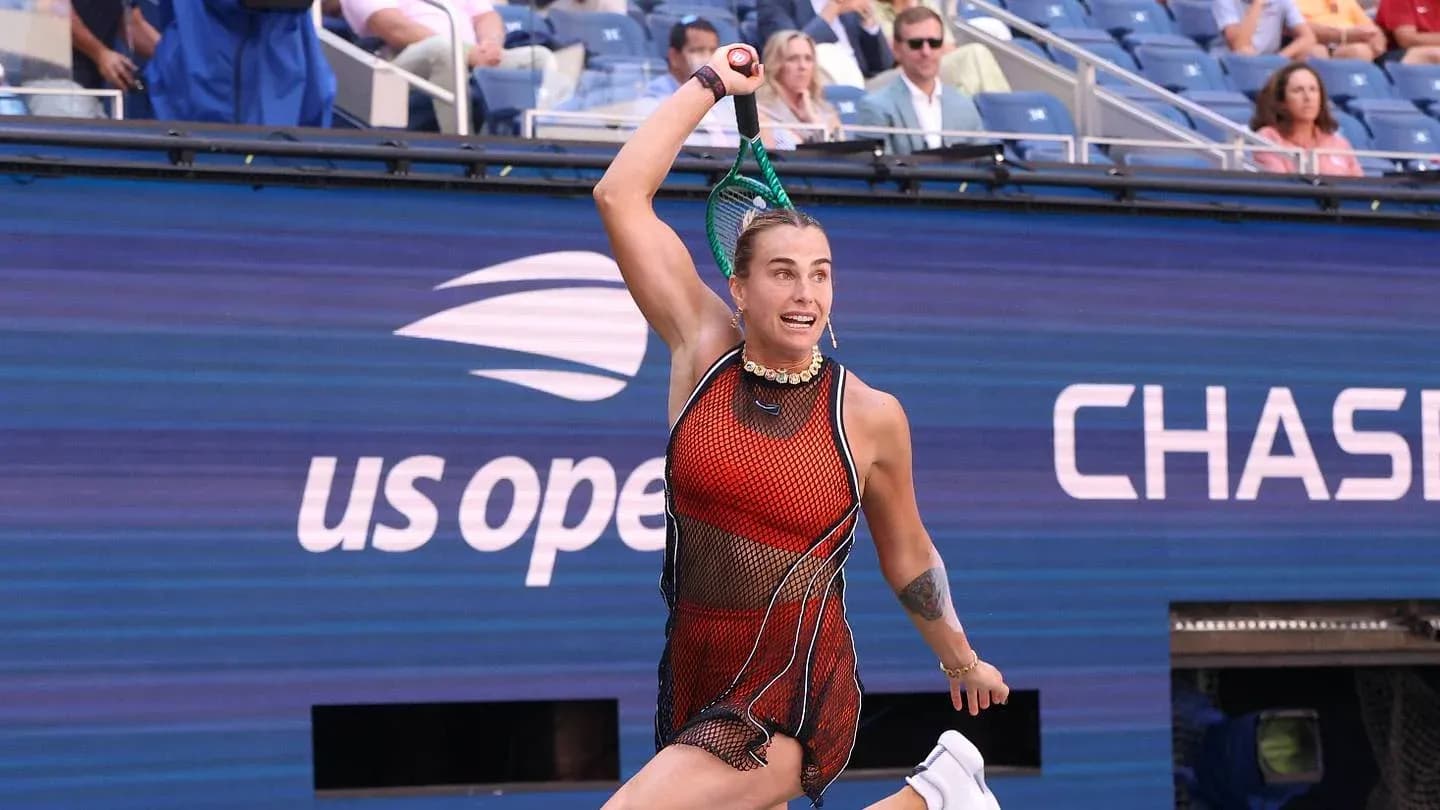
Aryna Sabalenka did not so much begin her title defence as announce it with a thud.
World No. 1. Two-time reigning US Open champion. Chasing a third straight crown and clinging to a ranking that has defined the last 99 weeks of her life. All of that pressure stepped onto court with her. None of it showed on the scoreboard.
Polina Iatcenko, 22 years old and making her debut on tennis’ biggest stage, barely had time to breathe. Sabalenka tore through the second-round match 6-1, 6-1 in just 53 minutes, a demolition that felt ruthless even by her own high standards.
This was the four-time Grand Slam champion in full command: three breaks of serve in the first set, three more in the second. The only blemish came in the fourth game of that second set, when Iatcenko finally broke through for a brief moment of resistance. It barely slowed the onslaught. Sabalenka simply reset, reloaded and resumed the punishment.
For the Russian qualifier, it was a harsh introduction to Arthur Ashe. A baptism of fire, yes, but also a week that brought her through qualifying and into the second round of a major for the first time. There is something to build on there, even if Wednesday night left a sting.
For Sabalenka, the win was too easy to be cathartic. The tennis was clean, violent, efficient. The tension around her remains anything but.
She knows the equation. To keep the No. 1 ranking, she must win the title in New York and hope Elena Rybakina falls before the semi-finals. Back in March, Sabalenka’s lead over the Kazakh looked untouchable, a towering 3000-point cushion. That has been hacked away, week by week, loss by loss, until only 434 points remain.
The slump has been real. After a blistering first three months of the season, with three titles and an Australian Open final, her results dipped sharply: early exits at majors, surprising defeats to players she usually brushes aside. The aura wobbled. The chase pack closed in.
Maybe that explains what happened once the match was over.
In her press conference, a question about her focus in the build-up to the tournament — referencing promotional events and brand appearances — struck a nerve. Sabalenka’s expression hardened.
“What kind of question is that?” she shot back. “Just because I posted some activities with brands, you think that I've been partying and not training?”
When the follow-up came — was she “getting serious” now that the event had started? — the sarcasm arrived, sharp and cold.
“Oh yeah, I wasn't serious before that. Next question.”
The exchange was brief, but it revealed the strain sitting beneath these comfortable scorelines. Sabalenka has done everything required so far: two straight-set wins, barely a scratch on the stat sheet. She has also quietly dodged a potential landmine, with Barbora Krejcikova’s early exit handing her Kamilla Rakhimova instead in the third round.
The tennis is under control. The ranking race is not. And that, for now, is the storm she cannot quite silence.
Alcaraz Shakes Off the Rust
If Sabalenka’s night was a procession, Carlos Alcaraz’s began with a jolt.
The defending men’s champion walked into Ashe for only his second competitive singles match in more than four months. A delicate wrist injury had turned his season into a stop-start puzzle. The question hanging over the evening was simple: how much of the old electricity remained?
For one set, Jaime Faria had the answer all to himself.
The Portuguese World No. 72 sensed hesitation in Alcaraz’s movement, a half-beat delay in his timing. He pressed. He broke in the seventh game. He took the opening set 6-4 and earned every bit of it.
The upset alarm began to sound. Then the defending champion slammed it off.
The turning point came immediately, in the first game of the second set. Faria carved out a crucial cluster of break points. Had he converted, the pressure might have swelled into something far more dangerous. Alcaraz held firm. The door stayed shut.
From that moment, the match flipped on its head.
The Spaniard surged through the second set 6-0, barely giving Faria a look. The forehand that had been under such scrutiny — would he hit it freely after the wrist lay-off? — started to crackle again, that familiar whip and heavy spin returning with intent rather than caution.
He had insisted after his opening win over Roman Safiullin that he could not afford to baby the shot.
“I know once I step on the court, I've just got to go for it every time. I've got to feel normal,” he said. “I have to hit like I was hitting before the injury. I'm feeling great. There is no reason to be afraid and not hitting normal.”
Against Faria, he lived that promise. The third set brought an exchange of breaks, a brief tug-of-war that ended with Alcaraz ahead 6-3. By the fourth, the pattern was set. The champion stretched his legs, opened the angles, and ran away with it 6-2.
Final score: 4-6, 6-0, 6-3, 6-2.
A scare, then a statement.
He admitted the early wobble.
“It was a tough match for me. I felt great in the first set, but I didn't take time and that cost me,” he said. “After that I tried to be focused, stay calm and think the good things will happen.”
The good things did arrive. Just not yet in their most spectacular form. Two rounds in, Alcaraz has what he needed most: no physical setbacks, two wins, and a game still some distance from its ceiling. For a player who thrives on rhythm and repetition, that might be the most encouraging detail of all.
The real examination, though, is still ahead. A dangerous third-round meeting with Wu Yibing comes next. Looming beyond that, a possible fourth-round clash with 20th seed Tommy Paul — the kind of bruising, athletic test that will probe not only his tennis but the resilience of that wrist over long, heavy rallies.
Five-setters will lurk deeper into the draw. So will the ghosts of missed months and lost match sharpness.
On this night, though, both champions walked off Ashe with their defences intact. Sabalenka, playing like a woman trying to hold off the world. Alcaraz, rediscovering the gears that once made New York his playground.
The lights will only get harsher from here. Who handles the glare longest?