Roger Federer: From Boy Wonder to Hall of Famer
Roger Federer always knew how to control a point. Controlling his tears was another matter.
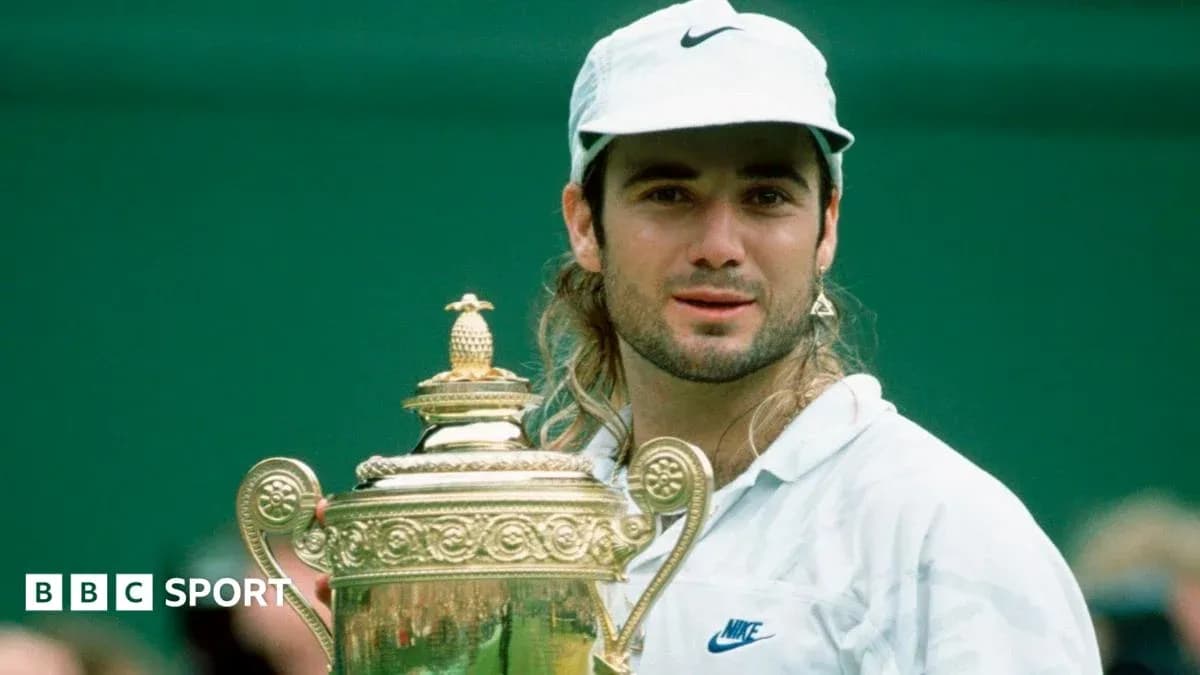
He still remembers the first time they caught him by surprise. Wimbledon, 2001. Centre Court. A 19-year-old with ponytail and promise had just taken down Pete Sampras, the king of the grass, on his own lawn.
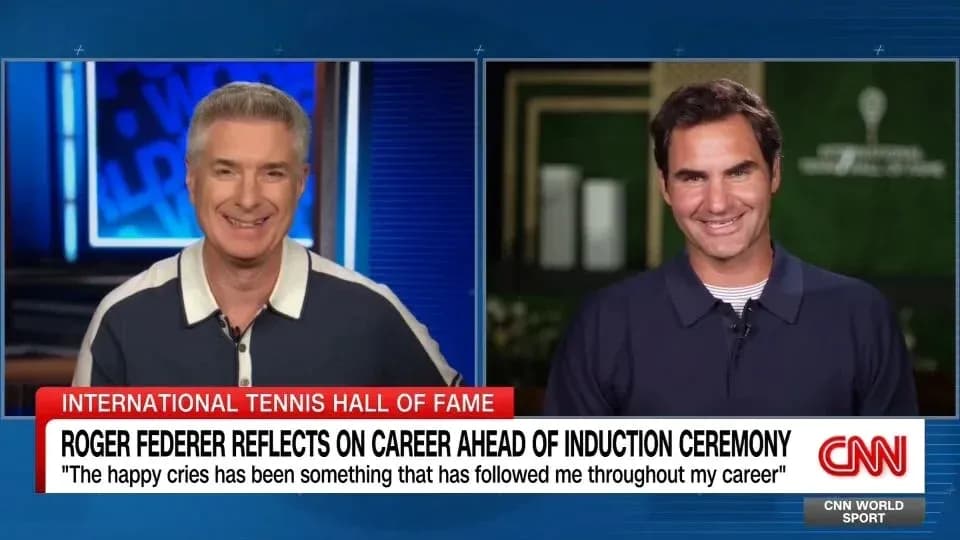
“I go to my knees, (then) I shake hands with Pete and he's my hero … and these emotions came all over me,” he told CNN Sports. “And I was like, ‘What is going on?’ This is not who I am normally.”
From that moment to his sob-filled farewell at the Laver Cup in 2022, Federer didn’t just win matches and majors. He became the sport’s most famous crier, a man whose tears seemed to say what the rest of tennis was feeling.
Now, he is walking into the International Tennis Hall of Fame in Newport, Rhode Island – and he knows the emotions are likely waiting for him again.
“If I'm speaking about the game and all the gratitude that I have, and having my entire family there – from my parents to my wife to my four children and my whole team from coaching staff and physios, etc. I think it could hit home very hard,” he said in the hours before his induction.
“If it happens, it will be more memorable for me personally, but I hope I get through the speech without too many hiccups. We'll see.”
From boy wonder to inevitable Hall of Famer
For his followers, this Hall of Fame weekend feels less like a surprise and more like a formality that has been penciled in for two decades.
The destination became obvious in 2004. Federer won three of the four grand slam singles titles that year and climbed to world No. 1, then simply refused to move. He stayed at the top for 237 consecutive weeks, a mark no one has matched.
In 2005, he won more than 95% of his matches. Then came 2006, the season many still hold up as his masterpiece: three more majors, 12 titles in all, a 92-5 record and a scarcely believable 94.8% win rate. Week after week, surface after surface, he turned dominance into routine.
Sampras’ 14 grand slam titles once felt like a mountain no one would scale. Federer blew past it at Wimbledon in 2009 and didn’t glance back. His final total of 20 has since been overtaken by Rafael Nadal and Novak Djokovic, but the number never told the whole story anyway.
He was the player people paid to watch even when they knew the result. The way he glided, the way the racket seemed an extension of his hand, the way he walked off court and spoke with the same calm ease – it all fed into the illusion that this was simple for him.
The price behind the elegance
Federer knows that perception always followed him. He also knows it was wrong.
“It looked like I wasn't actually hitting the ball so hard,” he recalled of his junior days. “But it was kind of flying off of my racket with a lot of power. People always thought, like, ‘It's so simple for you,’ because it looked like elastic. But it wasn't the case. There was a lot of work and effort put into it.
“When I would lose, they say, ‘Why don't you try harder?’ And when you win, they would say, ‘Oh my God, it's so easy for you!’”
Buried in that frustration is a clue to all those tears that followed trophies.
“The sacrifice was massive and I was holding a lot of pressure in.”
Every title, every five-set escape, every Centre Court walkout added to that internal load. The public saw the balletic forehand and the relaxed smile. Federer felt the weight of a sport and a legacy he was building in real time.
At peace with the quiet
What stands out now is how little he seems to miss the grind.
There is no talk of a void, no itch to chase one more adrenaline rush or one more roar from a stadium. “I'm actually really happy going through everyday life at a lower pace,” he said.
That “lower pace” is relative. He is a father of four, a philanthropist, an investor, a businessman. The calendar is still full, the suitcase still in use.
“I've always been a guy who loves being on the road,” he admitted, and retirement has not changed that. The difference is that the trips no longer come with a draw sheet and practice blocks attached.
Sharing a hall with his heroes
Newport offers something else: a chance to look back and, for a moment, to imagine what might have been in another era.
He has already drawn up his fantasy list of opponents from the Hall of Fame walls. “I would have a little list,” he said, before reeling off the names: Rod Laver, Bjorn Borg, John McEnroe, Stefan Edberg, Boris Becker and, of course, Sampras again.
“I think these would be my favorite players to play against. I've always admired their personalities, what they have achieved, and what they represent in the game.”
It is a telling choice. Federer, who became the benchmark for an entire generation, still looks up to the men who defined the sport before him. On court, he surpassed many of their records. In his mind, he simply joined their conversation.
Life after 20 majors
Federer’s once-record haul of 20 grand slam titles now sits behind Nadal and Djokovic in the history books. Among his fans, though, the debate feels settled. They will always call him the greatest.
He doesn’t push the argument. He looks forward instead.
“I'm trying to get better at golf,” he said with a smile. “I would love to start with an instrument again. I used to play the piano, so when I have more time, I'd like to dive into that because my four children and my wife play the piano.”
The competitive edge has shifted to quieter arenas. A cleaner swing on the fairway. A piece of music played well. A decision made carefully.
“I hope I'm a good listener and a good decision-maker. Hopefully I'm a guy who people enjoy being around. I'm a big family guy. I love being surrounded by my friends – that's really the priority in my life.”
For two decades, Federer’s world revolved around the white lines of a tennis court. This weekend, as he takes his place among the immortals in Newport, the spotlight will find him again. The tears may follow.
This time, they will belong not to a young man trying to understand what he has just done, but to a champion who knows exactly what it took – and exactly what he has walked away with.