Roger Federer Reflects on His Career and Future in Tennis
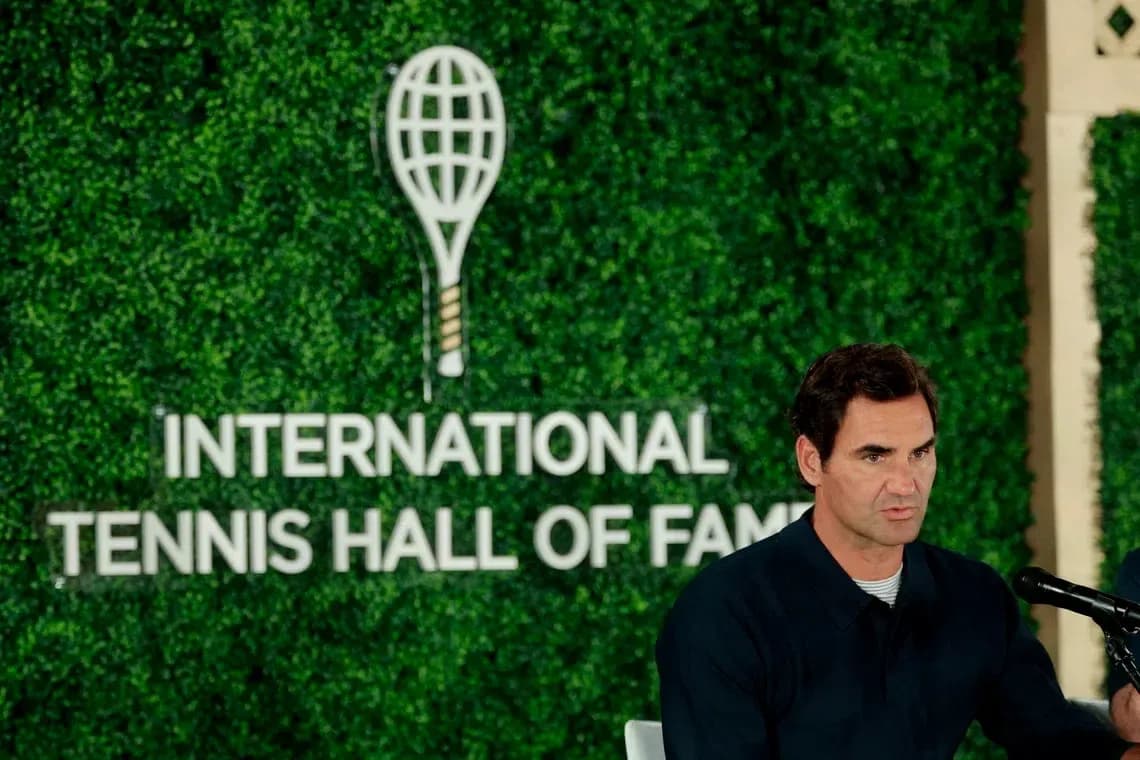
Roger Federer has spent most of his life rushing forward – to the net, up the rankings, into history. In Newport this weekend, as he enters the International Tennis Hall of Fame, he is being asked to do something he rarely did in his playing days: stop and look back.
The 20-time Grand Slam champion will be inducted on Saturday alongside broadcaster and journalist Mary Carillo, a pairing that underlines both the scale of his achievements and the story-telling that followed them. This honour, he admitted, feels very different from the trophies that once stacked up with numbing regularity.
"It's a huge, huge honour, one of the greatest we can achieve in this sport," Federer said on Friday at a news conference moderated by Hall of Fame president Patrick McEnroe. The word “honour” came easily. It was the comparison with his old life that seemed to give him pause.
For two decades, his career was measured in cold numbers. Eight Wimbledon titles, a men’s record. Six Australian Opens. Five U.S. Opens. The 2009 French Open to complete the career Grand Slam. Olympic doubles gold with Stan Wawrinka in 2008. A Davis Cup crown with Switzerland in 2014.
Then the broader totals: 103 ATP Tour titles. 310 weeks as world number one. A résumé that looks almost fictional when compressed into a single paragraph.
Yet Federer, now 45, spoke less like a collector of records and more like a custodian of the sport he once ruled.
“I hope I represented the sport well,” he said. That line hung in the air. Then he pushed further, away from the highlight reels and towards the boardrooms and back corridors where tennis quietly reshaped itself during his era.
He talked about conversations with the game’s power brokers – on the ATP side, with the Grand Slams, with player councils where he “donated” his time – and about what those meetings delivered. Not just bigger cheques for champions, but a broader base of players able to survive, and thrive, on tour.
He pointed to the growth in prize money for first and second rounds, to better conditions for players and media, to improvements in medical support and stadium infrastructure. The nuts and bolts that never trend on social media but define a professional’s daily life.
“I feel like way more players can make a living. And I hope that I have helped with that as well,” he said. No boast. More a quiet claim of responsibility.
The journey from gifted Swiss teenager to global icon rarely looked turbulent from the outside. Federer made Centre Court feel like his living room. The reality, he suggested, was more complicated.
“I felt like I was a winner early. I liked being on Centre Court. I preferred Centre Court to Court Five or Court 18. I wanted to be that person, so I think I embraced the pressure.”
The ambition was there from the start. So was the appetite for the biggest stage. But with it came the noise. Endless judgments. A sport that often reduces careers to a binary: did you win?
"You get affected by so many outside comments that it's like one big storm sometimes in your brain," he said. The image is striking – the calmest player of his generation describing the chaos inside his own head. “Sometimes you lose the fun in it.”
Then the twist that explains his longevity: “But I feel like, for the most part, I've really done a good job of staying really happy on the road."
Happiness on the road is a rare currency in tennis. It might be the one stat that truly separated him from so many of his peers.
Federer officially walked away in 2022, his body finally refusing to match his imagination. Yet retirement has never looked like a full stop. On Tuesday at Arthur Ashe Stadium, he rolled back the years in an exhibition match ahead of the U.S. Open, a reminder that his presence still changes the temperature of a court.
He is not done with tennis. Not emotionally. Not practically.
He floated the idea of one day captaining a Laver Cup team, mentoring younger players, or stepping into the commentary box. None of it sounded like a media plan. More like a man listing the ways he might stay close to the game that shaped him.
"I would like to give back to the sport," he said. The phrase can sound hollow from others. From Federer, it carries weight, because he is already doing it in quieter ways.
He tries to attend three, four, maybe five tournaments a year. Not as a headliner, but as a presence. To watch. To talk. To listen.
"It rejuvenates me mentally to see what I could be doing in the sport that would be meaningful down the road," he said.
On Saturday in Newport, the Hall of Fame will place Federer firmly in the past tense, enshrined alongside the greats he once chased and then surpassed. He does not sound ready to live there.