Political Storm at Lord's: Imran Khan's Sons Speak Out
At Lord’s, the game briefly stopped being about bat and ball.
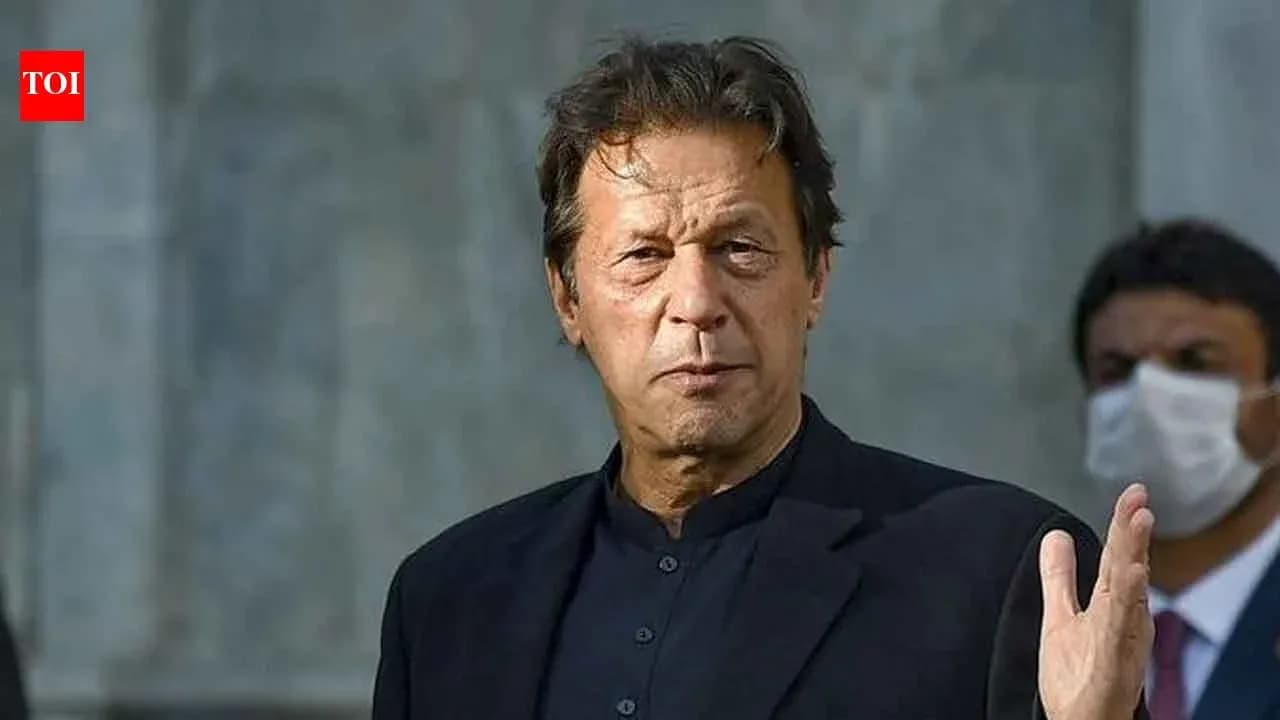
During the second Test between England and Pakistan, an interview on Sky Sports with Sulaiman and Kasim Khan — the sons of former Pakistan captain and ex-Prime Minister Imran Khan — detonated far beyond the boundary rope. What began as a sombre discussion about their father's health and prison conditions quickly spiralled into a political and sporting storm, dragging the Pakistan Cricket Board (PCB) and its chairman Mohsin Naqvi into the spotlight.
Reports later claimed the PCB had gone as far as threatening not to send the team out for the post-lunch session on day one unless the interview was taken off air. For a few fraught moments, the possibility of a walk-off at the home of cricket hung over the Test.
‘They’re clearly hoping to kill him in there’
The trigger was the raw, unvarnished concern voiced by Imran’s sons.
They described their father’s solitary confinement and painted a bleak picture of his treatment. Kasim, speaking in the interview and later to The Telegraph, levelled a grave accusation about Khan’s safety.
“They're clearly hoping to kill him in there. They want to silence him as secretly as possible and just slowly make him fade into nothing,” he said, arguing that the authorities were trying to erase the country’s most recognisable political figure from public life. “That's a very difficult thing to do with the most popular person in Pakistan right now. Their strategy, whenever we speak, is to let everything fizzle out and then impose more brutal restrictions that make it even harder for him to survive.”
The words were incendiary. The setting — a global broadcast from Lord’s — only amplified their reach.
‘They made absolute fools of themselves’
As the backlash grew, the focus swung towards Mohsin Naqvi and the PCB’s reported response.
From London, Kasim did not hold back. He accused the board of damaging its own credibility with its alleged attempt to strong-arm the broadcaster.
“They made absolute fools of themselves,” he said, arguing that the PCB had turned a humanitarian plea into a public relations debacle.
Sulaiman, too, expressed disbelief at the scale of the reaction from Lahore. He said he had anticipated some pushback, but not a threat that touched the integrity of the Test itself.
“I was expecting some sort of response. But I didn't think they would be so tactless as to threaten not to take to the field,” he said. For him, the core issue was clear: “It shouldn't be in the remit of the Pakistan Cricket Board (PCB) to ask for an interview about an ex-Pakistan player, somebody who lived in England for 22 years, to be taken down. This wasn't about politics, but about the humanitarian situation and his health.”
For a board already under scrutiny, the optics were brutal: a team on the verge of not resuming play at Lord’s because of an interview about a national icon’s treatment in jail.
Denials, doubt and a battle over truth
On the other side, Pakistani authorities have consistently rejected claims of mistreatment. Their line has been firm: Imran Khan, they say, is receiving appropriate medical care.
The family does not buy it.
Sulaiman questioned both the content and the opacity of the official updates on his father’s condition, accusing the state of shaping a narrative to pre-empt a darker outcome.
“The worrying theory we're hearing is that they're drip-feeding these reports of his ailing health and pretending that they're trying to help him, just to lay the ground for something worse to happen. Then they can wash their hands and say: 'He's just an old man who died, and we had nothing to do with it,’” he said.
For the sons, the problem is not only what they are being told, but what they are not allowed to verify.
“They haven't given us proof of any of this. It's all just hearsay from government sources – there's no transparency, they don't want to give anyone access, so how are we supposed to believe any of it?” Sulaiman added. He pointed to the last solid information they had: a six-month-old account from Imran himself, in which he spoke of problems with his eye and alleged neglect of his treatment.
That gap — between official assurance and family testimony — now sits at the heart of a bitter dispute.
Cricket caught in the crossfire
For decades, Imran Khan has been more than a former captain. He is a World Cup winner, a national hero and, later, a polarising political force. His name carries a weight in Pakistan that no current player can match. When his sons speak about him on a global cricket broadcast, the reverberations are inevitable.
At Lord’s, those reverberations briefly threatened to halt a Test match.
The PCB now finds itself accused not just of overreach, but of dragging the national team into a political storm of its own making. The board denies wrongdoing, the authorities deny mistreatment, and the sons of Pakistan’s most famous cricketer insist their father’s life is in danger.
The cricket will move on. The scoreboard at Lord’s will fade into the archives. The questions hanging over Imran Khan’s prison cell, and over the power wielded around Pakistan cricket, will not disappear so easily.