Pakistan Women Claim Asian Games Bronze Against Bangladesh
Pakistan’s women walked off the field in Nisshin with bronze medals around their necks and something even more valuable in their pockets: a measure of redemption and a reminder of their pedigree at the Asian Games.
Beaten by Bangladesh in the bronze-medal match in Hangzhou at the 2022 Games, Pakistan turned the script on its head this time, sealing a 31‑run win built on a captain’s innings from Fatima Sana and a ruthless new‑ball burst from their young bowlers.
Fatima Sana drags Pakistan to a fighting total
At 67 for five, Pakistan’s innings was teetering. The top order had misfired, the pressure was building, and Bangladesh could sense a chaseable target in the making.
Fatima Sana refused to let it happen.
The captain counter-attacked with authority, thumping 45 from just 30 balls. She struck three fours and three sixes, picking her moments to go hard and never allowing Bangladesh’s bowlers to settle. Every time the innings threatened to stall, she found a gap or cleared the ropes.
Crucially, she found an ally.
Aliya Riaz joined her with Pakistan in trouble and played the perfect foil. Her 25 from 22 balls didn’t dominate the scoreboard, but it steadied the dressing room. Together, the pair stitched a 67‑run stand off only 43 deliveries, transforming a precarious position into a platform.
From 67 for five, Pakistan surged to 145 for eight. It was not a towering total, but on a surface offering just enough to the bowlers, it felt competitive. More importantly, it carried the imprint of a captain leading from the front.
Early strikes break Bangladesh’s chase
Defending 145 required discipline with the new ball. Pakistan delivered it with interest.
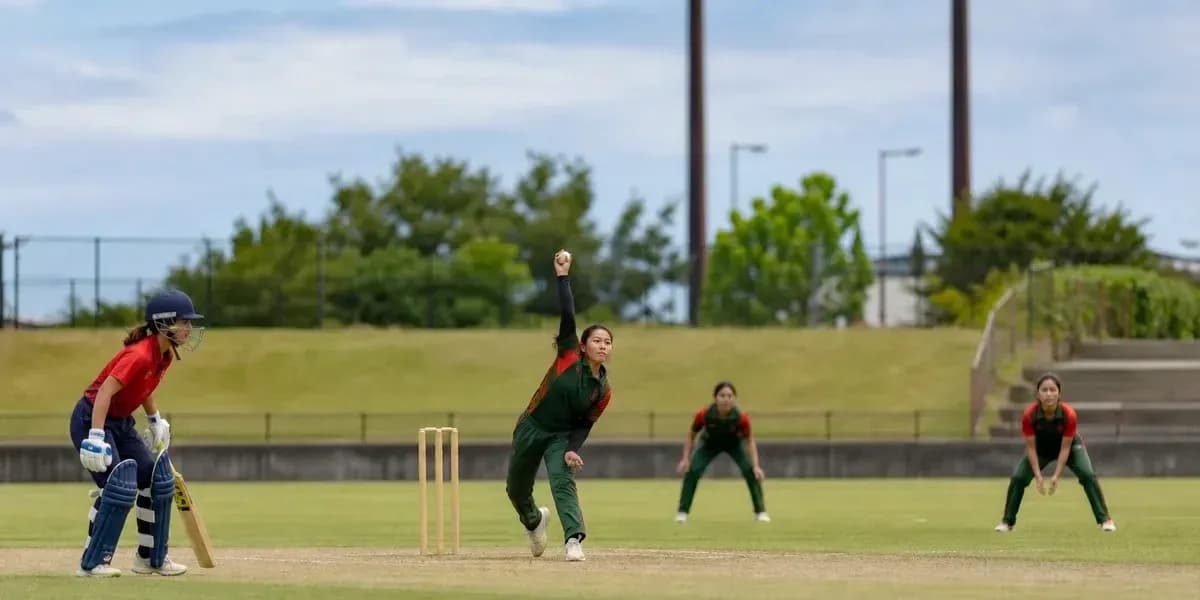
Umm-e-Hani and Tasmia Rubab ripped into Bangladesh’s top order, reducing them to 20 for three inside the first five overs. The chase never really recovered from that early damage.
Umm-e-Hani, in particular, produced the spell of her young Twenty20 international career. She finished with figures of three for 10 from her four overs, including a wicket maiden, and choked the life out of the powerplay. Every dot ball tightened the grip; every dismissal pushed Bangladesh further into a corner.
The pressure finally told on the middle order. Singles dried up, boundaries became rare, and the required rate crept away from them.
Resistance from Sharmin and Nigar, but no rescue
Bangladesh did find resistance.
Sharmin Akhter stood firm with an unbeaten 46 from 45 balls, the one batter who looked capable of stretching the game deep. She found support from captain Nigar Sultana, who added 25, and together they stitched a 47‑run partnership for the fourth wicket that briefly steadied the chase.
For a moment, the contest flickered.
If that stand had kicked on, Pakistan’s total might have started to look light. Instead, Pakistan’s bowlers kept chipping away. The fielders backed them with sharp work on the ground, and the squeeze never really eased.
Fatima Sana returned to make another telling contribution with the ball, removing Ritu Moni and nudging her tally in Twenty20 internationals in 2026 to 31 wickets. Bangladesh closed on 114 for seven, well short of the target and well short of denying Pakistan their medal.
A third Asian Games medal – and a statement
The bronze in Nisshin is Pakistan’s third women’s cricket medal at the Asian Games, adding to their golds from 2010 and 2014. It also heals, in part, the sting of that defeat to Bangladesh in the 2022 bronze-medal match.
This campaign had its bumps. Pakistan edged past Thailand by three wickets in the quarterfinals, then ran into a ruthless Sri Lanka in the semifinals, losing by eight wickets. At the top of the podium, India underlined their dominance with a crushing final win over Sri Lanka, piling up 216 for three and rolling their opponents for 69 to claim gold.
Pakistan’s story unfolded a rung below that summit, but it mattered no less to the players who walked off with bronze. A captain’s knock, a young bowler’s career-best spell, and a reversal of a painful recent result against Bangladesh — all of it points to a side that still believes it belongs on the Asian Games podium.
The question now is simple: with this core and this resolve, how long before they are chasing gold again rather than settling for bronze?