Pakistan's Top-Order Crisis Hits 35-Year Low in England Tour
Pakistan did not just lose their starts in England. They barely had any. Across three Tests, six innings and three different opening combinations, the top of the order scraped together a total of just 20 runs – their joint-worst return in a Test series in 35 years.
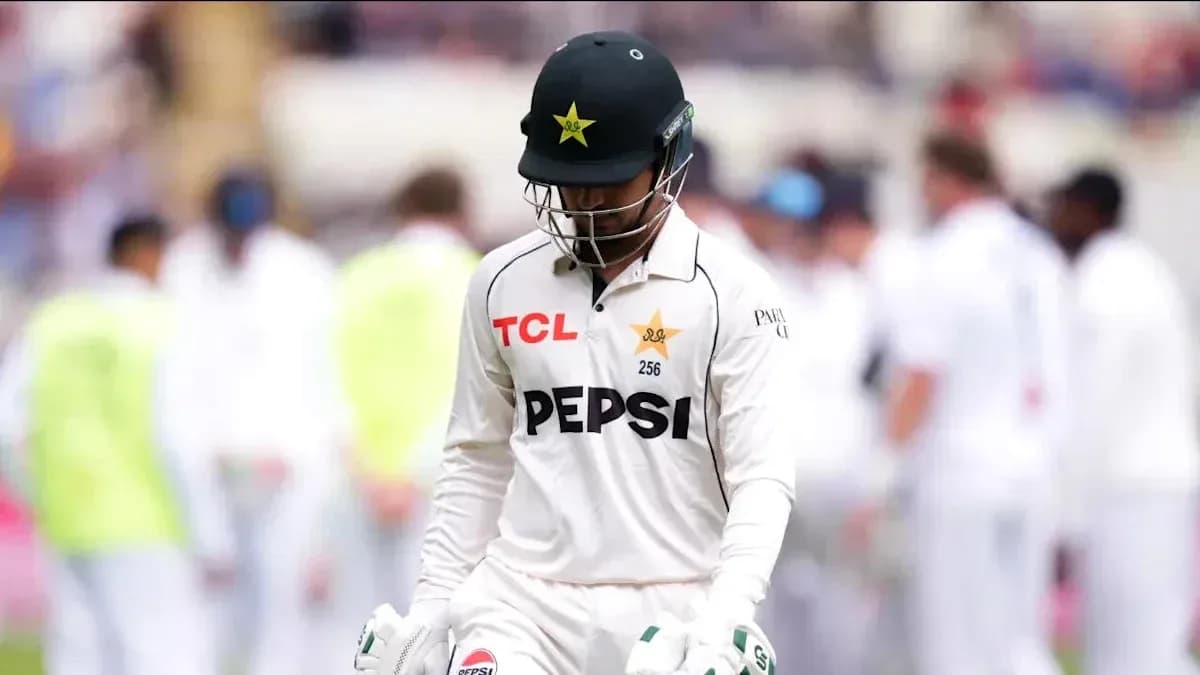
By the time the third Test reached Edgbaston, the story had become painfully familiar. New ball, fresh hope, swift collapse. In Pakistan’s second innings there, the openers did not add a single run. Zero for one, then zero for two, and the middle order walking out almost before they had loosened their shoulders.
Three pairs, no platform
Pakistan searched for answers at the top and found only fresh problems. They cycled through three opening partnerships during the series, yet not one of them managed to stitch together a stand in double figures. The highest opening stand was eight. Eight runs as a best effort across an entire Test series.
The 20-run aggregate takes its place among the bleakest numbers in Pakistan’s Test history. Not since the 1990-91 home series against West Indies had their openers produced so little across a full campaign.
The instability was relentless. New faces, new combinations, same result: early wickets, England on top, Pakistan rebuilding from rubble.
Awais stands, partners fall
In the middle of the chaos, Azan Awais offered something resembling resistance. The young left-hander cobbled together 129 runs in six innings at an average of 21.50, numbers that look modest on paper but positively robust in the context of the carnage around him.
He kept turning up, kept trying to see off the new ball, kept walking back to the pavilion with another partner gone cheaply at the other end.
Imam-ul-Haq produced 42 in one innings but paired it with a duck. Shan Masood’s contribution as an opener read 1 and 26. Saim Ayub’s brief audition brought the harshest line of all: 0 and 0.
Each failure deepened the pressure on the middle order. Pakistan’s No. 3 and No. 4 walked out time and again with the ball barely scuffed, the slips cordon buzzing, and the scoreboard stuck in single digits.
Edgbaston low lights a wider collapse
The top-order problems fed into something larger and more alarming in the third Test. At Edgbaston, Pakistan’s batting did not just wobble; it caved in.
In the first innings, they were skittled for 133. The new ball bit, England’s bowlers hunted in a pack, and Pakistan’s top five all departed with single-figure scores. One after another, they trudged off with barely a mark on the board.
That sequence carved out an unwanted piece of history: it was the first time a team had lost all of its top five wickets for single-digit scores in the first innings of a Test in England.
Numbers like that do not just sting; they demand answers. For Pakistan, the question is no longer whether the top order needs fixing. It is how quickly they can rebuild an opening partnership that can survive the first spell, let alone shape the course of a Test match.