Pakistan Cricket Faces Ruthless Reset Amid England Tour Defeats
Pakistan cricket is not just losing a Test series in England. It is being torn up and rewritten in real time.
Two crushing defeats — an innings and 103 runs at Headingley, then a 194‑run beating at Lord’s — have given England an unassailable 2-0 lead. For Pakistan, the scoreboard tells only part of the story. The real drama is unfolding off the field.
A ruthless reset
Before the third Test at Edgbaston has even begun, the Pakistan Cricket Board has swung the axe. Hard.
Sarfaraz Ahmed and Umar Gul are out of the coaching setup. Mike Hesson has been handed the reins, with former Australia seamer Ashley Noffke alongside him as assistant. That alone would signal a reset. The PCB has gone much further.
Seven players have been sent home ahead of the final Test. Not fringe names. Senior figures. Mohammad Rizwan, Imam-ul-Haq and Salman Ali Agha are among those removed from the squad as the board pivots sharply towards a younger core. The message is stark: this tour is no longer about saving a series. It is about starting again.
Shoaib Akhtar lifts the lid
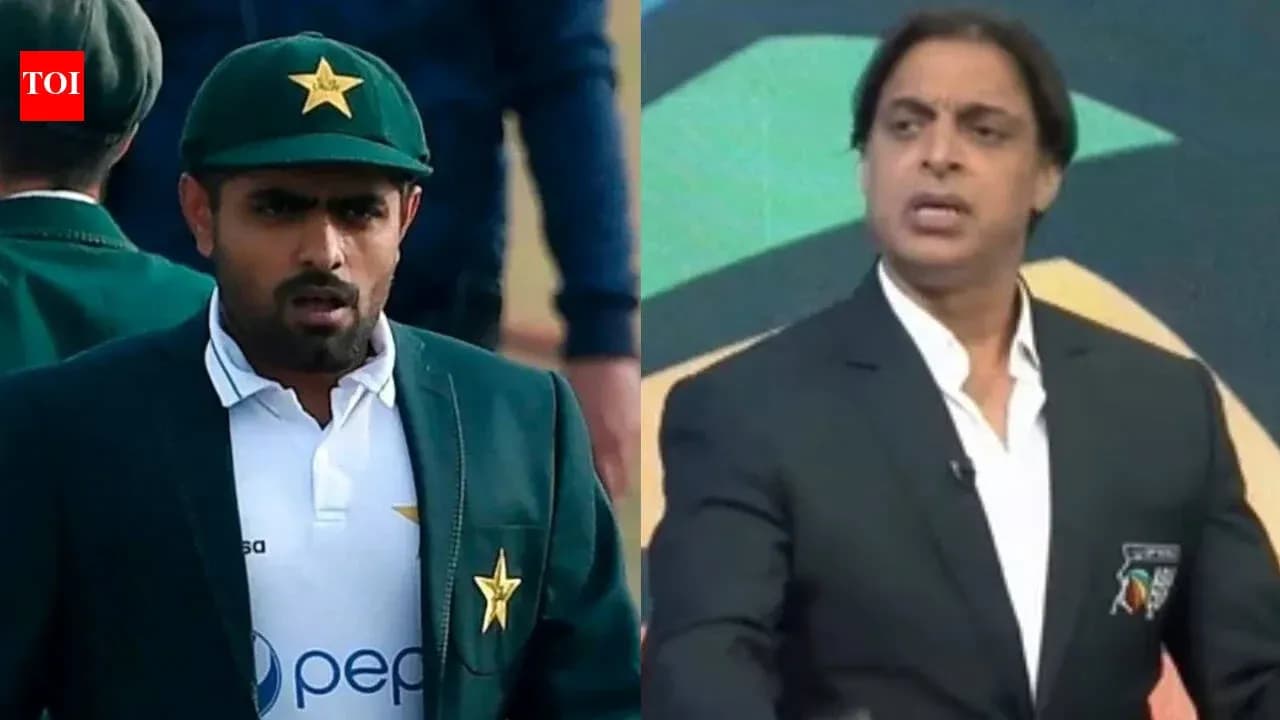
Into this chaos steps Shoaib Akhtar, never one to sugar-coat. Speaking on the OutSide EDGE show, the former fast bowler laid bare how deep the disillusionment runs inside the PCB.
“The PCB itself was very disappointed by these people, and they don’t expect anything from this Pakistan squad. The plan is to remove this squad and replace them with younger and newer blood. Players who just want to play for Pakistan. They are looking at the future now, and they are working at it in the right way,” he said.
This is not, in his view, a knee‑jerk reaction to two bad Tests. It is a long‑brewing rupture, with the England tour used as the stage to accelerate a rebuild that was coming anyway.
Yet even as he backed the idea of renewal, Akhtar issued a clear warning: do not burn the few genuine assets the team still has.
“In this transition, I just want Shaheen Shah Afridi, Naseem Shah and Haris Rauf’s careers to be saved. These guys have a lot of cricket left in them,” he said.
Those three names cut through the noise. They are the bowlers Pakistan can least afford to mismanage as the old guard is cleared out.
‘Nothing’ expected from this squad
Akhtar then revealed a conversation that captures the mood inside the corridors of power.
He said he asked a PCB official what the board realistically expected from this team on the England tour. The answer, as he tells it, was brutal.
“Nothing. We have expectations from the next generation of players that we are preparing for the big stage,” Akhtar quoted the official as saying.
In that single word — “Nothing” — lies the most damning verdict of all. The current squad, at least in the eyes of some within the board, has already been written off.
Akhtar added that the same official likened Pakistan cricket to being “on a ventilator” and suggested it could take around two years to revive the national setup. The imagery is grim, but it matches what the scoreboard has been screaming at Headingley and Lord’s: this is a system in intensive care, not a team in a temporary slump.
No shock, no fight
Akhtar’s criticism did not stop with the administrators. He turned his gaze back to the players and what he saw — or failed to see — in those first two Tests.
“We didn’t have the fight in us,” he said, summing up Pakistan’s performances in one cold line.
For a country that built its cricketing identity on defiance, on fast bowlers snarling with the ball in hand and batters counter-punching against the odds, that absence of resistance cuts deeper than any defeat margin.
When asked if the current turmoil had shocked him, Akhtar brushed the idea aside.
“What is the shock there? Didn’t you expect that?” he replied.
To him, the crisis is not a twist in the plot. It is the inevitable consequence of years of drift, now exposed under the harsh lights of an English summer.
Work behind the scenes
Akhtar also spoke about visiting the National Cricket Academy in Lahore during the second Test. What he found there hinted at the scale of the rebuild being attempted.
“After 26 years, there is work being done at the academy now,” he noted, pointing to significant infrastructure activity at the facility.
While the senior team absorbs blow after blow in England, foundations are literally being laid back home. It is a jarring contrast: construction and hope in Lahore, collapse and confusion in Leeds and London.
A dead rubber that suddenly matters
Pakistan now head to Edgbaston 2-0 down, the series already gone. On paper, the third Test is a dead rubber. In reality, it has become something else entirely.
The PCB’s decisions — the coaching shake-up, the culling of senior players, the open talk of a two-year revival — make it clear that the stakes stretch far beyond avoiding a 3-0 whitewash. Every session in Birmingham will be played under the shadow of a regime that has already started planning for a future without many of the men currently in the dressing room.
For some, this may be a last audition. For others, a first glimpse of what comes next.
Pakistan cricket has been described as being “on a ventilator.” The coming days will reveal whether this is the beginning of a recovery, or just the quiet before an even more painful diagnosis.