Pakistan's Major Overhaul in England Tour: Seven Players Axed
Pakistan’s tour of England has lurched from crisis to full-scale reset.
With the side 0-2 down in the Test series and sinking fast in the World Test Championship, the Pakistan Cricket Board has swung the axe on a remarkable scale, releasing seven players from the touring party and overhauling the Test coaching structure in the middle of the tour.
Senior players dumped as form collapses
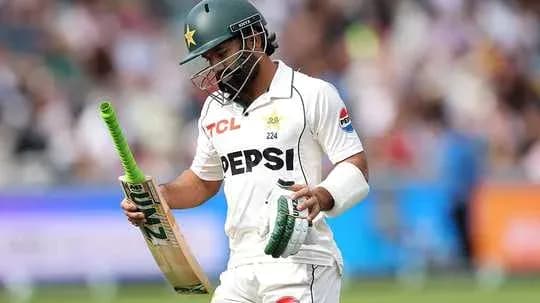
The most eye-catching name among those sent home is former white-ball captain Salman Agha, part of a senior trio whose returns with the bat have evaporated at the worst possible time.
He is joined by Mohammad Rizwan, Imam-ul-Haq, Ali Usman, Aamir Jamal, Muhammad Awais Zafar and Khurram Shahzad. All seven have been released from the Test squad in England, a move that underlines just how fed up the management is with a run that has seen Pakistan lose five of their last six Tests.
Rizwan, once the heartbeat of Pakistan’s middle order, has mustered just 283 runs in his last 11 Test innings at 25.72, with only two fifties to show for it. Agha has fared no better, scoring 221 runs at 24.55. Imam’s numbers are even starker: 178 runs at 22.25 across eight innings.
Those individual struggles mirror a collective decline. Since January 2025, Pakistan’s batting average in Tests stands at a WTC-worst 23.92. The numbers are brutal and, in the eyes of the PCB, unforgivable.
They sit bottom of the WTC table and are already out of the race for the final. They have not won a Test in SENA countries (South Africa, England, New Zealand, Australia) since that famous victory at Lord’s in May 2018. Since then: 18 Tests, 16 defeats, two draws. The away record in recent times is even more damning — 10 losses in their last 11 Tests on the road.
Sunday’s defeat at Lord’s cut particularly deep. It was not just another loss; it dragged Pakistan’s all-time Test win-loss ratio below 1 for the first time since 1987. They now stand at 153 wins and 154 defeats in 473 Tests, a symbolic tipping point for a proud cricketing nation.
Seven new call-ups and a gamble on youth
The response has been ruthless. For the third Test at Birmingham, starting September 9, the management has issued call-ups to seven players, a blend of familiar faces and fresh bets.
Saim Ayub, Abdullah Fazal and Arafat Minhas have already worn the Pakistan colours and now get another crack at reviving a listing red-ball campaign. Alongside them come four uncapped players: Mohammad Imran Jnr, Saad Baig, Mohammad Imran (Imran Randhawa) and Razaullah.
It is not a tweak. It is a clear signal that reputations no longer protect underperformers and that the PCB is willing to throw new blood into the fire of an English Test series if the established order cannot cope.
Whether this injection of youth and fringe talent stabilises the side or deepens the chaos will be revealed in Birmingham. For now, it reads like a hard reset.
Hesson handed the wheel as Sarfaraz and Gul depart
The shake-up does not stop with the playing XI.
Mike Hesson, long associated with Pakistan’s white-ball setup, has been told to take charge of the Test squad alongside Ashley Noffke. The New Zealander is already in England and is expected to link up with the side shortly, effectively becoming the new face of Pakistan’s red-ball operation.
Hesson will lead the Test team for the remainder of this WTC cycle: two matches in Sri Lanka in November and two more in New Zealand early next year. That is a significant mandate and a clear endorsement of his methods in a format he was not originally hired to run.
The flip side is stark. Current Test coach Sarfaraz Ahmed and bowling coach Umar Gul have been released from their roles. Two former stalwarts of Pakistan cricket, both moved aside mid-tour.
Coaching changes in the middle of an England tour are not without precedent. The BCCI famously parachuted Ravi Shastri and his team of Bharat Arun, R Sridhar and Sanjay Bangar into the 2014 tour, sidelining Duncan Fletcher’s staff. But that switch came after the Test series, ahead of the white-ball leg.
Pakistan have gone one step further — ripping up their structure with a live Test series still in motion.
A crossroads, not just a crisis
This is more than a reaction to a 0-2 scoreline. The numbers tell a story of long-term decline: a win-loss record tumbling, a batting lineup that cannot cope in challenging conditions, a generation of players unable to turn talent into results overseas.
The PCB has chosen shock therapy.
Seven players out, seven in. A new coaching brain trust. A tour in disarray, but also, potentially, a line in the sand.
Birmingham will not just host a third Test. It will stage the first examination of whether Pakistan have the courage — and the clarity — to turn this rupture into the start of something new, rather than just another chapter in a worrying slide.