Pakistan Cricket in Chaos: A Call for Structural Change
Pakistan cricket has known chaos. This feels different.
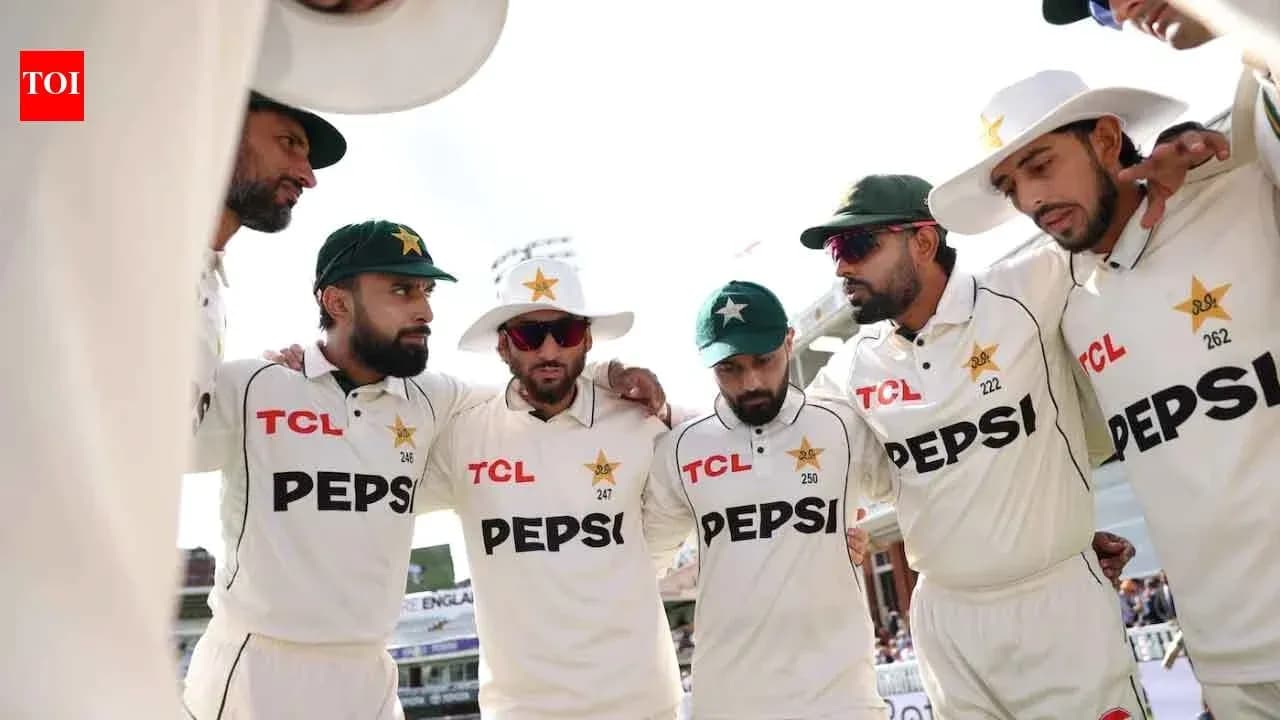
Two heavy defeats to England, a series already lost 2-0, and then, with one Test still to play at Edgbaston, the Pakistan Cricket Board ripped up its own script. Seven players sent home. Head coach Sarfaraz Ahmed and bowling coach Umar Gul removed mid-tour. White-ball coaches Mike Hesson and Ashley Noffke suddenly asked to run the red-ball side. Misbah-ul-Haq walking away from the selection panel and his batting consultant role in Lahore.
It is not a reset. It is an eruption.
‘Pakistan cricket is in shambles’
From New Delhi, the sense of bewilderment echoed loudly from a man who knows the system from the inside. Former Pakistan wicketkeeper-batter Atiq-uz-Zaman did not bother with diplomacy.
“Pakistan cricket is in shambles at the moment… currently at an all-time low,” he told IANS, his frustration sharpened by distance. He lives in England now, but the hurt, he said, is still Pakistani.
The timing of the overhaul, straight after a 194-run hammering at Lord’s, has become the flashpoint. Pakistan were outplayed there; that much was clear. What followed left many, including Atiq, struggling to understand the logic.
He pointed directly at selection calls that undercut the very idea of building a Test side.
“I don't understand why Khurram Shehzad was dropped or why the spinner (Ali Usman) was sent home after taking the most wickets in the Leeds Test,” he said. A bowler delivers in one Test, disappears in the next. A seam of promise is cut off mid-series.
Then came the charge that cuts to the heart of dressing-room trust: “All of a sudden, now T20 bowlers are brought into the Test squad. Why? Because Mike Hesson has his personal favourites, and he brought those players into Test cricket.”
Atiq’s words frame a deeper worry. This is not just about one bad tour. It is about a structure that lurches from one idea to the next without a plan, leaving players, coaches and fans to pick through the debris.
Sarfaraz and Gul axed mid-series
The decision to sack Sarfaraz Ahmed and Umar Gul during the series has become another symbol of that instability.
“There is no justification for it,” Atiq said. “The same people who selected them are the ones turning around and deselecting them. That means either you made a mistake in the first place, or you are making a mistake right now.”
Sarfaraz and Gul are not fringe names. They are World Cup winners, players woven into Pakistan’s modern cricket identity. Sarfaraz lifted the U19 World Cup and then the Champions Trophy as national captain. Gul terrorised top orders with the new ball and at the death.
“They’ve won World Cups for Pakistan… He deserves respect,” Atiq insisted.
He did not hide his own reservations about Sarfaraz’s initial appointment as Test head coach, pointing to the lack of coaching experience and qualifications. But for him, that is exactly why the mid-series U-turn looks so damaging.
“I didn't support that appointment. But once you make him the coach, you have to back him. Give him a fair chance before you disrespect him and send him home in the middle of a Test series. It is unacceptable.”
The question he posed cuts through the noise: if the players on the field are not performing, or the squad itself is poorly constructed, where does the responsibility really lie?
“I feel very sorry for Sarfaraz and Umar Gul because I don't think they did anything wrong. If the players on the field can't perform, or if you haven't selected a team capable of performing, what is a coach supposed to do? Let's see what Mike Hesson does now.”
The pressure has shifted, very publicly, onto Hesson and Noffke. The third Test is no longer just about salvaging pride. It has become a referendum on the board’s upheaval.
Imam-ul-Haq under fire
Amid the structural storm, one player’s personal decision has lit another fuse.
Imam-ul-Haq missed both innings at Lord’s after suffering a Grade 1 tear in his left calf. He did come out for some batting practice despite the injury, but when he chose not to bat in the Test itself, criticism followed swiftly. Atiq did not hold back.
“Look, I won't speculate on the exact severity of his injury, but in our culture, we are raised to be tough,” he said. For him, a Grade 1, 2 or even Grade 3 muscle strain is not enough to stay in the dressing room when your team is in trouble.
“You still step out there and bat for your team. Even if you get out on the first ball, it doesn't matter – the public sees that you showed heart, and they respect you for it.”
Imam’s choice, and the optics around it, jarred with that expectation. He did not bat, then appeared in front of the media in shorts, bandages visible, limping heavily.
“Even if you can't run, you can still hit a ball,” Atiq argued, before invoking a roll call of cricket’s grittiest efforts: Glenn Maxwell’s double hundred with severe hamstring cramps, Chris Woakes batting with a fractured hand, Saleem Malik facing West Indies quicks with a broken arm.
“Imam-ul-Haq should have walked out to bat. Even if he got out immediately, nobody would have questioned his commitment because he was genuinely injured. But limping around in front of the media after taking criticism the day before just looks like a performance.”
His verdict was brutal.
“It leaves a bad impression, and I have no sympathy for that behaviour. If you don't have the heart or bravery for international cricket, you shouldn't be playing Test matches. Test cricket isn't just a test of your skills – it's a test of your character.”
In a week when the team’s mental steel is under scrutiny from all sides, those words will sting.
Playing under threat
Yet even as he dismantled decisions and attitudes, Atiq did not abandon the players themselves. He knows the environment that shapes them.
“To be honest, in Pakistan, players are used to this environment from domestic, U16, and U19 cricket,” he said. “We are raised in a tough system where you rarely get total freedom or backing, and you always feel like you are playing under threat just to survive.”
That sense of permanent jeopardy, of careers hanging on a bad session or a political shift in Lahore, is not new. It is the backdrop to almost every Pakistan generation.
His message to the current squad, heading into Edgbaston with their world seemingly collapsing around them, was simple enough.
“Enjoy your cricket, believe in your skill set, do what you can with bat and ball, and leave the rest to God.”
The words carry both resignation and defiance. If the system will not protect you, protect your game. If the board keeps changing its mind, hold your nerve.
Talent without a structure
Atiq’s criticism eventually circles back to the top. He now works as a scout for England women, Lions and Young Lions, and coaches the Germany men’s team. From that vantage point, he sees what a coherent structure can do.
He is adamant Pakistan have the raw material.
“The talent in Pakistan is undeniably there,” he said. The problem, in his eyes, is what surrounds it – or fails to.
He called for major changes at PCB level: better leadership, serious planning, proper support. Not slogans. Not knee-jerk sackings in the middle of a tour.
“Hopefully, the PCB chairman changes his approach and brings in someone with genuine expertise and leadership experience to drive real structural change. If you surround the team with quality, professional individuals, they will instill high standards.”
Right now, those standards feel a long way off. A proud cricket nation arrives at Edgbaston stripped back, confused, and publicly chastised by its own former players. A Test match that should have been a final chance to fight for a series becomes something else entirely.
It becomes a test of whether Pakistan can still find clarity and courage amid their own chaos – or whether this really is the all-time low Atiq-uz-Zaman fears.