Pakistan Cricket Board Overhauls Squad Amid Inquiry
At Lord’s, where Pakistan’s past still hangs in the air like a stubborn mist, the old spectre has drifted back into view.
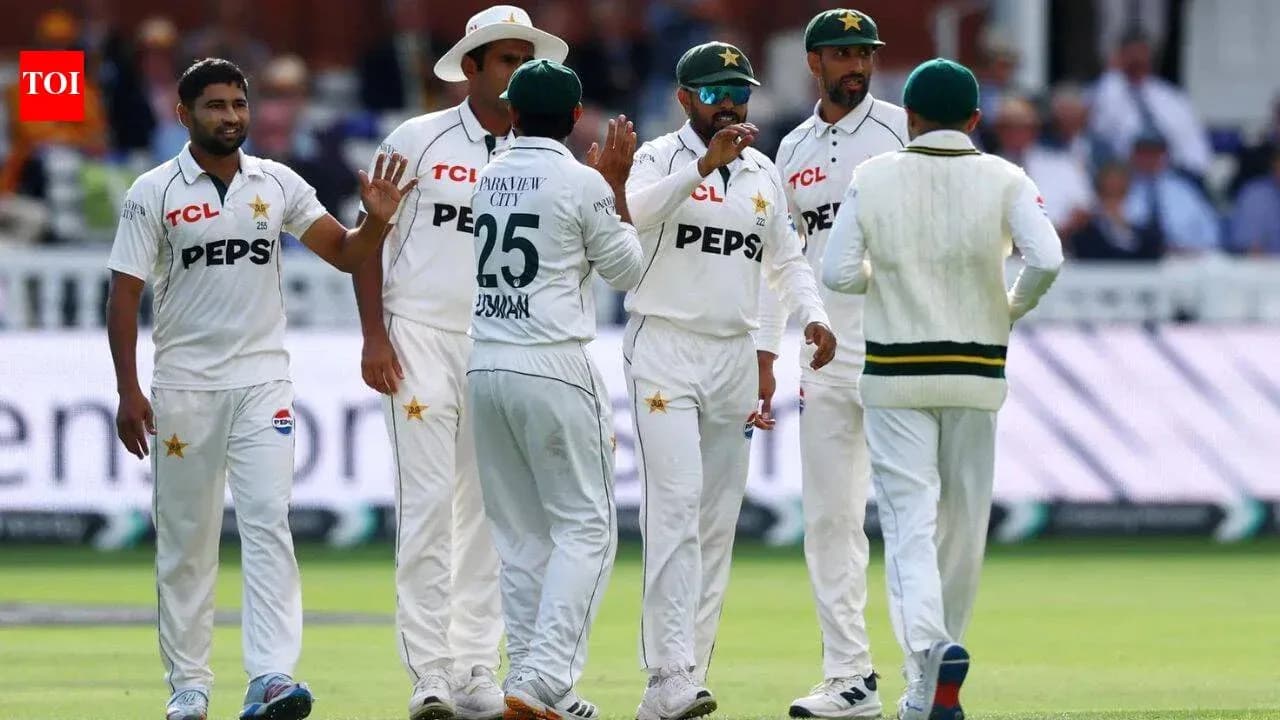
Babar Azam’s side had already been battered by England, beaten by 194 runs in the second Test. The scoreboard told one story. What followed told another.
Within days of that defeat, the Pakistan Cricket Board ripped through its Test squad. Mohammad Rizwan, Salman Ali Agha, Imam-ul-Haq, Ali Usman, Khurram Shahzad, Aamir Jamal and Muhammad Awais Zafar were all jettisoned mid-series. Head coach Sarfaraz Ahmed and bowling coach Umar Gul were also released from their roles.
Seven new faces came in, five of them yet to play international cricket. Saim Ayub and Abdullah Fazal were the only capped players added. Alongside them, pace-bowling all-rounders Razaullah Khan and Mohammad Imran, left-arm spinner Arafat Minhas, wicketkeeper Saad Baig and left-arm quick Mohammad Imran Junior were drafted into a dressing room already under siege.
The scale of the shake-up was startling. The timing even more so.
More than cricket
Inside Pakistan cricket circles, the message was clear enough: this was not just about a poor performance at Lord’s.
It emerged that the changes were driven by reasons described as “more than cricket”, a phrase that instantly dragged attention back to the game’s darkest corners. Questions went to the England and Wales Cricket Board and the PCB. More than 72 hours later, no answers came.
Instead, a carefully worded statement arrived from Amir Mir, PCB’s Director Media and Digital Communications.
“The Pakistan Cricket Board has initiated an internal disciplinary inquiry following media reports concerning discipline and conduct, which are currently being reviewed internally,” it read. “The PCB handles such matters in accordance with its standard procedures. The process is being conducted under PCB regulations, ensuring that all concerned individuals are given due consideration.”
No names. No details. Just confirmation that something serious enough to demand an internal inquiry was unfolding in the middle of a Test series in England.
A report from Pakistani outlet 365 News added another layer. According to their account, players’ devices had been taken into PCB custody and would remain there until the end of the final Test. The report did not specify whose phones were seized. The PCB has not publicly explained why the devices were confiscated.
In Pakistan, where the word “fixing” has scarred generations of cricketers and fans, those fragments of information were enough to set alarm bells ringing.
Public fire, private turmoil
While the inquiry moved behind closed doors, the board’s senior figures went very public.
Director of High Performance Aaqib Javed, never one to pull his punches, turned his fire on Imam-ul-Haq. The opener had suffered a low-grade calf tear at Lord’s and did not bat in either innings.
Aaqib made his displeasure plain in an interview with Geo.
“The Imam injury is a big question mark, and a deep disappointment. Players in the past used to get injuries, but they used to put on casts and still tried to play. We'll take action against this. How is it possible that a pulled muscle ruled you out of batting in both innings? He should have tried and fought. He'll have to face an inquiry; I can't say he faked it, but a muscle pull like that cannot stop you from batting altogether.”
In a week already thick with suspicion and uncertainty, those words landed heavily. A player facing a fitness issue now also faced a formal inquiry and a very public rebuke from a senior official.
Aaqib also backed the decision to overhaul the squad mid-series.
“The message we're sending to the recalled players is that you have to raise your game on important tours and compete, and we should be able to see some effort,” he said.
PCB chairman Mohsin Naqvi echoed that hard line, defending the sweeping changes as a necessary jolt rather than a purge.
“Every match of a series is important for us and we are not left with any option if a player is not performing but to look for his replacement. The purpose behind these changes is not to axe players from contention, but just to replace them,” Naqvi told Geo Network.
The official stance, then: performance first, standards enforced, places under threat but not permanently lost.
The context made it feel like much more than a routine selection reset.
The weight of Lord’s
All of this is happening at the very ground that hosted one of cricket’s most infamous scandals.
In 2010, also at Lord’s, Pakistan captain Salman Butt, and fast bowlers Mohammad Asif and Mohammad Amir were exposed in a spot-fixing scandal that shook the sport. They were found to have taken bribes to bowl deliberate no-balls at pre-arranged moments in a Test match. Prison sentences followed. So did bans. Pakistan’s reputation took years to even begin to recover.
That history cannot be separated from the present. Not when devices are being seized. Not when an internal disciplinary inquiry is quietly under way. Not when the board itself talks of issues “more than cricket”.
For now, the facts are stark but limited: a heavy defeat, a brutal cull, seven fresh faces, a disciplinary probe, phones in PCB custody, and senior officials openly questioning a player’s injury and commitment.
The rest sits in the shadows, waiting on an explanation that has yet to arrive.